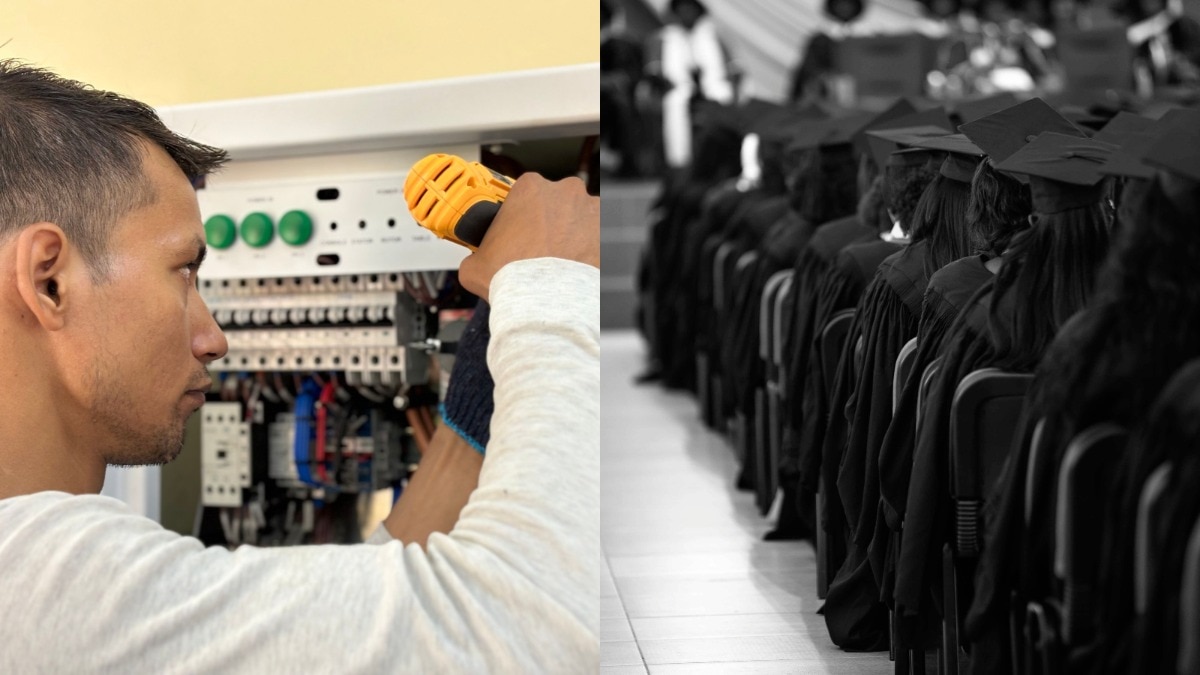
In a landmark decision, the Goa government has officially equated ITI certification with Class 12 completion. This move aims to bridge the gap between vocational training and mainstream academia.
In a transformative move for the educational landscape, the Goa government has officially declared that Industrial Training Institute (ITI) certificates will now be treated as equivalent to Class 12 (HSC). This decision is set to empower millions of students who opt for technical and vocational pathways over traditional academic routes. Previously, ITI graduates often faced systemic hurdles when attempting to pursue higher education or applying for specific government roles that required a standard high school diploma.
Reshaping the Educational Hierarchy
By granting this equivalence, the state has paved the way for ITI students to transition seamlessly into undergraduate (degree) programs. This shift is expected to boost the confidence of vocational learners and address the long-standing debate of 'Skills vs. Degrees' in the Indian workforce. It ensures that technical expertise is given the same institutional respect as theoretical knowledge.
Skill-based education is the bedrock of the future global economy, and Goa's decision could serve as a catalyst for reforming India's entire educational paradigm.
Why This Matters (इसके मायने क्या हैं)
BozokMedia analysis shows that this decision is not merely an administrative update but a strategic alignment with the national 'Skill India' mission. By elevating the status of vocational training, the government is actively working to dismantle the social stigma often associated with 'blue-collar' training. This inclusivity allows students from diverse socio-economic backgrounds to access higher academic opportunities that were previously out of reach.
From an economic perspective, this move could significantly enhance industrial productivity. When skilled technicians are also academically qualified, they become better candidates for management and innovation roles within the industry. If other Indian states adopt this model, it could create a more versatile and highly skilled workforce, directly contributing to the nation's GDP and reducing structural unemployment.
| Feature | Traditional Class 12 | ITI (New Status) |
|---|---|---|
| Academic Standing | Higher Secondary (HSC) | Equivalent to Higher Secondary |
| Primary Focus | Theoretical Knowledge | Practical & Technical Skills |
| Higher Ed Access | Direct to Degree | Now eligible for Degree programs |
| Employment Sector | Corporate/Administrative | Technical/Industrial/Administrative |
Historical Background
For decades, the Indian education system has prioritized academic degrees over vocational expertise, creating a perceived hierarchy in the job market. While traditional schooling was seen as the gateway to prestige, vocational training was often viewed as a secondary option for those unable to pursue mainstream academics. However, with the introduction of the National Education Policy (NEP) 2020, there has been a concerted national effort to integrate vocational training into the mainstream curriculum, making Goa's recent decision a local realization of a national vision.
Frequently Asked Questions (अक्सर पूछे जाने वाले प्रश्न)
Question 1: Can ITI students apply for university degrees now?
Answer: Yes, under the new regulations in Goa, ITI certificate holders are considered equivalent to Class 12 graduates and are eligible for degree admissions.
Question 2: Is this policy applicable across all of India?
Answer: No, this is currently a state-level policy in Goa, though it serves as a potential model for other Indian states to follow.