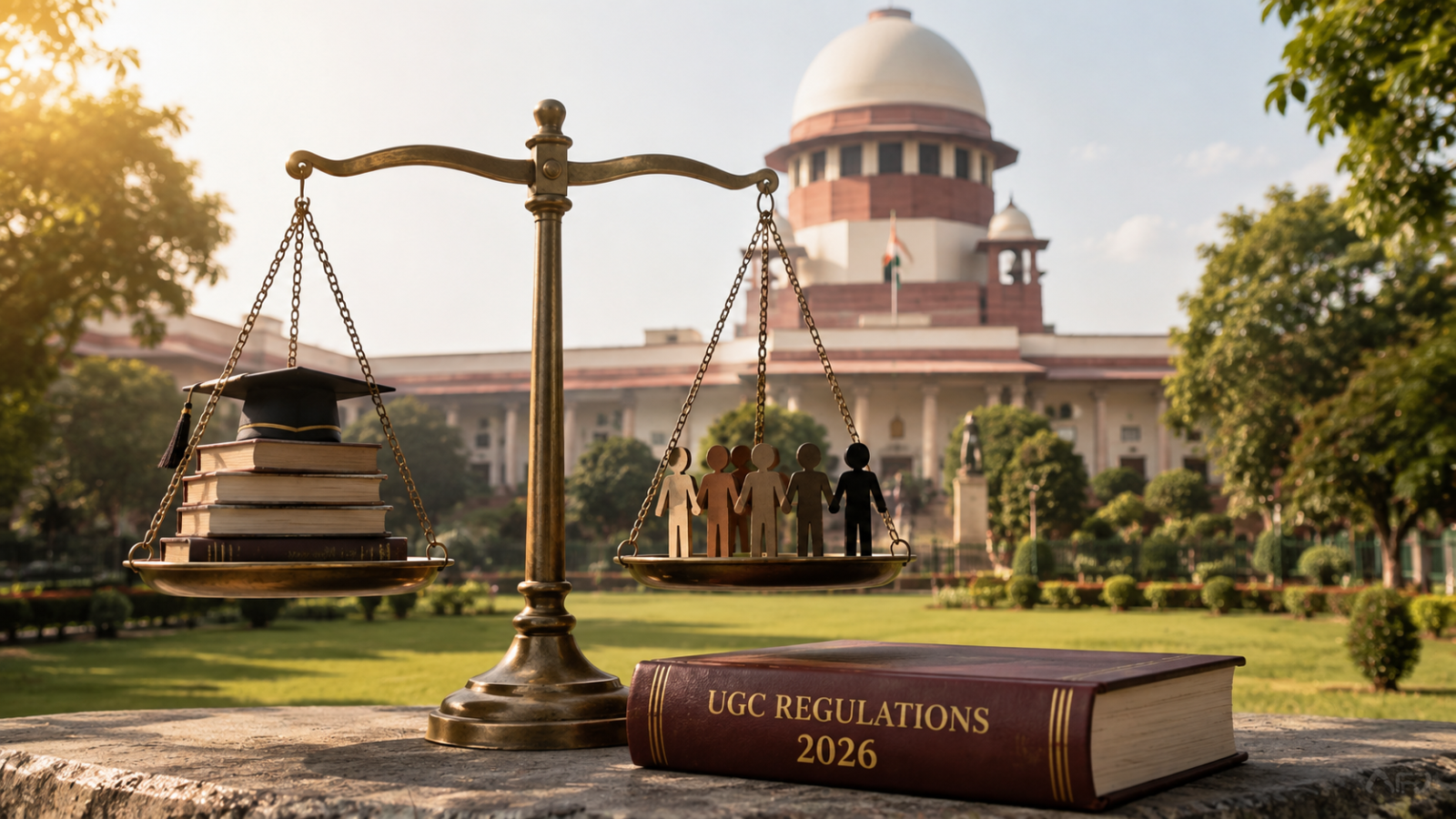
The Supreme Court heard a plea against CBSE's new three-language policy. The court clarified that students will not be failed due to this policy and will be promoted to 10th grade via internal assessment.
- A petition has been filed in the Supreme Court against CBSE's mandatory three-language policy.
- The court ensured that 9th-grade students will not face failure due to the new language requirements.
- Assessment for the new policy will be conducted solely through internal assessment.
- The court may appoint an expert committee if implementation issues persist.
New Delhi: A high-stakes debate unfolded in the Supreme Court regarding the Central Board of Secondary Education's (CBSE) controversial 'Three-Language Policy.' Under this new mandate, 9th-grade students are required to study three languages, including at least two Indian languages. A petition challenging the mid-session implementation (effective July 1st) was heard by a bench led by the Chief Justice of India (CJI).
Lawyers representing the petitioners raised critical concerns regarding the feasibility of the policy. They argued that imposing a new language mandate mid-session—without providing adequate textbooks or qualified teachers—is inherently unfair. The lack of resources is particularly glaring for students in rural areas, where access to both digital learning materials and specialized language educators is severely limited.
Why This Matters
BozokMedia analysis shows that sudden shifts in educational mandates can disrupt the academic continuity and psychological well-being of students. Without a robust framework of infrastructure and trained human resources, linguistic inclusivity policies risk becoming administrative burdens rather than educational assets.
Education should aim at the expansion of knowledge, not the imposition of administrative hurdles on students.
During the proceedings, the Additional Solicitor General (ASG) assured the court that the government remains committed to student welfare. The ASG clarified that the evaluation for the new languages would be restricted to 'Internal Assessment'. Crucially, the court noted that if a student fails to qualify in the new language component, they will not be detained in 9th grade but will instead be promoted to the 10th grade.
The Chief Justice of India (CJI) offered a profound perspective on linguistic integration, suggesting a reciprocal system where students from North India learn Southern languages and vice versa to foster national unity. The CJI acknowledged that anxieties regarding the sudden change are natural and indicated that an expert committee could be formed if implementation hurdles continue.
Historical Background
The debate over language in Indian education is long-standing. The Three-Language Formula was originally introduced to balance regional linguistic identities with national integration. While the National Education Policy (NEP) emphasizes multilingualism, the logistical challenges of implementing such a vast mandate across diverse socio-economic landscapes remain a recurring theme in Indian jurisprudence.
Frequently Asked Questions
Q1: Will 9th-grade students fail if they don't learn the new languages?
A: No, according to the court and ASG, students will be evaluated through internal assessment and will be promoted to the 10th grade.
Q2: What is the main grievance of the petitioners?
A: The primary grievances include the lack of qualified teachers, unavailability of textbooks, and the sudden mid-session implementation of the rule.