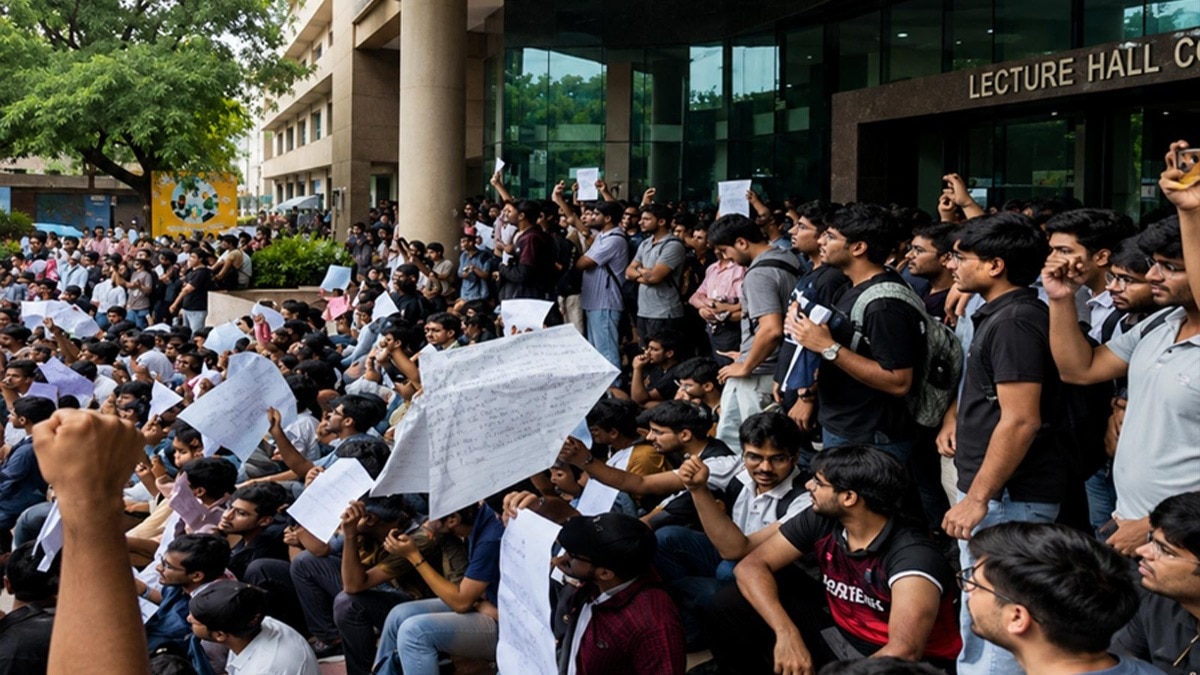
An in-depth exploration of governance, moral courage, and public service through the lens of IAS officer Tukaram Mundhe's actions, challenging the idolization of basic duty.
- Tukaram Mundhe's actions are analyzed through Utilitarianism and Kantian ethics to understand public welfare.
- Administrative inertia is linked to the 'Tamas' guna, while ethical leadership aligns with 'Sattva'.
- The core debate focuses on whether good governance should rely on exceptional individuals or institutional norms.
The recent actions of IAS Tukaram Mundhe have sparked a critical conversation regarding the nature of public service in India. Known for his uncompromising stance on food safety and consumer rights, Mundhe's career serves as a case study for UPSC aspirants and governance experts alike. The central question remains: Should the simple act of performing one's duty be celebrated as an extraordinary feat?
Ethical Frameworks in Public Administration
From the perspective of Utilitarianism, an action is ethical if it produces the greatest good for the greatest number. By cracking down on unhygienic food practices, Mundhe maximizes public health and safety. Simultaneously, his approach mirrors Kantian Ethics, which emphasizes the 'Categorical Imperative'—the moral obligation to act according to principles that should be universal laws.
Why This Matters
BozokMedia analysis shows that the tendency to idolize individual officers as 'heroes' is a symptom of a systemic void. When basic honesty is viewed as a miracle, it indicates that ethical conduct has ceased to be the norm within the institution and has instead become a rarity.
"Public administration cannot be reduced to mere rules and procedures; it is about recognizing the dignity and welfare of the people the state is sworn to serve."
Indian Philosophy: The Three Gunas
The Bhagavad Gita describes three qualities—Sattva, Rajas, and Tamas—that influence human behavior. In a bureaucratic setting, an officer dominated by Tamas tends toward inertia and maintaining the status quo, often ignoring systemic failures to avoid personal discomfort.
Conversely, Rajas is driven by ambition and attachment to outcomes, which can distort the relationship between the civil servant and the citizen. Sattva, however, represents purity, balance, and a commitment to a higher purpose. Mundhe's willingness to face professional friction for the sake of public welfare is a manifestation of Sattva and moral courage.
| Guna (Quality) | Administrative Behavior | Outcome |
|---|---|---|
| Tamas | Inertia, Status Quo | Systemic Neglect |
| Rajas | Ambition, Personal Interest | Biased Decision Making |
| Sattva | Selfless Service, Balance | Ethical Governance |
The ultimate goal of a democratic administration should be to move away from the 'hero-centric' model of governance. The focus must shift toward creating an environment where integrity is not an act of courage, but a standard operating procedure for every official.
Frequently Asked Questions
1. What is Moral Courage in the context of IAS?
It is the ability to take a stand for what is ethically right, despite the risk of transfers, political pressure, or professional setbacks.
2. How does the 'Sattva' guna improve governance?
Sattva promotes objectivity, empathy, and a sense of duty toward the marginalized, ensuring that public interest remains the sole driver of decision-making.