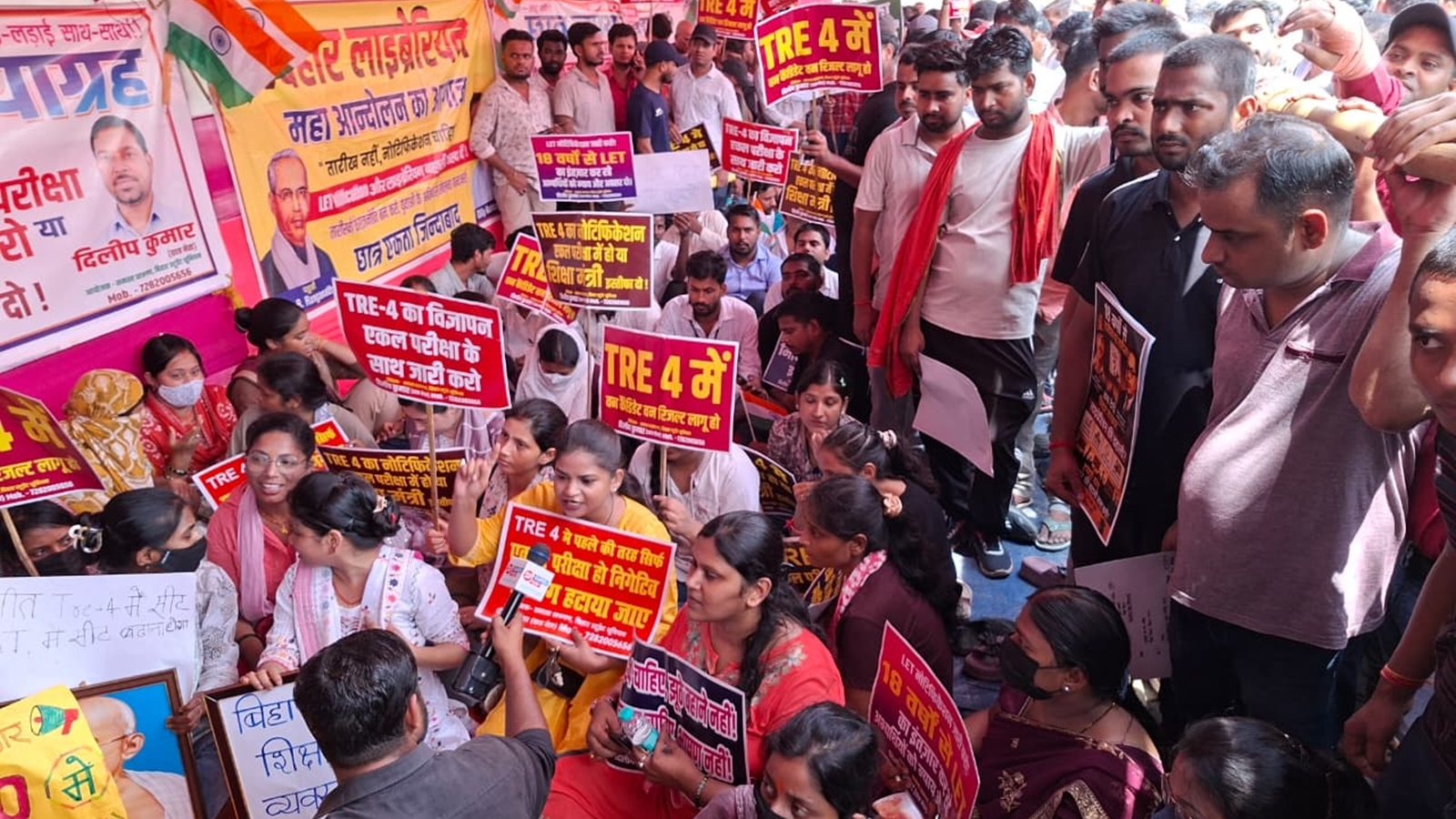
The Bihar Public Service Commission (BPSC) rejected demands to scrap negative marking and to scrap its two‑stage exam format, while its examination controller quoted the proverb “Hathi chale bazaar, kutta bhauke hazar,” sparking a political firestorm. Opposing students and opposition leaders called the remark offensive and intensified the protests.
- BPSC upheld negative marking and a two‑stage examination system.
- The controller’s proverb triggered a social‑media backlash labeling protesters as “dogs”.
- Multiple student groups continue to press varied demands across Patna.
Context and Incident Overview
Since August 18, students in Patna’s Gardanibagh have been staging a sit‑in against the proposed pattern for the fourth Teacher Recruitment Examination (TRE‑4). Their chief demands include removing negative marking, moving to a single‑stage test, and ensuring transparency in the recruitment process. Amid this, BPSC examination controller Rajesh Kumar Singh responded to media queries by quoting the Hindi proverb “Hathi chale bazaar, kutta bhauke hazar,” which quickly turned into a political controversy.
Impact of the Controller’s Comment
The proverb traditionally advises staying focused while ignoring noise, yet opposition leaders interpreted it as likening protesting students to “barking dogs.” RJD national working president Tejashwi Yadav labelled the statement “shameful” and warned that such language would not be tolerated. Singh later issued a video apology, insisting the proverb was taken out of context and that he never intended to hurt any group.
Historical Background
Bihar’s public service examinations have a fraught history of policy shifts, negative‑marking debates, and periodic student agitations. After the Union Public Service Commission (UPSC) adopted a two‑stage model, several state commissions—including those of Uttar Pradesh, Gujarat, Haryana, and Himachal Pradesh—mirrored the approach, making BPSC’s stance that “the system isn’t unique to Bihar” factually accurate.
BPSC’s Official Stance
The commission reaffirmed that all objective papers will retain negative marking to deter random guessing. It also confirmed that a two‑stage structure—preliminary and mains—has already been decided, citing examples from other state commissions. Allegations of bias against Hindi‑medium candidates were dismissed, with the board stating that answer quality, not language, drives scoring.
Student Groups and Recent Developments
The All PhD Holders and Research Association, after a two‑hour meeting with Governor Lt Gen (Retd.) Syed Ata Hasnain, agreed to end its 21‑day hunger strike. The governor promised a committee of educators and senior administrators within 15 days to review demands concerning the 2026 Assistant Professor Recruitment Regulations, age limits, API/PhD/NET‑JRF weightage, and service conditions for guest assistants. Other protest groups remain active, keeping pressure on the commission.
Why This Matters
BozokMedia analysis shows that the controversy highlights a deeper mistrust between Bihar’s aspirants and its recruitment machinery, potentially influencing future policy reforms and electoral narratives in the state.
“Transparency and continuous dialogue are the only sustainable solutions for examination reforms,” says education policy expert Dr. Ravi Kumar.
Frequently Asked Questions
Q1: Is there any chance that negative marking will be removed?
A: As of now, BPSC has confirmed that negative marking will remain to discourage blind guessing.
Q2: When will applications for TRE‑4 open?
A: Applications are slated to open from September 1 to September 30, with the exam likely scheduled for December or January.