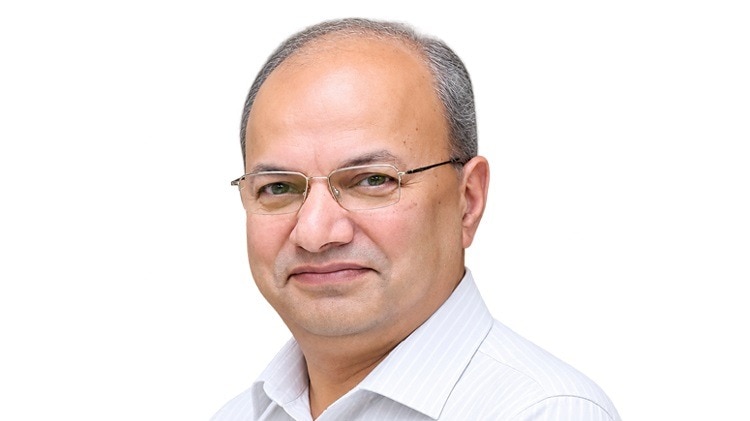
IIT Kanpur Director Prof. Manindra Agrawal warns that the era of traditional assignments is over due to AI. He advocates for a shift toward mathematical depth and problem-solving skills.
- AI has rendered traditional student assignments obsolete as a measure of understanding.
- Educational institutions must pivot toward teaching originality and complex problem-solving.
- The fusion of mathematics and biosciences is set to define 21st-century science.
- India needs mathematics institutes with a heavy emphasis on training the next generation.
In a profound commentary on the digital revolution, Prof. Manindra Agrawal, Director of IIT Kanpur, has declared that the era of conventional academic assignments is effectively dead. Speaking in an exclusive interview, the Padma Shri awardee highlighted how Artificial Intelligence (AI) is fundamentally altering the landscape of higher education, making traditional homework-based assessments redundant.
A Paradigm Shift in Pedagogy
Agrawal argues that when AI tools can generate precise answers and complete complex tasks with minimal human intervention, assignments no longer serve as a reliable metric for a student's cognitive grasp. Instead of resisting this technological surge, he suggests that institutions must reinvent their approach. The focus must shift from rote learning and task completion to originality, critical thinking, and complex problem-solving.
Why This Matters
BozokMedia analysis shows that this transition is a critical inflection point for global academia. As AI becomes an omnipresent collaborator, the value of 'knowing the answer' is plummeting, while the value of 'asking the right question' is skyrocketing. Institutions that fail to adapt their assessment models risk producing graduates who are technically proficient at using tools but intellectually incapable of independent reasoning.
The assignment era has gone; we must now build mathematical thinking that transcends machine computation.
Prof. Agrawal's perspective is deeply rooted in his own journey. A world-renowned researcher in theoretical computer science, his work on the AKS primality test has left an indelible mark on mathematics. He notes that his own career was shaped by a love for the precision and lack of ambiguity in mathematics—a quality that remains essential even in the age of generative AI.
Strengthening India's Mathematical Foundation
While India boasts a rich mathematical heritage—from Aryabhata to Srinivasa Ramanujan—Agrawal identifies a systemic gap in modern institutional frameworks. He points out that while India has prestigious research bodies, many lack a robust training component for the younger generation. To compete globally, India needs institutions that function not just as research hubs, but as intensive training grounds for mathematical excellence.
| Feature | Traditional Education | AI-Integrated Education |
|---|---|---|
| Primary Focus | Assignment Completion | Conceptual Depth & Innovation |
| Assessment Basis | Standardized Tasks | Originality & Reasoning |
| Role of AI | External Threat/Cheating Tool | Collaborative Cognitive Tool |
Frequently Asked Questions
Question 1: Why does AI make assignments obsolete?
Answer: Because AI can now perform the computational and linguistic tasks required for assignments with high accuracy, making it impossible to distinguish between student effort and machine output.
Question 2: What is the future of mathematics in science?
Answer: Mathematics is moving toward a fusion with biosciences, where mathematical models will be used to decode the complexities of living systems.