Following Gen Z's nationwide protests, India's Gen Alpha, comprising school children as young as six, has initiated a wave of demonstrations across at least ten states. These young students are demanding immediate improvements in their dilapidated school infrastructure and basic facilities, highlighting a critical failure in the country's vast education system. Their activism signals a new challenge for the government, building on recent youth movements against exam leaks and unemployment.
- Gen Alpha students in India are protesting dilapidated school infrastructure and lack of basic facilities across at least 10 states.
- These protests follow the Gen Z movement, which demanded accountability for exam leaks and addressed widespread youth unemployment.
- The activism highlights significant gaps in India's education system, particularly in government-run rural schools, posing a new political challenge.
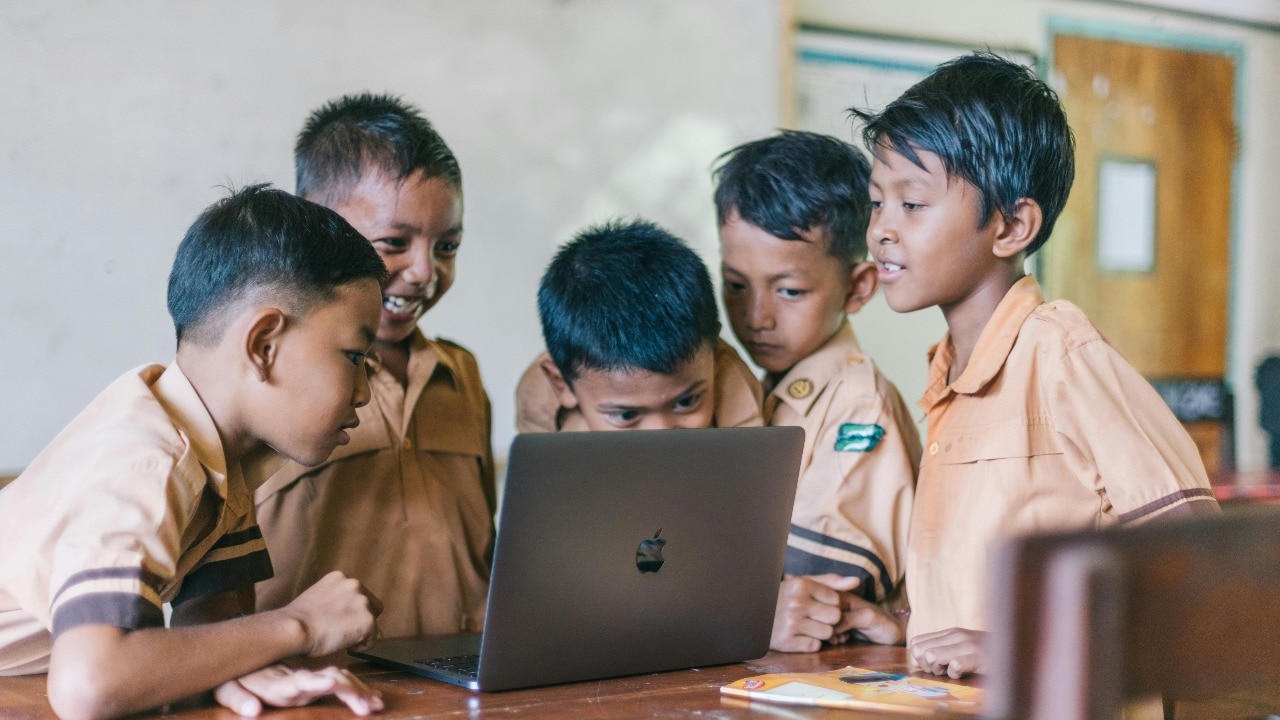
Bengaluru, India — It was past time for class, but none of the 122 students at the government-run primary school in Samuhi Bhatpurwa village in India’s Uttar Pradesh were ready for lessons. For once, they had something to teach the school authorities. Dressed in their red-and-white checked uniforms, the students — some as young as six — refused to enter their classrooms until they received an assurance that the school would build the new building authorities had promised. Some, such as eight-year-old Priya*, held India’s national flag.
The current structure is old and dilapidated. A portion of the school lies in rubble — unrepaired — after a wall fell on a girl, severely injuring her in 2023. Since then, the children have been asking for a new building for their safety. But no one listened to them until they launched their unlikely protest on August 22, children no older than 10 challenging school and government authorities. As news spread that the youngsters were on strike, a senior education department official visited the school.
Block education officer Deepak Awasthi told the children that a new building would be constructed soon. That was when the pupils agreed to go back home as it was already close to evening. “I am happy. We will get a new building. We (the children) dread the school building would one day fall. Its condition is poor,” Priya told Al Jazeera. “The fear does not let us concentrate on our studies. That is why we all protested.” Priya and her friends aren’t alone. Children in at least 10 Indian states, including Maharashtra, Bihar, Rajasthan, Jharkhand and Madhya Pradesh, among others, have launched similar protests in schools since late July. Protests have been reported in rural areas where government-run schools are crumbling under neglect.
The protests represent a challenge, not only for India’s education system, but also point to a new political test for Prime Minister Narendra Modi’s government when it is already struggling to retain the support of young people. Starting in early June, thousands of Gen Z protesters flooded Jantar Mantar, the protest hub in the heart of India’s capital city, New Delhi. Their most pressing demand was accountability after a series of high-profile examination paper leaks, which in turn were seen as responsible for dozens of young Indians dying by suicide.
But as the Modi government tried to cast the protesters as extremists backed by foreign forces rather than engaging with their grievances, their questions of those in power grew: India’s vast unemployment and underemployment crisis became another flashpoint for the protests. The popular youth movement was led by the Cockroach Janata Party (CJP), a satirical society formed in May to express angst over large-scale unemployment and systematic flaws in the education system.
When security forces that report directly to Modi’s de facto deputy, Amit Shah, brutally cracked down on protesters peacefully marching towards the Indian parliament, the Gen Z youth movement drew widespread popular support from across the nation. As the numbers of protesters swelled and their anger at being beaten up simply for demanding education reforms grew, the Modi government relented. Education Minister Dharmendra Pradhan, from Modi’s Bharatiya Janata Party, resigned. The CJP has since turned its attention to the condition of India’s schools. School students, such as in Samuhi Bhatpurwa, are now doing something that is rare in India’s cultural traditions: questioning teachers and those in authority. Coming close on the heels of the Gen Z protests, this new generation of protesters is being widely described as heralding a Gen Alpha movement.
India operates one of the world’s largest school systems, teaching 247 million students in 1.5 million schools. About 70 percent of the schools are run by federal, state or local governments, the rest either by charities or private institutions. The government’s official audit of schools in 2025-2026 reported improvements in access to education and suggested that the teacher-pupil ratio was improving — one teacher for every 24 students. School dropout rates are falling too, the data shows. But the reality for many students and their parents is very different. Some schools operate in buildings that are also used to rear cattle.
Why This Matters
BozokMedia analysis shows that the rise of Gen Alpha's protests, immediately after the impactful Gen Z movement, indicates a growing and systemic discontent among India's youth regarding the quality and accessibility of public services. This intergenerational activism underscores a critical juncture for governance, where the failure to address fundamental educational and employment issues could lead to sustained social unrest and political instability.
"The children are demanding their rights. They want teachers, benches, school buildings, drinking water, electricity and toilets. Unfortunately, for a long time, the basic infrastructure and manpower to run schools have been missing. It is the story of most government-run schools across the country."
Frequently Asked Questions
- What triggered the recent Gen Alpha protests in India?
- How do the Gen Alpha protests relate to the earlier Gen Z movement?