Madhya Pradesh has launched a groundbreaking Hindi-medium BTech program in Civil Engineering at Shri G S Institute of Technology and Science (SGSITS), Indore, aligning with the National Education Policy (NEP). The initiative offers a substantial Rs 2 lakh incentive to students in their final year, aiming to make technical education more accessible and mitigate dropout rates for those from Hindi-medium backgrounds.
- Madhya Pradesh introduces Hindi-medium BTech in Civil Engineering.
- Rs 2 lakh final-year incentive for enrolled students from the state government.
- Program launched at Shri G S Institute of Technology and Science (SGSITS), Indore.
- Aims to bridge the language barrier in technical education, aligning with NEP.
Indore, September 4, 2026: Madhya Pradesh has rolled out a significant educational initiative by introducing a Hindi-medium BTech program in Civil Engineering from the current academic session. Under this pioneering move, students enrolled in the course will be eligible for a remarkable Rs 2 lakh incentive from the state government upon reaching their final year. Officials confirmed this development on Thursday, marking a new chapter in the landscape of technical education.
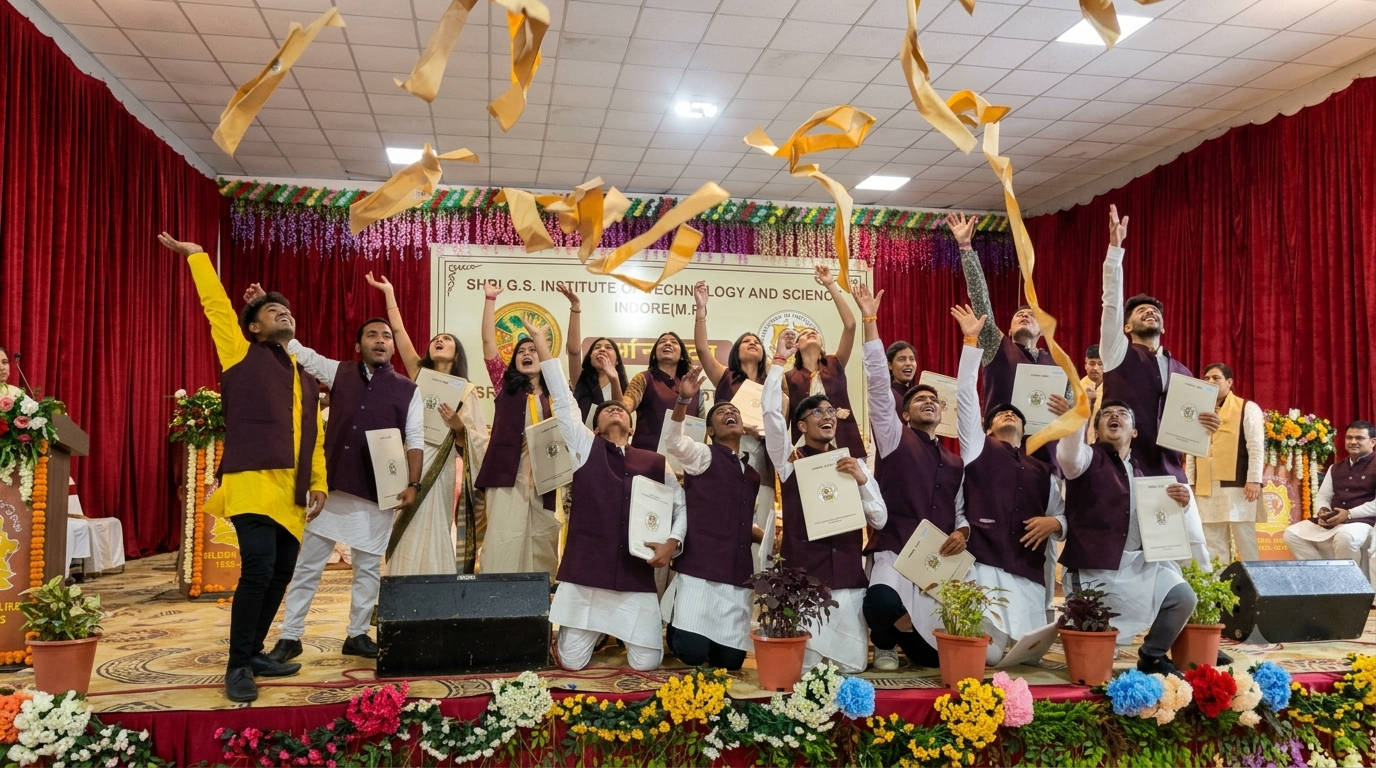
The program has been launched at Shri G S Institute of Technology and Science (SGSITS), Indore, an aided autonomous institute and one of the prominent engineering colleges in central India. Under the initiative, 30 seats have been earmarked for a dedicated Hindi-medium batch in civil engineering, with approximately 20 students having already secured admission to the program, officials stated. This step is focused on providing students the opportunity to pursue technical education in Hindi while also encouraging them to take up engineering studies.
This initiative has been introduced in line with the National Education Policy (NEP) to make technical education more accessible to students who studied in Hindi-medium schools. In India, many Hindi-medium students often face significant challenges transitioning to English-based higher education after studying in their mother tongue up to Class 12. This language barrier frequently discourages students from pursuing their preferred courses or even leads to mid-course dropouts. The program endeavors to bridge this critical gap.
Sunil Ajmera, head of the civil engineering department at SGSITS, highlighted that over the years, the institute had observed that many students who studied in Hindi medium up to Class 12 found it difficult to pursue engineering in English, with some even dropping out midway. “Keeping this aspect in mind, the B.Tech civil engineering course has begun in Hindi so that students can study and appear for examinations in their mother tongue,” Ajmera said.
The institute undertook extensive preparations for the Hindi-medium course for several years before its introduction. Vivek Tiwari, assistant professor in the civil engineering department, revealed that institute experts had been translating English technical study material into Hindi for the past four years. Workshops were also organised to train teachers to teach in Hindi, he added. Engineering student Rohit Sharma lauded the initiative, stating, “For me, studying civil engineering in English would have meant taking help from Google and ChatGPT to understand difficult subjects. But while studying in my mother tongue Hindi, teachers can explain even technical terms in English easily.”
Why This Matters
BozokMedia analysis shows that education in one's mother tongue significantly enhances conceptual understanding and learning efficacy, especially in complex technical fields. This initiative not only fosters educational inclusivity in Madhya Pradesh but also sets a precedent for skill development and innovation nationally, ensuring that no talented mind is left behind due to linguistic barriers.
“Providing technical education in the mother tongue is a progressive step that not only democratizes the learning process but also empowers students to grasp complex concepts within their native cultural context, ultimately leading to better problem-solving skills and innovation.”
Faculty members emphasized that students enrolled in the Hindi-medium course are also provided with essential English language skills to ensure they remain competitive in the current environment. The objective of offering civil engineering in Hindi is not to distance students from English but to provide them with technical education in their mother tongue while ensuring they acquire the English skills necessary for their careers.
Frequently Asked Questions
- What is the primary objective of the Hindi-medium BTech program?
- How does the program ensure students remain competitive in the global job market?