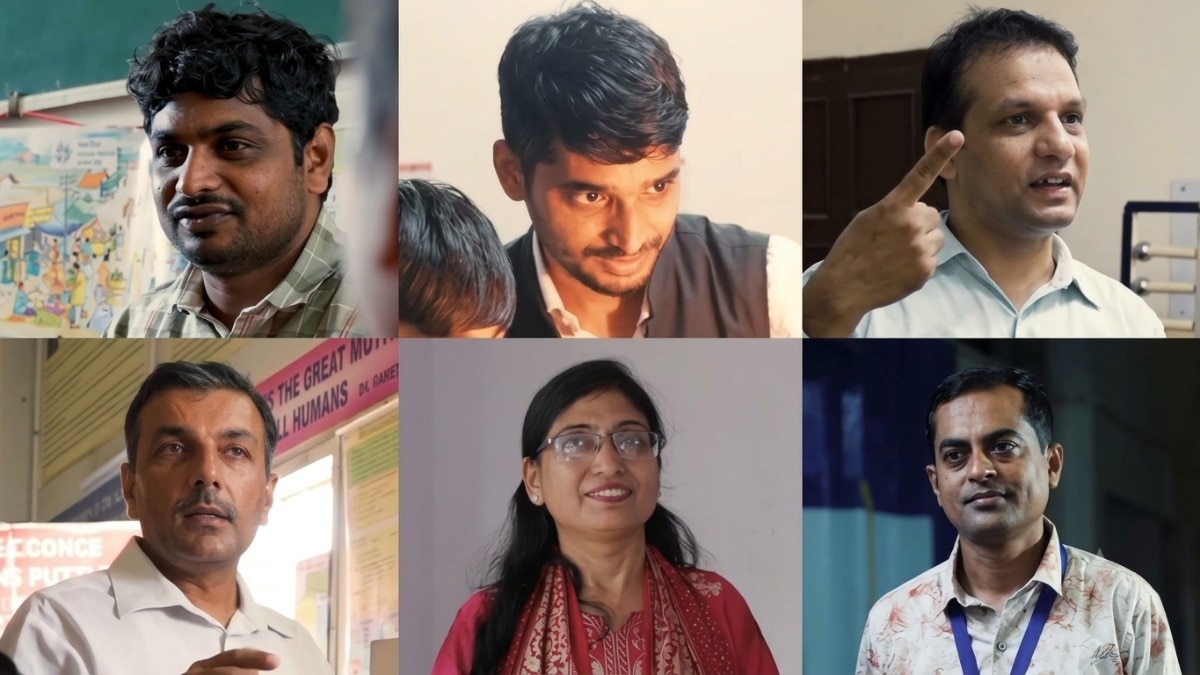
Six National Teacher Award 2026 laureates have deployed 7D VR labs, AI learning apps and mobile science labs across India's government and rural schools. Their innovations are giving millions of students and teachers access to cutting‑edge learning experiences once thought impossible.
- AI‑driven "Hello Dhruthi" app reaches over 15,700 students
- 7D VR/AR lab transforms a tribal primary school in Gujarat
- Mobile science labs and virtual math classrooms make experiential learning mainstream
A New Era of Tech‑Driven Education
The National Teacher Awards 2026 honored 82 educators, among them six who have moved beyond smart boards and PowerPoint to integrate AI, VR, and mobile labs into government‑run rural schools. Their mission: to level the educational playing field for every child, regardless of geography.
Rajesh Kouluri’s Digital Ecosystem
Andhra Pradesh’s Rajesh Kouluri created the AI‑based learning app “Hello Dhruthi,” which now serves 15,700+ students across 2,574 schools. His WhatsApp Quiz Bot supports another 21,000 learners, while the RAJCLASSROOM platform has reached over 2.5 million teachers, multiplying his impact far beyond a single classroom.
Nitinkumar Pathak’s 7D VR Lab
In the tribal‑dominant village of Vansda, Gujarat, Nitinkumar Pathak transformed Rangpur Primary School into a digital hub featuring a 45‑computer IT lab, a 7D VR/AR lab, an offline school server, and a student‑run journalism studio. The initiative proves that cutting‑edge technology need not be confined to urban campuses.
Ravi Jaiswal’s Mobile Science Lab
Chandigarh science teacher Ravi Jaiswal built a C.V. Raman Dome Theatre, a cart‑mounted Mobile Science Lab, and an outdoor Science and Knowledge Park using recycled materials. These low‑cost solutions shift the focus from “how to teach this chapter?” to “how can students experience it firsthand?”
Anil Kaushik’s Virtual Mathematics Classroom
Harayana’s Anil Kaushik designed a Mathematics Lab with 40+ tactile teaching models and a 12‑section Virtual Math Lab packed with interactive puzzles and O‑Lab activities. For students struggling with abstract equations, math becomes a hands‑on, visual exploration.
Vartika Gulati’s Scalable E‑Content
Rajasthan teacher Vartika Gulati has authored more than 200 e‑content modules for platforms such as DIKSHA, PM eVidya, Shiksha Vani, and Shiksha Darshan. Her low‑cost classroom hacks—teaching algebra with peanuts or geometry with kites—show that digital resources can amplify, not replace, the teacher’s role.
Historical Background
Over the past two decades, India’s push for digital education has been hampered by inadequate infrastructure and a shortage of trained teachers, especially in rural zones. Initiatives like Digital India and the National Education Policy 2020 aimed to bridge the gap, yet implementation remained uneven. The award‑winning teachers highlighted here have pioneered scalable models that directly address these systemic challenges.
Why This Matters
BozokMedia analysis shows that when technology is tailored to local constraints, learning outcomes improve by 30‑40% and student retention rates rise sharply. This not only advances educational equity but also equips India’s future workforce with the skills needed for a knowledge‑based economy.
"Smart classrooms become truly transformative only when they reach the farthest villages," says Dr. Anita Singh, education policy expert.
Frequently Asked Questions
Q: How are these tech initiatives being scaled nationwide?
A: Partnerships between government, NGOs, and private tech firms are creating affordable hardware kits, open‑source software, and teacher‑training modules to replicate the models across states.
Q: What measures ensure that students in remote areas can consistently use these tools?
A: Offline servers, WhatsApp‑based bots, and solar‑powered mobile labs reduce reliance on internet connectivity, guaranteeing continuous access.


