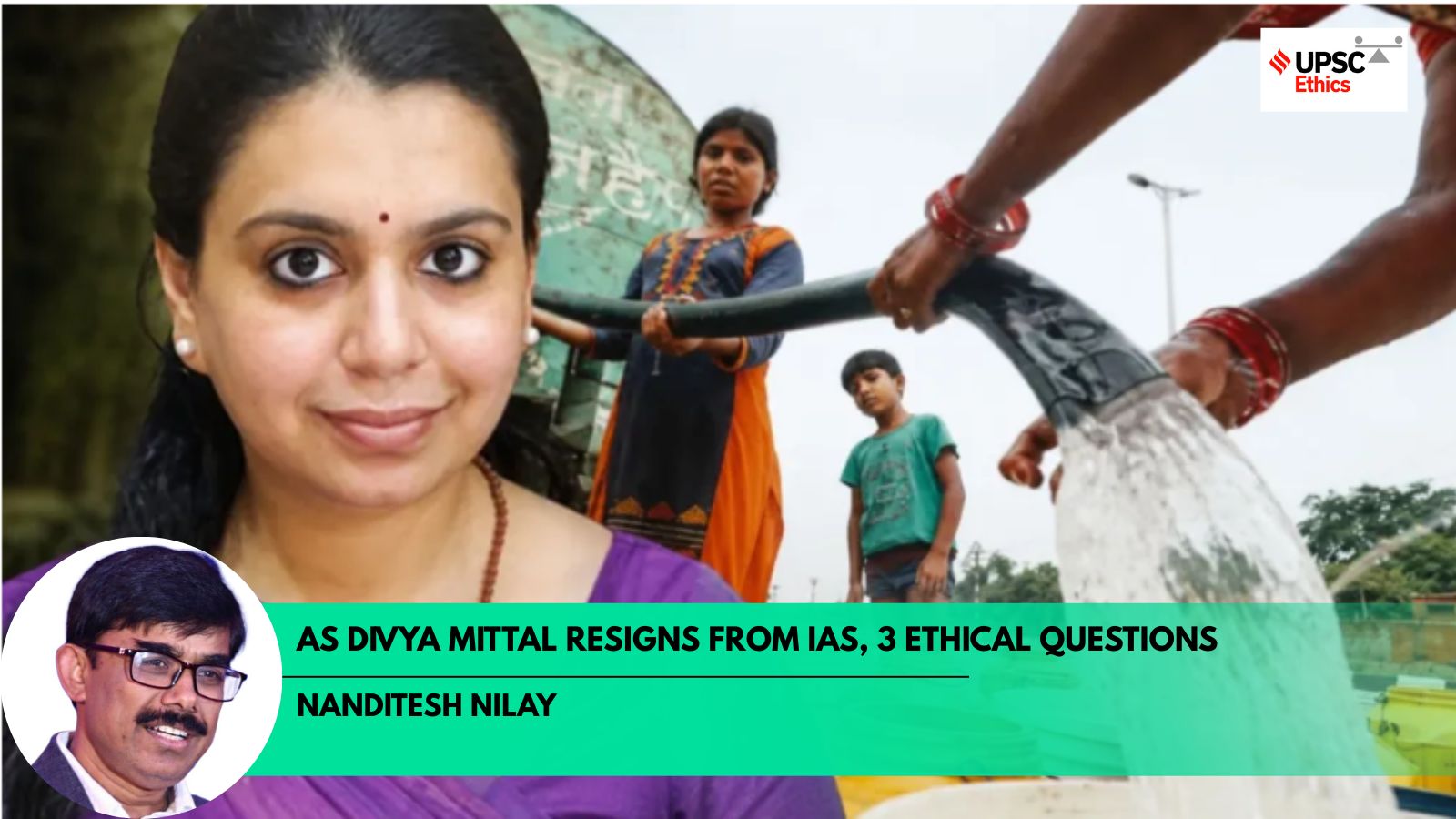
The resignation of IAS officer Divya Mittal after 13 years of service has ignited a profound debate on the true meaning of public service and the ethical responsibilities of civil servants.
- IAS officer Divya Mittal has resigned after a distinguished 13-year career.
- She was widely recognized for impactful work in Mirzapur, including providing piped water to remote villages.
- Her departure raises critical questions about empathy, virtue, and the nature of governance.
The resignation of Divya Mittal from the Indian Administrative Service (IAS) is more than just a career shift; it is a philosophical moment for the entire civil services fraternity. After 13 years of dedicated service, her departure invites us to look beyond the prestige of the position and examine the soul of public service.
Mittal's legacy is etched in the success of projects like the Jal Jeevan Mission in the hilly terrain of Mirzapur. In villages like Lahuria Dah, where water had been a struggle for decades, she didn't just treat the lack of water as an administrative entry—she treated it as a personal responsibility. This distinction between 'managing a problem' and 'solving a human crisis' is the core of ethical governance.
Why This Matters
BozokMedia analysis shows that the resignation of high-performing officers often highlights the tension between individual ethical vision and rigid institutional frameworks. When officers prioritize human impact over mere procedural compliance, they become catalysts for change, but they also face unique systemic pressures.
"An ideal officer is not necessarily one who is perfect, but one who remains conscious of the human purpose behind public office."
Drawing from Aristotelian virtue ethics, we can argue that true ethical conduct is not a set of rules followed out of fear of punishment, but a settled disposition of character. An officer who internalizes empathy and justice will naturally see the human consequences of every file they sign. Mittal’s career serves as a case study for this brand of 'virtue-driven' administration.
Historical Background: The Evolution of Civil Service Ethics
Historically, the Indian Civil Service was designed for colonial administration and tax collection. Post-independence, the mandate shifted toward social engineering and welfare. Today, the challenge has evolved again: moving from 'rule-based' governance to 'role-based' and 'empathy-based' governance to meet the complexities of a modern democracy.
Frequently Asked Questions
1. What was Divya Mittal's major contribution?
She was instrumental in ensuring piped water supply to remote, underserved villages in the Mirzapur district.
2. Can one officer change a whole system?
While one individual cannot transform an entire institution, they can set a precedent and inspire systemic shifts through exemplary conduct.