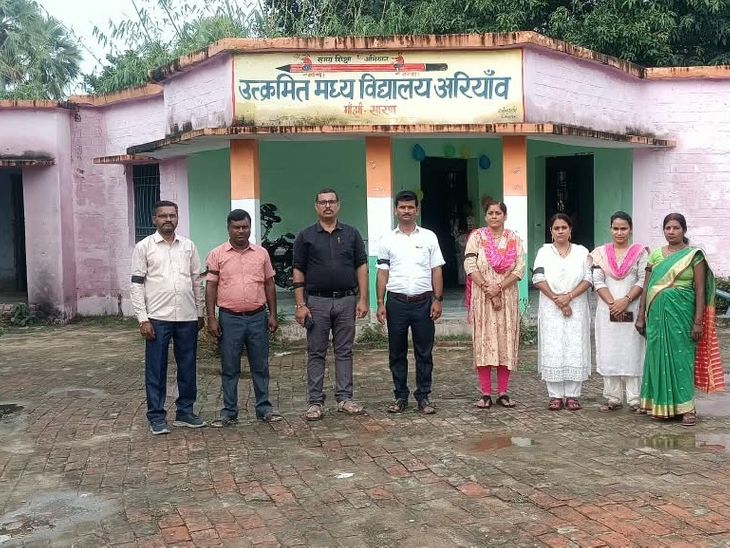
Teachers in Manjhi, Saran district of Bihar, staged a protest by wearing black armbands. They are demanding the implementation of the Old Pension Scheme (OPS), equal pay for equal work, and the removal of TET requirements.
- Teachers in Manjhi, Saran, protested by wearing black armbands.
- Core demands include Old Pension Scheme (OPS), pay parity, and removal of TET.
- The protest was organized under the guidance of the All India Primary Education Association.
- Teachers have warned of larger agitations if demands are not met.
In a significant show of dissent, teachers in the Manjhi block of Saran district, Bihar, staged a protest on Saturday. Following the directives of the Bihar State Primary Teachers' Association and the All India Primary Education Association, educators wore black armbands to express their deep dissatisfaction with current government policies.
The protest was prominently observed in primary and middle schools within the Sheetalpur and Ariyav areas. While the teachers continued to perform their essential duties, the symbolic use of black armbands sent a clear message to the administration regarding the growing unrest within the teaching community.
The Core Demands
The protesters have outlined three non-negotiable demands that they believe are essential for their professional dignity and financial security:
- Old Pension Scheme (OPS): A demand to revert to the traditional pension system to ensure long-term stability.
- Equal Pay for Equal Work: Addressing the wage disparities that exist despite similar job roles and responsibilities.
- Removal of TET Mandate: Seeking an end to the recurring Teacher Eligibility Test (TET) requirements which they claim create unnecessary hurdles.
District President Abhay Kumar Singh, along with senior leaders like Brajesh Kumar Singh and Alok Kumar Singh, emphasized that the government's unresponsive attitude has pushed teachers to the brink.
Why This Matters
BozokMedia analysis shows that teacher unrest in Bihar is not merely a localized issue but a systemic concern. If the grievances regarding pension and pay parity remain unaddressed, it could lead to widespread strikes, potentially disrupting the academic calendar and affecting the quality of education across the state.
The tension between teacher welfare and government fiscal policy is reaching a tipping point in Bihar.
The leadership has made it abundantly clear that this is only the beginning of their struggle. If the government fails to initiate a constructive dialogue, the teachers are prepared to escalate their protest into a massive, state-wide movement.
Historical Background
Teacher unions in Bihar have a long-standing history of activism. From demanding better working conditions to fighting for fair recruitment processes, these organizations have played a pivotal role in shaping the educational landscape of the state. The current agitation reflects a recurring cycle of struggle over service conditions and social security.
Frequently Asked Questions
1. What are the main reasons for the teacher protest in Manjhi?
The primary reasons are the demand for the Old Pension Scheme, equal pay for equal work, and the removal of the TET requirement.
2. How are the teachers protesting?
The teachers are protesting by wearing black armbands while performing their daily teaching duties.