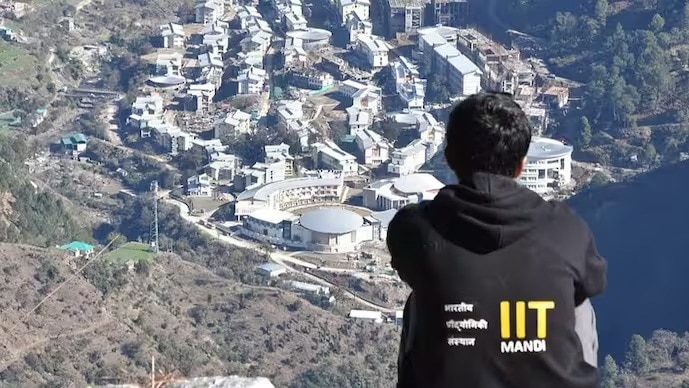
A poster depicting the traditional varna system during a Janmashtami event at IIT Mandi has ignited a fierce debate over caste and equality, prompting the institute to launch an official inquiry.
- A poster titled 'Bhagavad Gita – The Timeless Wisdom' was displayed at IIT Mandi.
- The poster outlined social duties based on the four varnas: Brahmin, Kshatriya, Vaishya, and Shudra.
- IIT Mandi Director has condemned the poster and ordered a formal inquiry.
- Students and alumni have raised concerns regarding campus inclusivity and social harmony.
A Janmashtami celebration at IIT Mandi has descended into a major controversy following the display of a poster detailing the traditional varna system. The poster, which featured verses from the Bhagavad Gita, outlined specific social roles and duties assigned to the four varnas: Brahmins, Kshatriyas, Vaishyas, and Shudras. The incident has sparked a nationwide debate regarding the intersection of religious philosophy and social hierarchy within premier educational institutions.
According to the details on the poster, Brahmins were described as those who "spread God's message," Kshatriyas as protectors of society, Vaishyas as drivers of the economy, and Shudras as those destined to "serve higher classes." Upon the circulation of images of the poster on social media, many students expressed deep concerns that such hierarchical depictions undermine the principles of equality and social justice that modern campuses strive to uphold.
Why This Matters
BozokMedia analysis shows that this incident highlights the growing tension between traditional Vedic interpretations and the constitutional mandate of non-discrimination in Indian public institutions. For an Institute of National Importance like an IIT, the presence of materials that categorize individuals into social hierarchies can have significant implications for student inclusivity and the institutional ethos of scientific temper.
The introduction of caste-based role descriptions in a secular academic environment poses a direct challenge to the institutional mandate of social equality.
In a swift response to the growing backlash, IIT Mandi Director Professor Laxmidhar Behera issued a formal statement via email. He expressed shock at the display, clarifying that the institute had not endorsed the content in any manner. "The Institute strongly condemns any form of caste-based discrimination," Behera stated, adding that an inquiry committee has been constituted to investigate the origins and the approval process of the poster.
The controversy has also extended to the alumni network, with former students of various IITs questioning the sensitivity required when presenting religious or philosophical materials. There are also unanswered questions regarding the oversight mechanisms in place for campus events and whether the faculty members involved in the celebrations, including a professor associated with ISKCON, played a role in the selection of the material.
Frequently Asked Questions
1. What exactly was written on the controversial poster?
The poster described the duties of the four varnas, specifically stating that Shudras' role was to "serve higher classes," which triggered the outcry.
2. What action has the IIT Mandi administration taken?
The Director has condemned the poster, stated it was unauthorized, and has ordered a formal inquiry to establish accountability.