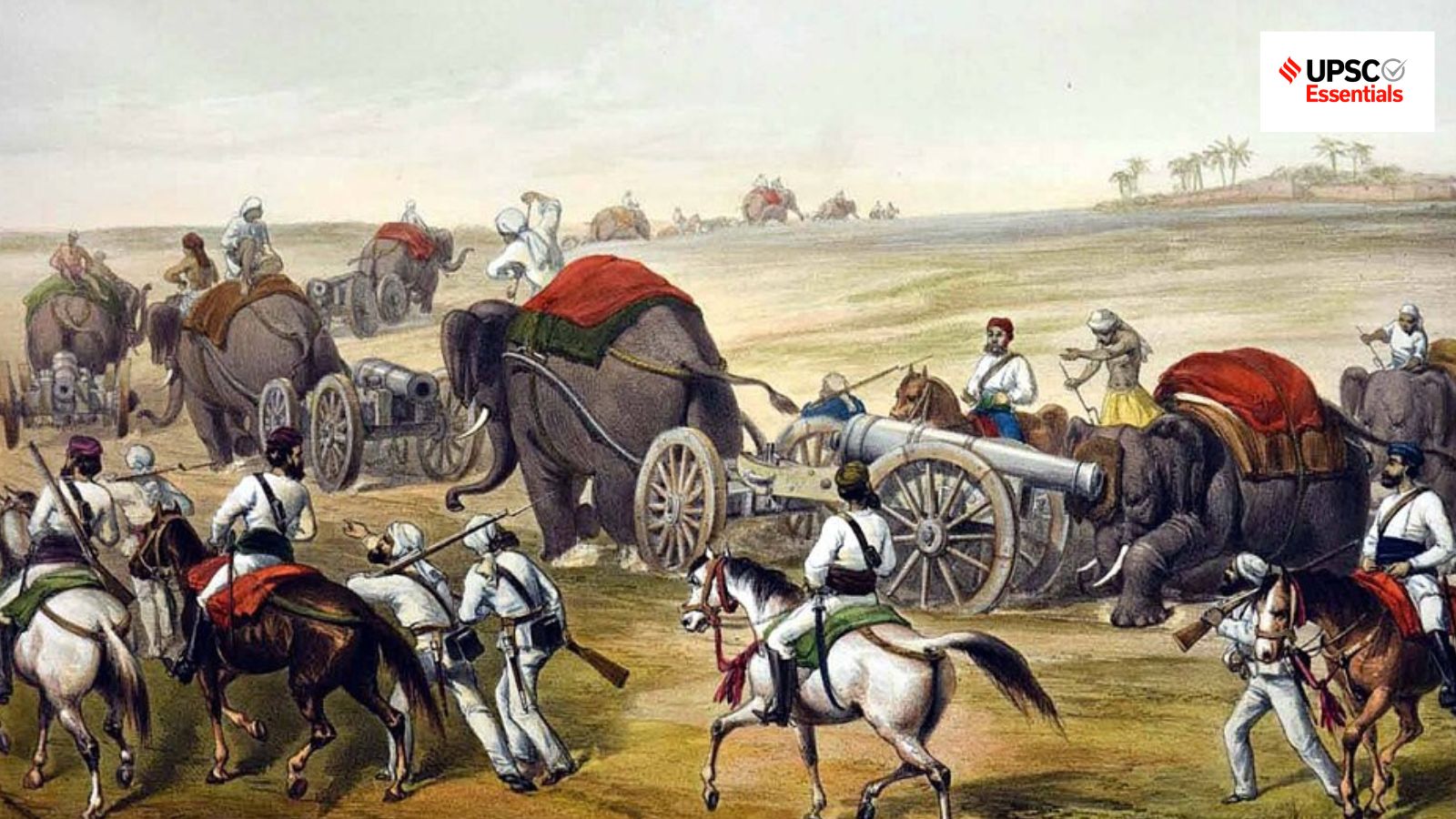
Test your knowledge of India's anti-colonial struggle and cultural heritage with this comprehensive UPSC-focused analysis of the 1857 rebellion and the origins of Snakes and Ladders.
- Deep dive into the role of Kunwar Singh and Begum Hazrat Mahal in the 1857 Revolt.
- Exploration of 'Gyan Chaupar', the spiritual predecessor to the modern Snakes and Ladders game.
- Analysis of the regional and gender-based dynamics of India's first war of independence.
The journey toward mastering the UPSC Civil Services Examination requires more than just rote memorization; it demands a nuanced understanding of the intersection between political rebellion and cultural evolution. The latest subject-wise quiz on History and Culture brings to light critical figures of the 1857 Revolt and the intangible heritage of Indian board games.
The Unsung Heroes of the 1857 Rebellion
The Revolt of 1857 was not a monolithic event but a collection of regional uprisings. One such pivotal figure was Kunwar Singh, the zamindar of Jagdishpur in Bihar. Despite being a septuagenarian, Singh's resilience against British estates deprivation led him to lead sepoys from Dinapore to Arrah, proving that the spirit of independence transcended age.
Equally significant was the role of Begum Hazrat Mahal of Lucknow. Often vilified by British records as an 'unscrupulous woman', her resistance in the Qaisarbagh palace and subsequent retreat into Nepal highlight the strategic depth of women leaders during the uprising. Her legacy remained obscured until post-independence, when Prime Minister Jawaharlal Nehru initiated a search for her grave in Kathmandu, eventually locating it at the Hindustani Masjid in Baghbazar.
Why This Matters
BozokMedia analysis shows that the UPSC is shifting its focus from generic dates to 'personality-based' and 'thematic' history. Understanding the specific grievances of leaders like Kunwar Singh or the exiled struggle of Begum Hazrat Mahal allows aspirants to connect the dots between local grievances and the national movement.
The 1857 revolt was as much a battle of narratives as it was a battle of weapons, where British propaganda attempted to erase the legitimacy of indigenous leadership.
From Spirituality to Play: The Story of Gyan Chaupar
Beyond the battlefield, India's cultural history offers fascinating insights into how morality was taught. Gyan Chaupar, known as the 'Game of Knowledge', is the ancestral root of the global phenomenon Snakes and Ladders. Unlike the modern version, the original Indian game was a tool for spiritual education, utilizing cosmogony and cosmography to illustrate the path to liberation (Moksha) and the pitfalls of vice.
When the British adopted the game, the profound religious texts written in the squares were replaced by simple illustrations or removed entirely, transforming a spiritual guide into a mere pastime. This transition mirrors the broader colonial pattern of stripping indigenous knowledge of its philosophical depth.
| Feature | Gyan Chaupar (Original) | Snakes & Ladders (Modern) |
|---|---|---|
| Purpose | Spiritual/Moral Education | Entertainment/Leisure |
| Content | Cosmography & Religious Verses | Abstract Illustrations |
| Core Theme | Path to Liberation (Moksha) | Luck and Chance |
Frequently Asked Questions
Q1: Who was Kunwar Singh in the context of 1857?
He was a veteran zamindar from Jagdishpur, Bihar, who led a significant armed resistance against the British East India Company.
Q2: How does Gyan Chaupar differ from modern Snakes and Ladders?
Gyan Chaupar was a spiritual tool used to teach the laws of karma and liberation, whereas the modern version is a game of chance.