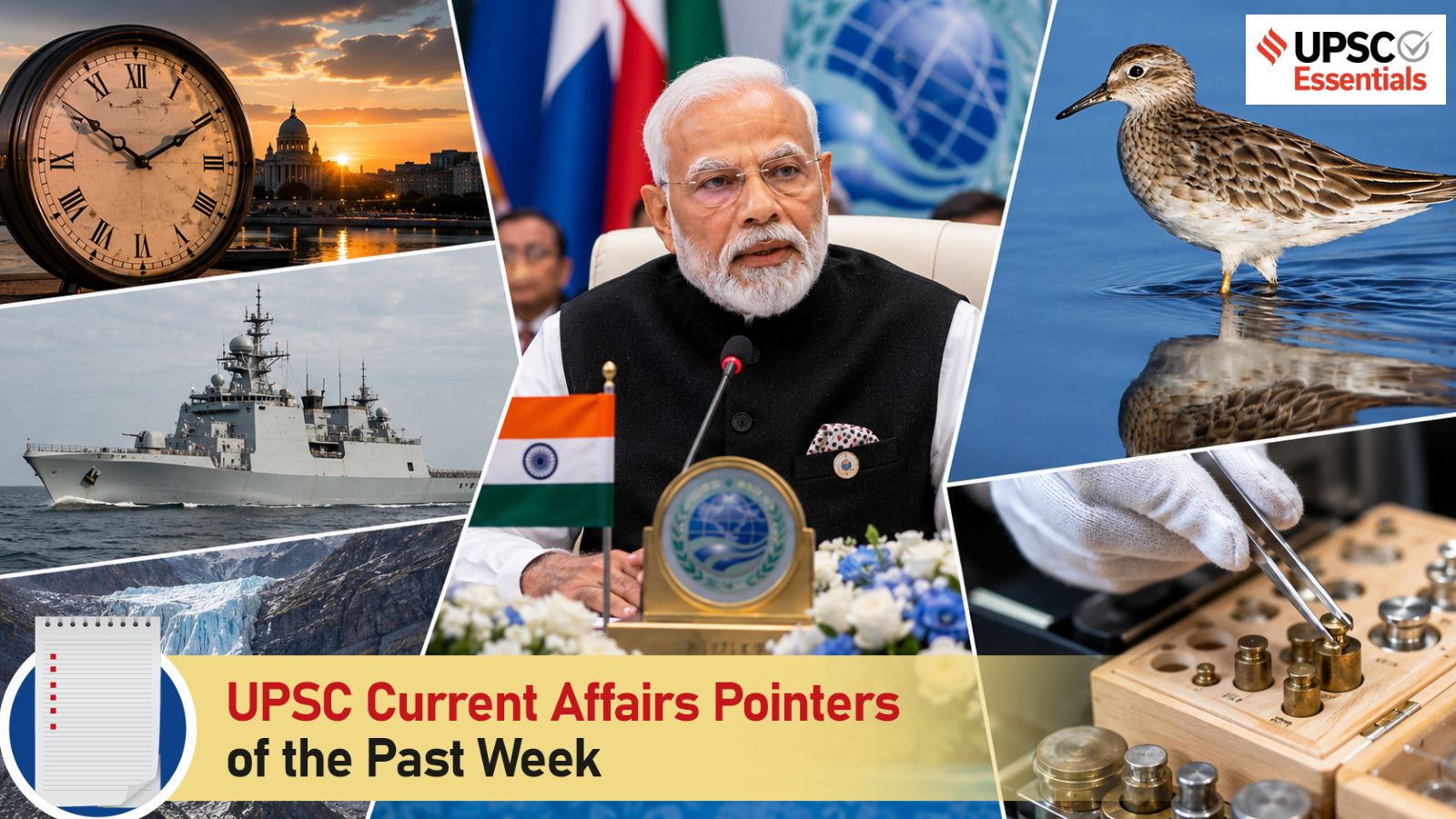
A comprehensive breakdown of this week's most critical UPSC topics, including the UNEP climate overshoot report, the Bishkek Declaration, and key defense updates.
- UNEP reports that breaching the 1.5°C warming threshold is now 'unavoidable'.
- The 26th SCO Summit concluded with the adoption of the 'Bishkek Declaration'.
- Key topics include Semicon 2.0, INS Nipun, and the implications of the Paris Agreement.
For aspirants preparing for the UPSC Civil Services Examination, the week of August 31 to September 6, 2026, has been packed with significant developments spanning environment, international relations, and science & technology.
Climate Crisis: UNEP's 'Limiting Overshoot' Report
The United Nations Environment Programme (UNEP) has released a sobering report titled 'Limiting Overshoot'. The findings suggest that the global community is on an inevitable path to breaching the 1.5°C warming limit set by the 2015 Paris Agreement. Even under optimistic scenarios, temperatures are projected to peak at approximately 1.8°C above pre-industrial levels.
It is crucial to understand that the 1.5°C target is not a 'safety' limit but a threshold to minimize catastrophic risks. While the 2°C limit was the standard for decades, the Cancun Agreements (COP 16) formally introduced the 1.5°C target as the more desirable goal to prevent irreversible damage to ecosystems like the Amazon rainforest.
Why This Matters
BozokMedia analysis shows that the shift from 'mitigation' to 'managing overshoot' will redefine global economic policies. Nations must now transition from merely reaching Net Zero to achieving Net-Negative emissions to stabilize the climate in the long term.
The window to prevent the most severe climate impacts is closing, shifting the global mandate from prevention to active atmospheric restoration.
International Relations: The Bishkek Declaration
The 26th Shanghai Cooperation Organisation (SCO) summit took place in Bishkek, Kyrgyzstan, marking its 25th anniversary. Under the theme "Together for Sustainable Peace, Development and Prosperity," leaders adopted the Bishkek Declaration.
A significant aspect of the declaration was the collective stance against terrorism. The SCO leaders emphasized that "double standards" in combating cross-border terrorism are unacceptable, a statement particularly relevant to India's long-standing diplomatic positions on regional security.
| Metric | 1.5°C Target | 2°C Target |
|---|---|---|
| Primary Goal | Ideal Desirable Limit | Maximum Threshold |
| Risk Profile | Manageable Ecosystem Risks | Irreversible Tipping Points |
| Current Outlook | Likely to be Overshot | Inevitably Exceeded |
Science, Tech, and Defense
Beyond geopolitics, the week saw major updates in the defense and tech sectors. The mention of INS Nipun and the Semicon 2.0 initiative highlights India's push toward technological sovereignty. Additionally, biological terms like Cold Allodynia and environmental phenomena like Hanging Glaciers remain vital for the Prelims syllabus.
Frequently Asked Questions
Q1. Does one hot year mean we have failed the Paris Agreement?
No. The 1.5°C goal refers to the long-term average temperature increase over decades, not a single calendar year's peak.
Q2. What was the theme of the 26th SCO Summit?
The theme was "25 Years of the SCO: Together for Sustainable Peace, Development and Prosperity."