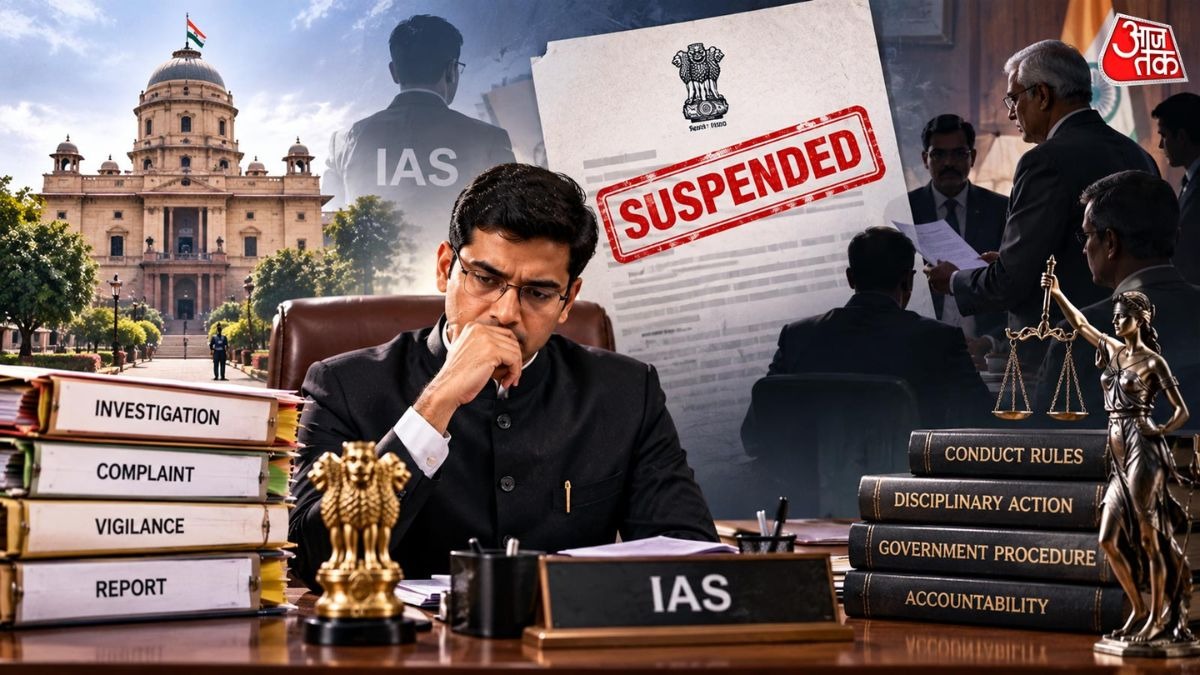
Discover the legal intricacies behind the suspension of an IAS officer. Learn about the 30-day rule, the role of the Central Government, and the protections under Article 311.
- IAS officer suspensions are governed by the 'All India Services (Discipline and Appeal) Rules, 1969'.
- State governments can only suspend an officer for a maximum of 30 days without Central Government approval.
- A detailed report must be submitted to the Central Government within 15 days of suspension.
- Under Article 311, an officer can only be removed by the authority that appointed them.
It is common to see headlines regarding the suspension of an IAS (Indian Administrative Service) officer due to corruption or misconduct. However, the legal mechanism behind such actions is far from straightforward. The question often arises: does a state government have absolute authority to suspend an officer, or is the Center's intervention mandatory?
The Legal Framework: The 1969 Rules
The suspension and disciplinary proceedings of IAS officers are strictly governed by the 'All India Services (Discipline and Appeal) Rules, 1969'. According to these regulations, the government under which the officer is currently serving has the authority to issue a suspension order based on specific circumstances. However, transparency is a prerequisite; the government must state clear reasons for the suspension and immediately notify the 'Cadre Controlling Authority'.
Why This Matters
BozokMedia analysis shows that these stringent protocols are designed to prevent the arbitrary use of power. Without these checks and balances, the administrative machinery could become vulnerable to political whims, undermining the neutrality of the civil services.
The suspension process is a delicate balance between maintaining administrative accountability and protecting officers from undue political pressure.
The Crucial 30-Day Rule
One of the most critical aspects of the law is the time limit imposed on state governments. A state government possesses the power to suspend an IAS officer for a duration of only 30 days. If the investigation is not concluded within this window and the suspension needs to be extended, the state must seek formal permission from the Central Government. Conversely, for officers working directly under the Central Government, suspension can only occur following the recommendations of the Central Review Committee.
Historical Context and Constitutional Safeguards
To ensure the independence of the bureaucracy, the Indian Constitution provides significant safeguards under Article 311. This article mandates that no civil servant shall be dismissed or removed by an authority subordinate to that by which they were appointed. This historical safeguard was implemented to ensure that officers can perform their duties without fear of retaliatory actions from local political leaders.
Frequently Asked Questions
Q1: Can a state government suspend an IAS officer indefinitely?
A: No, they can only do so for 30 days. Any extension requires explicit approval from the Central Government.
Q2: How long does the government have to report a suspension to the Center?
A: A detailed report regarding the suspension must be submitted to the Central Government within 15 days.