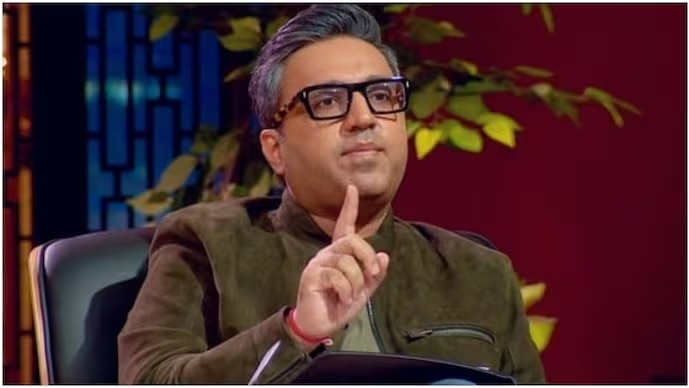
Entrepreneur Ashneer Grover has sparked a national debate by claiming Delhi University needs a $2 billion overhaul to compete globally. The call comes amid rising concerns over decaying hostels and the increasing trend of students migrating abroad for better facilities.
- Ashneer Grover suggests a ₹20,000 crore ($2 billion) investment is essential to make DU world-class.
- Only 19 out of 90+ DU colleges currently provide hostel facilities, creating a massive housing crisis.
- Regulatory hurdles and airport proximity restrictions hinder vertical expansion in South Campus.
- Infrastructure gaps are cited as a primary driver for talented Indian students seeking education abroad.
The discourse surrounding India's higher education infrastructure has reached a fever pitch following a tragic building collapse in Satya Niketan. Ashneer Grover, the co-founder of BharatPe and former Shark Tank India judge, has entered the fray, arguing that Delhi University (DU) requires a massive capital injection to shed its outdated image and emerge as a global academic powerhouse.
Taking to X (formerly Twitter), Grover asserted that an investment of at least $2 billion (approximately ₹20,000 crore) is necessary. His comments were a response to allegations that no new hostels have been constructed since 2014, highlighting a systemic failure in prioritizing student welfare over political infrastructure.
The Crisis of Accommodation
The statistics regarding DU's residential capacity are startling. Out of more than 90 colleges, a mere 19 offer hostel facilities. Even among these, Hindu College, one of the most prestigious institutions, only provides around 560 beds—a drop in the bucket compared to the thousands of students who migrate to the capital every year via the CUET-UG process.
Why This Matters
BozokMedia analysis shows that this is not merely a question of bricks and mortar, but of competitive edge. When students from diverse economic backgrounds enter DU, the lack of affordable, safe housing forces them into unregulated PGs, as seen in the Satya Niketan incident. If India's premier public university cannot guarantee basic living standards, the 'Brain Drain' to foreign universities becomes an inevitability rather than a choice.
"The gap between academic prestige and physical infrastructure is the single biggest deterrent for domestic talent staying in India."
Logistical and Regulatory Hurdles
The struggle is not solely about funding. Professor Vajala Ravi, Principal of Sri Venkateswara College, highlighted the 'wartime effort' required just to build a single room. Constraints such as airport proximity and local zoning laws prevent vertical expansion, leaving colleges trapped in decades-old buildings that are struggling to support a modern student population.
| Feature | Current DU State | World-Class Standard |
|---|---|---|
| Hostel Availability | ~21% of Colleges | Comprehensive On-Campus Housing |
| Infrastructure Age | Decades-old / Dilapidated | Smart Campuses / Sustainable Tech |
| Expansion Capability | Strict Regulatory Limits | Planned Urban Academic Zones |
As the landscape of higher education evolves, with private universities investing heavily in state-of-the-art campuses, DU's reliance on stagnant government allocations is becoming a liability. The correlation between poor campus facilities and the surge in study-abroad applications is a signal that the Indian education system needs a paradigm shift in funding.
Frequently Asked Questions
Q1: Why is it difficult to build new hostels in DU's South Campus?
Construction is hampered by strict regulatory constraints and height restrictions due to the proximity of the Delhi airport.
Q2: What is the link between DU's infrastructure and students going abroad?
Students often seek foreign universities not just for curriculum, but for superior living facilities, research labs, and overall campus quality of life.