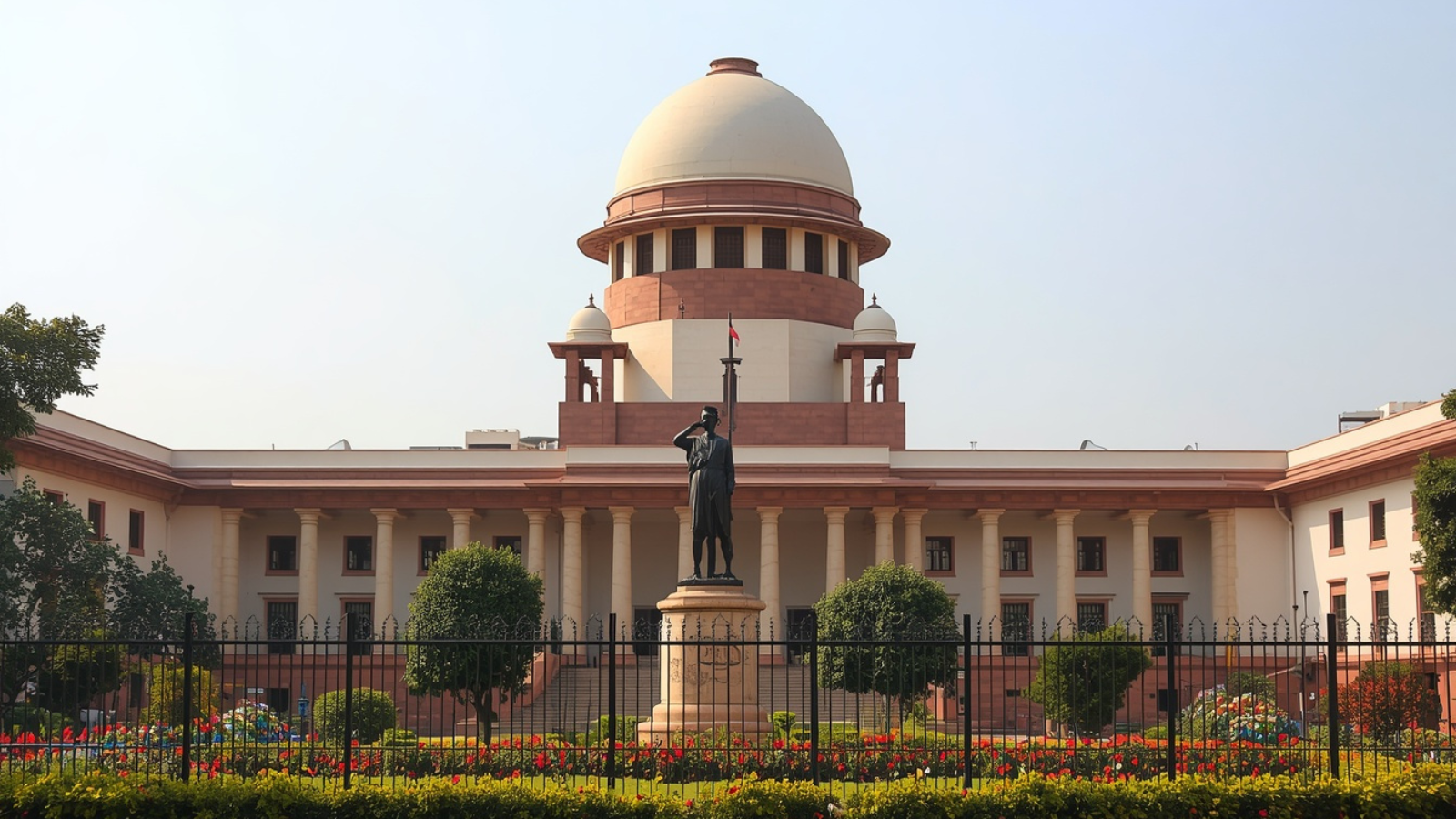
The Supreme Court has rejected pleas to re-constitute the high-powered committee probing police excesses during NEET UG protests, stating it will not act on presumptions of bias against its own appointed members.
- SC refuses to change the 5-member committee led by Justice R Subhash Reddy.
- CJI Surya Kant stated the committee is an "extended hand" of the court.
- The probe covers both police brutality (including pellet guns) and violence by protesters.
- A public notice will be issued to allow citizens to submit evidence to the committee.
New Delhi: In a decisive hearing on Thursday, the Supreme Court of India made it unequivocally clear that it will not agree to any changes or re-constitution of the five-member high-powered committee tasked with examining allegations of police excesses and violence during the recent student-led NEET UG protests in Delhi.
A bench comprising Chief Justice of India Surya Kant, Justice Joymalya Bagchi, and Justice V Mohana asserted that the court would not proceed on the mere presumption that a committee constituted by the apex court was biased. "Committee is our extended hand. We will not agree to any changes," the CJI observed, adding that the court is not "running away" and would hold an open hearing if the committee's findings are later found to be flawed.
The Conflict of Interest Argument
The request for re-constitution was pushed by advocate Prashant Bhushan and senior advocate Gopal Sankaranarayanan. They argued that one member of the panel—a former DGP of a north-eastern state—suffered from a "conflict of interest" due to close ties with a high-ranking official likely to be under investigation. They further demanded that the committee be represented by an independent amicus and Advocate-on-Record rather than government counsel.
Solicitor General Tushar Mehta vehemently opposed these submissions, suggesting that the petitioners viewed almost everyone in the country as dishonest. The bench clarified that the retired Meghalaya DGP was specifically chosen to ensure the committee remained insulated from the political influences of mainland India.
Why This Matters
BozokMedia analysis shows that this judicial standoff highlights the tension between the demand for absolute neutrality in probes and the court's need to maintain the authority of its appointed bodies. By refusing to blink, the Supreme Court is reinforcing the sanctity of its administrative decisions, signaling that accusations of bias must be backed by concrete evidence rather than suspicion.
The integrity of a judicial probe rests not just on the members' profiles, but on the transparency of the process and the oversight of the court.
To ensure transparency, the bench announced that a public notice would be issued. This allows any individual or entity to submit viewpoints, documents, or evidence to the committee. A Member Secretary, likely a retired judicial officer, will act as the custodian of these records.
Historical Background: The unrest was spearheaded by the Cockroach Janta Party (CJP), with students demanding the resignation of Union Education Minister Dharmendra Pradhan. The agitation, which peaked during a march to Parliament on July 20, saw the use of lathis and teargas. The protests eventually concluded on July 25 after Pradhan resigned and the government met other core demands.
Frequently Asked Questions
Q1: What is the scope of the High-Powered Enquiry Committee (HPEC)?
A: The HPEC is investigating the use of excessive force by police, including the deployment of pellet guns, as well as violence perpetrated by protesters against security personnel.
Q2: How can a citizen provide evidence to the committee?
A: The Supreme Court will issue a public notice inviting individuals to submit their viewpoints, information, or evidence to the Member Secretary of the committee.