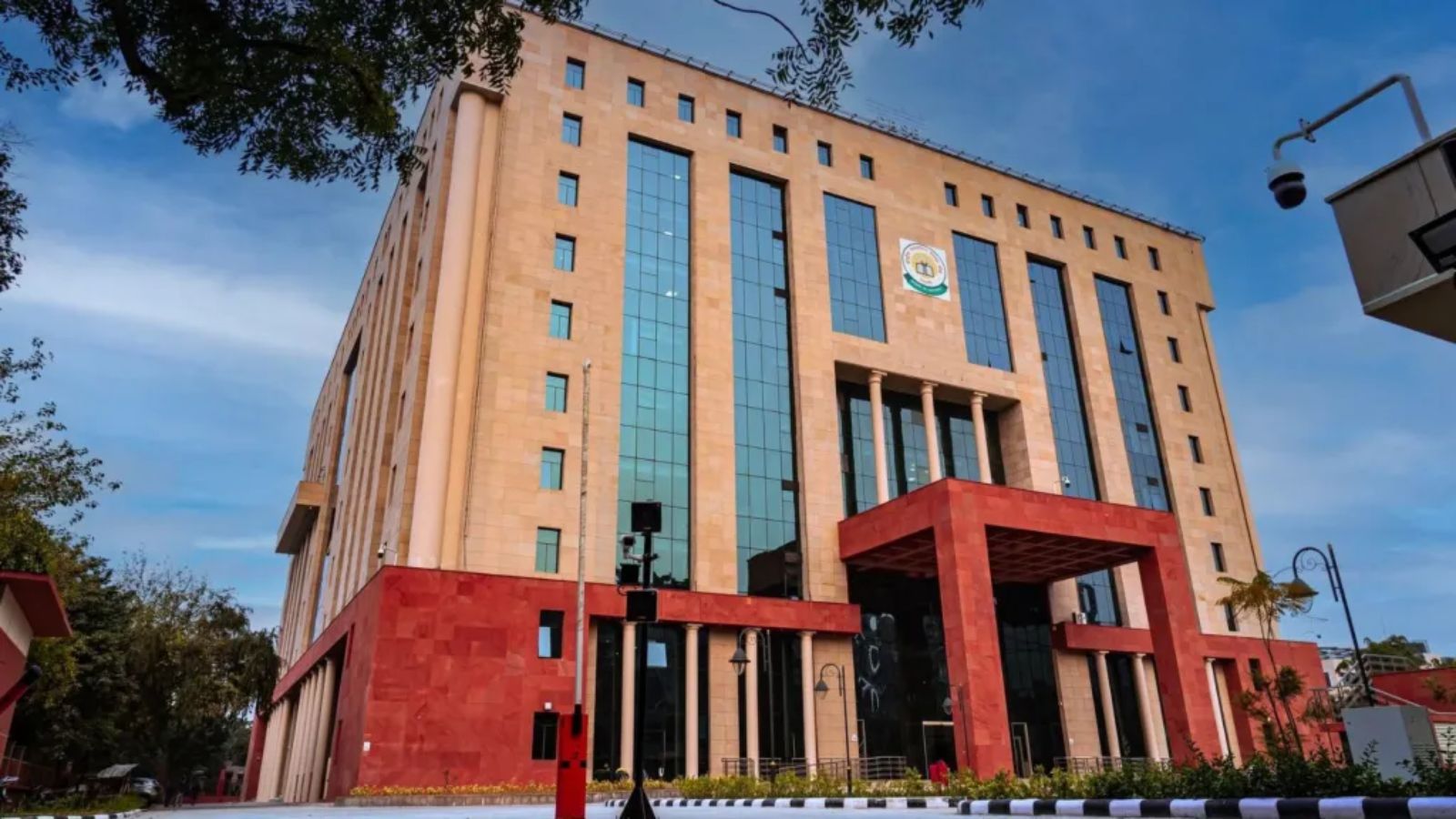
The Supreme Court has urged the CBSE to provide relief to current Class 6 students regarding the mandatory three-language policy. The court emphasized that children should not face undue pressure during the implementation of the National Education Policy.
- Supreme Court suggests exempting current Class 6 students from the three-language mandate.
- The policy requires students to study three languages, including at least two native Indian languages.
- The court raised concerns over the lack of human resource infrastructure for language teaching.
- The matter is deferred to September 17 for further hearings.
The Supreme Court of India has stepped in to address the growing anxiety among students and parents regarding the Central Board of Secondary Education (CBSE)'s three-language policy. A three-judge bench, led by Chief Justice of India (CJI) Surya Kant, has asked the board to consider providing an accommodation or exemption for the current batch of Class 6 students for this academic session.
The legal battle centers on a circular issued by the CBSE, which aligns its curriculum with the National Education Policy (NEP) 2020 and the National Curriculum Framework for School Education (NCF-SE) 2023. Under these guidelines, studying three languages—specifically including two native Indian languages—has become compulsory for students reaching Class 9. The controversy erupted when the implementation phase began affecting younger batches, including those currently in Class 6.
Why This Matters
BozokMedia analysis shows that this case highlights a critical gap between policy formulation and ground-level execution. While the intent to promote indigenous languages is aligned with cultural preservation, the sudden imposition without adequate teacher training and infrastructure creates an academic burden on students. The Supreme Court's intervention signals that the judiciary will prioritize student mental health and practical feasibility over rigid policy timelines.
During the proceedings, the bench, which included Justices Joymalya Bagchi and V Mohana, expressed concern that children should not be subjected to excessive pressure. The court specifically questioned the board on how it intends to build the necessary human resource infrastructure to support a diverse array of language options across various schools.
"The transition to a multi-language framework cannot be successful without a parallel investment in linguistic educators and updated pedagogical tools."
Solicitor General Tushar Mehta, representing the government, requested a deferment of the hearing due to the absence of Additional Solicitor General Aishwarya Bhati. However, he assured the court that officials would discuss the bench's suggestion to provide a reprieve to Class 6 students and revert with a decision.
Adding another layer of complexity, senior counsel for the petitioners argued that the CBSE lacks the jurisdiction to frame the curriculum for classes 6 to 8, asserting that such authority rests solely with the NCERT. This challenge questions the very legal foundation of the CBSE's current mandate for middle-school language requirements.
| Feature | Previous Approach | New NEP/CBSE Policy |
|---|---|---|
| Language Requirement | Flexible/Variable | Mandatory 3 Languages |
| Native Language Focus | Optional/Limited | At least 2 Native Indian Languages |
| Foreign Language Status | Often Primary Choice | Third or Fourth Language Only |
Frequently Asked Questions
Q1: Is the three-language policy mandatory for all CBSE students?
Yes, according to the recent circular, it is mandatory for students by Class 9, though the Supreme Court is currently reviewing the implementation for younger batches.
Q2: Can a student still choose a foreign language?
Yes, but only as a third language (after two native Indian languages) or as an additional fourth language.