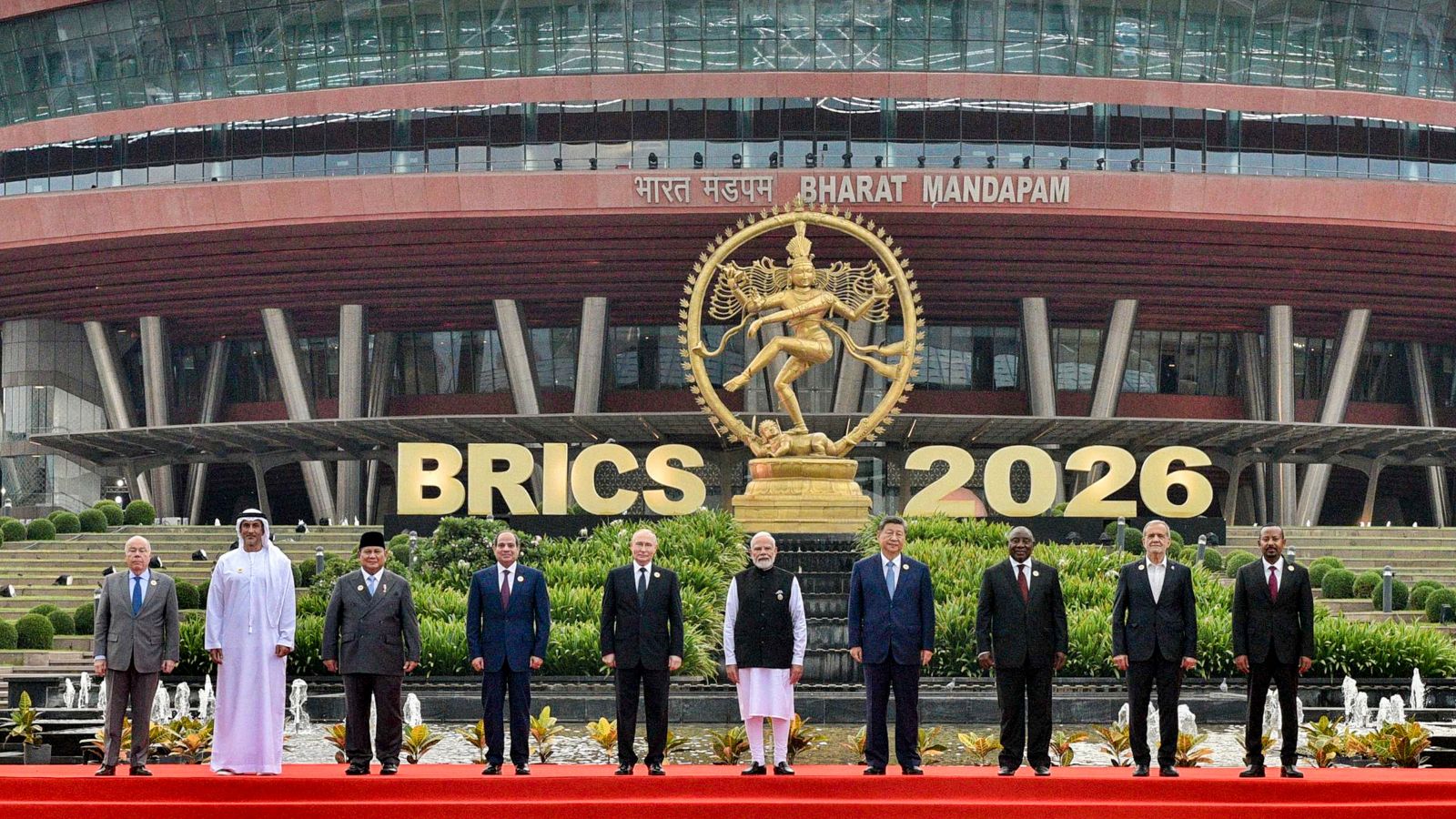
BRICS leaders have backed the human-centric use of AI in education and are exploring a dedicated BRICS University Global Ranking and Evaluation System. India's initiative to integrate indigenous knowledge was highly lauded.
- BRICS leaders endorsed the safe and ethical use of AI in educational frameworks.
- Development of a 'BRICS University Global Ranking and Evaluation System' is underway.
- India's initiative on traditional and indigenous knowledge systems received strong support.
- Emphasis on digital literacy, skill development, and TVET-industry linkages.
New Delhi: In a significant move toward reshaping the global academic landscape, leaders of the BRICS nations on Saturday endorsed the sharing of best practices in education, specifically focusing on the human-centered use of emerging technologies like Artificial Intelligence (AI). A major highlight of the discussions was the exploration of a dedicated BRICS University Global Ranking and Evaluation System, aimed at providing an alternative to existing Western-dominated academic metrics.
The leaders reaffirmed their commitment to strengthening cooperation through existing mechanisms, most notably the BRICS Network University. In a joint declaration, the summit leaders expressed deep appreciation for India’s leadership in circulating the 'BRICS Guiding Principles' for strengthening academic collaboration on traditional and indigenous knowledge systems. They encouraged the BRICS Network University to consider including these local knowledge systems as an official International Thematic Group (ITG).
Why This Matters
BozokMedia analysis shows that this initiative represents a strategic shift toward academic decolonization. By creating their own ranking system and integrating indigenous knowledge, BRICS nations are building a multilateral educational ecosystem that reflects the values and realities of the Global South, rather than relying solely on Eurocentric standards.
The integration of AI and indigenous wisdom marks the beginning of a new era in multilateral educational diplomacy.
Beyond technology, the leaders emphasized cooperation in Early Childhood Care and Education (ECCE), Foundational Literacy and Numeracy (FLN), and digital literacy. There was also a strong call for the mutual recognition of qualifications to enhance academic and professional mobility among member states, ensuring that talent can move seamlessly across borders.
Historical Background: The BRICS bloc has evolved from an economic grouping into a comprehensive geopolitical force. As the group expands, its focus has shifted toward deep institutional integration, including science, technology, and education, to create a self-sustaining ecosystem of innovation and shared knowledge.
| Focus Area | Proposed Action |
|---|---|
| Technology | Ethical & Human-centric AI Integration |
| Ranking | Development of BRICS Global Ranking System |
| Knowledge | Integration of Indigenous & Traditional Systems |
| Skills | Strengthening TVET-Industry Linkages |
Frequently Asked Questions
1. What is the significance of the BRICS University Global Ranking System?
It aims to create a more inclusive and representative evaluation system for universities that considers the specific strengths and contexts of BRICS nations.
2. How is India contributing to this educational initiative?
India has spearheaded the movement to include traditional and indigenous knowledge systems within the BRICS academic framework.