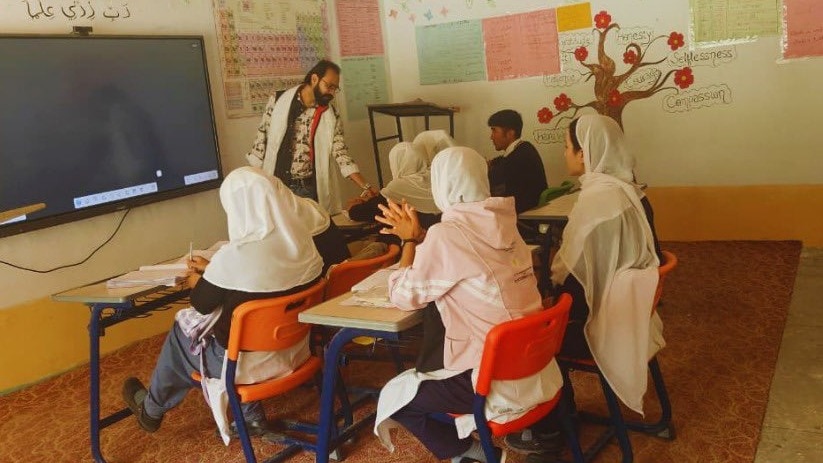
The National Law Scholars Programme (NLSP) is bridging the gap between rural talent and elite law schools. By providing full funding and specialized coaching, it is transforming lives.
- NLSP provides comprehensive support for Navodaya students preparing for the CLAT exam.
- The initiative is a fully funded, two-year residential program.
- The program bridges the linguistic and economic gap that prevents rural students from entering National Law Universities (NLUs).
For Anshita Rani, a student from a small village in Uttar Pradesh, the path to justice was once illuminated only by a flickering rechargeable lamp during power cuts. Today, that same determination has led her to the final year of her law degree at the prestigious National Law University, Jodhpur. Her journey is a testament to the power of targeted intervention.
The National Law Scholars Programme (NLSP), launched in 2019 as a collaboration between the Navodaya Vidyalaya Samiti and alumnus Anoop Maurya, is specifically designed to identify promising students within the Navodaya network. It aims to prepare them for the highly competitive Common Law Admission Test (CLAT) and support them through the rigors of law school.
Why This Matters
BozokMedia analysis shows that the legal profession in India has long been dominated by urban, English-speaking elites. By systematically dismantling the financial and linguistic barriers for rural students, NLSP is not just changing individual lives—it is diversifying the very fabric of India's legal landscape and future policy-makers.
CLAT has become an 'anti-poor exam' due to its heavy reliance on complex English passages, a hurdle NLSP is specifically designed to overcome.
The program's structure is intensive. Selected scholars participate in a two-year residential phase, currently based in Hyderabad. During the day, they attend local JNV schools, and in the evenings, they receive specialized coaching. This holistic approach ensures that students are not just academically prepared, but also socially integrated into the competitive environment of law school.
The impact is measurable. Out of 150 scholars selected over the last seven years, 120 successfully completed the residential program and transitioned into law schools. Many are now studying at top-tier National Law Universities (NLUs), receiving continuous financial assistance that covers tuition fees amounting to several lakhs of rupees.
For students like Vedant Deshmukh from Maharashtra, the program was a lifeline. Coming from a background where law was seen as an unaffordable luxury, the mentorship and alumni network provided by NLSP gave him the confidence to pursue his studies at Rashtrasant Tukadoji Maharaj Nagpur University.
| Feature | Standard Aspirant | NLSP Scholar |
|---|---|---|
| Financial Support | Self-funded/Loans | Fully Funded |
| Language Prep | Self-study | Integrated Coaching |
| Mentorship | Limited | Strong Alumni Network |
Frequently Asked Questions
1. What is the primary goal of the NLSP?
The primary goal is to bring students from rural and underprivileged backgrounds into India's most competitive law schools by providing academic and financial support.
2. How does the program address the English language barrier?
The program provides specialized coaching to help students navigate the English-intensive nature of the CLAT examination.