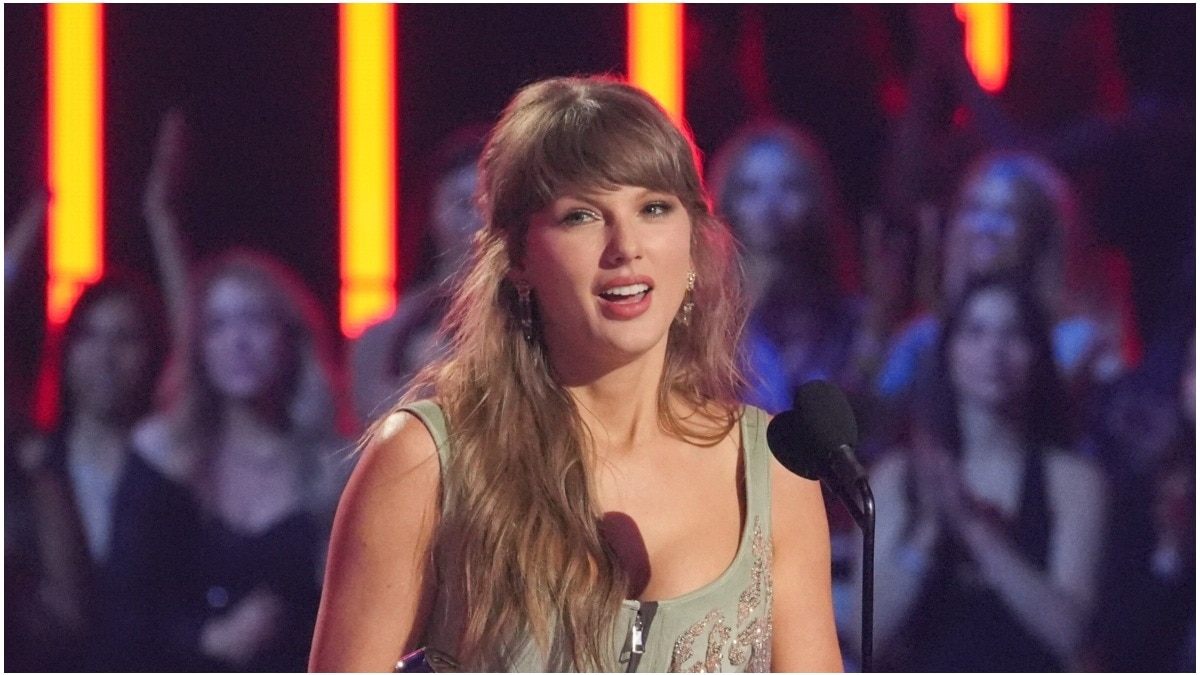
Global superstar Taylor Swift has opened up about the deliberate misinterpretations and intense public hostility she faced during her Reputation era, explaining how she channeled that energy into her music.
- Taylor Swift discussed the deliberate mockery she faced during her Reputation era.
- She highlighted the futility of defending oneself during a 'hate frenzy.'
- Music served as her primary escape and tool for resilience.
Global pop icon Taylor Swift has shared profound insights into one of the most turbulent periods of her career. Speaking at the Grammy Museum in Los Angeles, Swift reflected on her 'Reputation' era, describing it as a time characterized by a 'hate frenzy' and intentional public misunderstanding.
During 'The Icon Sessions with Taylor Swift: A 20-Year Retrospective,' hosted by Recording Academy CEO Harvey Mason Jr., Swift revealed that the backlash wasn't just accidental. She noted that people were actively working to misinterpret her words and actions to paint her in a negative light.
Why This Matters
BozokMedia analysis shows that Swift's experience serves as a landmark case study in celebrity culture and the psychological impact of mass public scrutiny. Her refusal to engage in defensive rhetoric, opting instead for creative redirection, marks a significant shift in how public figures manage reputation crises in the digital age.
When people are in a hate frenzy, any attempt to explain yourself will only result in your sincerity being mocked even further.
Swift compared the phenomenon to middle school dynamics, where a group decides to point and mock an individual. She explained that in such environments, attempting to defend one's character often exacerbates the situation. Instead of fighting the narrative through words, she chose to fight it through art.
Historical Background: The Reputation Era
Released in 2017, the 'Reputation' album was Swift's response to a period of intense media scrutiny and public fallout. While her previous works often leaned into romanticism, 'Reputation' embraced themes of betrayal, vengeance, and ultimately, finding love amidst the chaos. It was a sonic transformation that redefined her artistry and helped her reclaim her narrative.
Looking back, Swift expressed immense pride in her ability to navigate that darkness. She described using music as a way to 'barrel roll' out of attempts to drive her insane, turning hostility into a playful and self-aware creative masterpiece.
Frequently Asked Questions
1. What does Taylor Swift mean by 'hate frenzy'?
She refers to the period when public perception was driven by collective mockery and intentional misinterpretations of her character.
2. What was her advice to young songwriters?
She encouraged them to maintain their enthusiasm, embrace collaboration, and continue showing up despite challenges.
:max_bytes(150000):strip_icc():focal(749x0:751x2)/Witney-Carson-Vultures-Reality-Masterminds-Celebration-051226-b367096f9db74215bc3586fa93313e2f.jpg)

