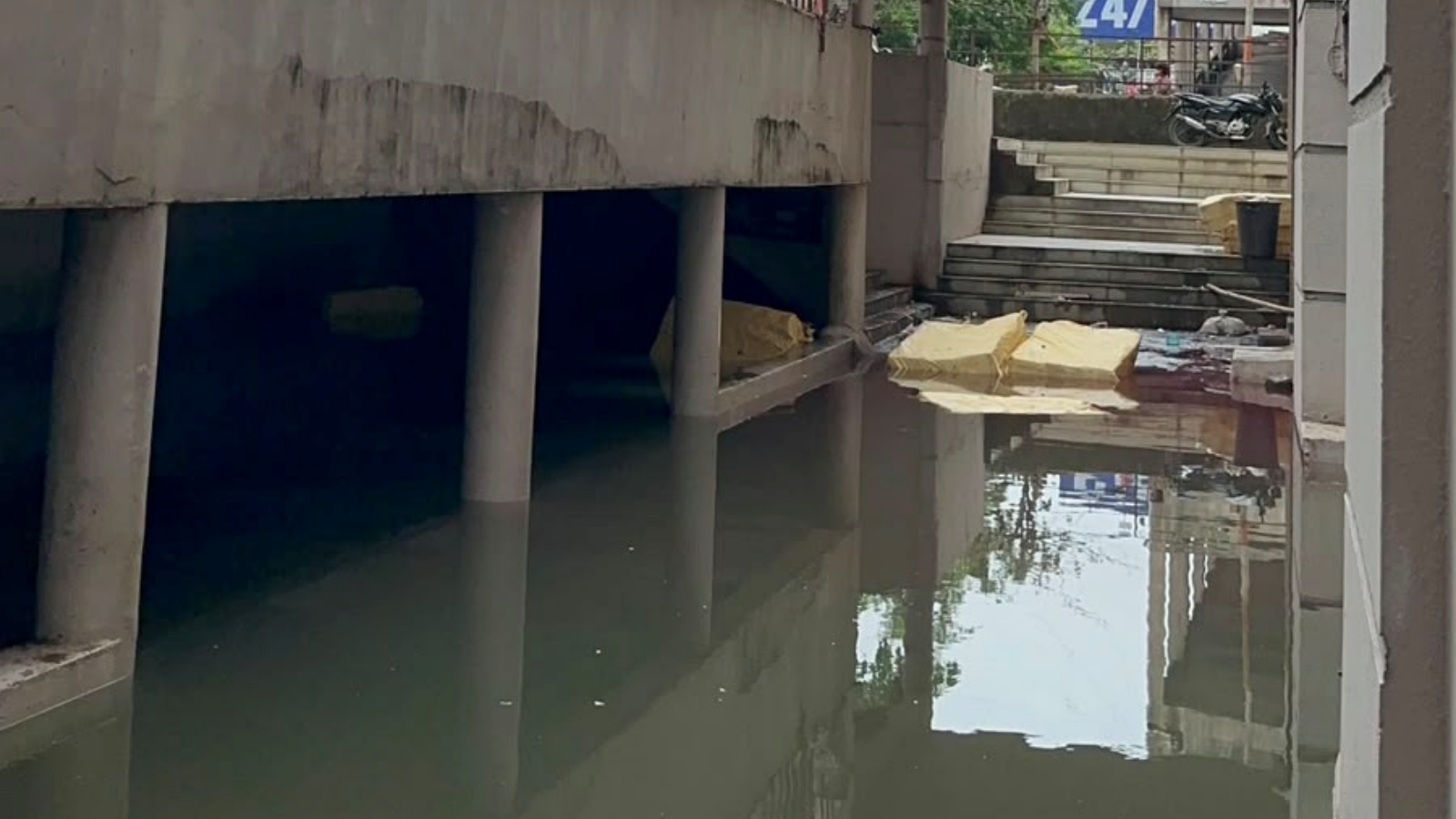
On July 7, record rainfall of up to 14.5 inches inundated Surat’s Mithi and Bhedwad creeks, prompting mass evacuations. Within three days, more than 1.1 billion litres of water were extracted from basements, while health camps treated hundreds of flood‑related ailments.
मुख्य बिंदु (Key Takeaways)
- July 7 saw 14.5 inches of rain trigger massive flooding in Surat.
- Over 1.1 billion litres of water—equivalent to 400 Olympic‑size pools—were pumped out of basements.
- Health camps reported 991 skin‑disease cases, 404 fevers and numerous other ailments.
On July 7, the Gujarat city of Surat experienced an unprecedented downpour of up to 14.5 inches (approximately 37 cm) of rain. The deluge swelled the Mithi and Bhedwad creeks, flooding large swathes of East Surat—including Varachha, Udhna, Limbayat, Sachin and Punagam—and forced authorities to evacuate thousands of residents.
Pumping Out a Billion Litres
According to the Surat Municipal Corporation (SMC), more than 254 pumps and auxiliary machinery were deployed over the subsequent three days. The combined effort removed roughly 1.11 billion litres (about 1 billion litres) of water from residential towers, commercial complexes and public spaces. To put the volume in perspective, it could fill 400 Olympic‑size swimming pools.
SMC Additional City Engineer MD Chavda said, “All affected zones were de‑watered, after which cleaning operations began. Full restoration may still take several months.” The sheer scale of the operation underscores the strain on the city’s drainage network.
Health Impact and Relief Camps
Beyond property damage, the flood created a public‑health crisis. The municipal health wing set up 15 medical camps across the hardest‑hit neighborhoods. In total, 4,529 people visited the camps, where 991 were diagnosed with skin infections—likely caused by prolonged exposure to contaminated water—404 with fever, 400 with respiratory problems, and 264 with common colds. Fourteen patients required admission to SMC hospitals.
Dr. Pradeep Umrigar, SMC medical officer, highlighted Udhna A zone as the hotspot for skin‑disease cases, with Kamrunagar reporting the highest count (190 cases), followed closely by Azadnagar (185) and Sanjaynagar (168).
Historical Context and Future Preparedness
Surat, known as the “Diamond City,” has a history of flood events, but rapid urban expansion and inadequate storm‑water channels have amplified vulnerability. Climate‑change experts warn that extreme rainfall events are becoming more frequent, demanding a re‑evaluation of existing drainage infrastructure.
Long‑term solutions include expanding and deepening storm‑water drains, constructing retention basins, and integrating green‑infrastructure such as rain gardens and permeable pavements. Without such upgrades, the city risks repeating the same cycle of devastation.
Socio‑Economic Repercussions
The inundation crippled local markets and commercial complexes, halting daily commerce and threatening livelihoods. While immediate relief measures are underway, the economic fallout may persist, affecting employment and income for months. Coordinated government assistance and swift reconstruction will be pivotal in mitigating long‑term losses.
Overall, the Surat flood of July 7 serves as a stark reminder that existing urban water‑management systems are ill‑equipped for extreme weather. Comprehensive infrastructure upgrades, coupled with proactive disaster‑response planning, are essential to safeguard the city’s future.