Through the innovative 'straw checkerboard' technique, China is successfully reclaiming over 1,000 sq km of desertified land annually. A 50-year ecological battle is turning sands into forests.
Key Takeaways
- China's 'Three-North Protective Forest Program' has been fighting desertification for nearly 50 years.
- The 'Straw Checkerboard' technique stabilizes shifting sands and protects young saplings.
- Desertified land is shrinking by more than 1,000 sq km every year since 2000.
- Forest cover in the target zones has increased from 5% in 1978 to 14% by 2022.
For nearly half a century, a quiet revolution has been unfolding across the vast, arid landscapes of northern China. What began as a desperate attempt to halt the advancing sands has transformed into one of the most significant ecological restoration projects in human history. Known as the 'Green Great Wall', this massive undertaking is successfully shrinking China's desert footprint by more than 1,000 square kilometers every year.
The Science of the Straw Checkerboard
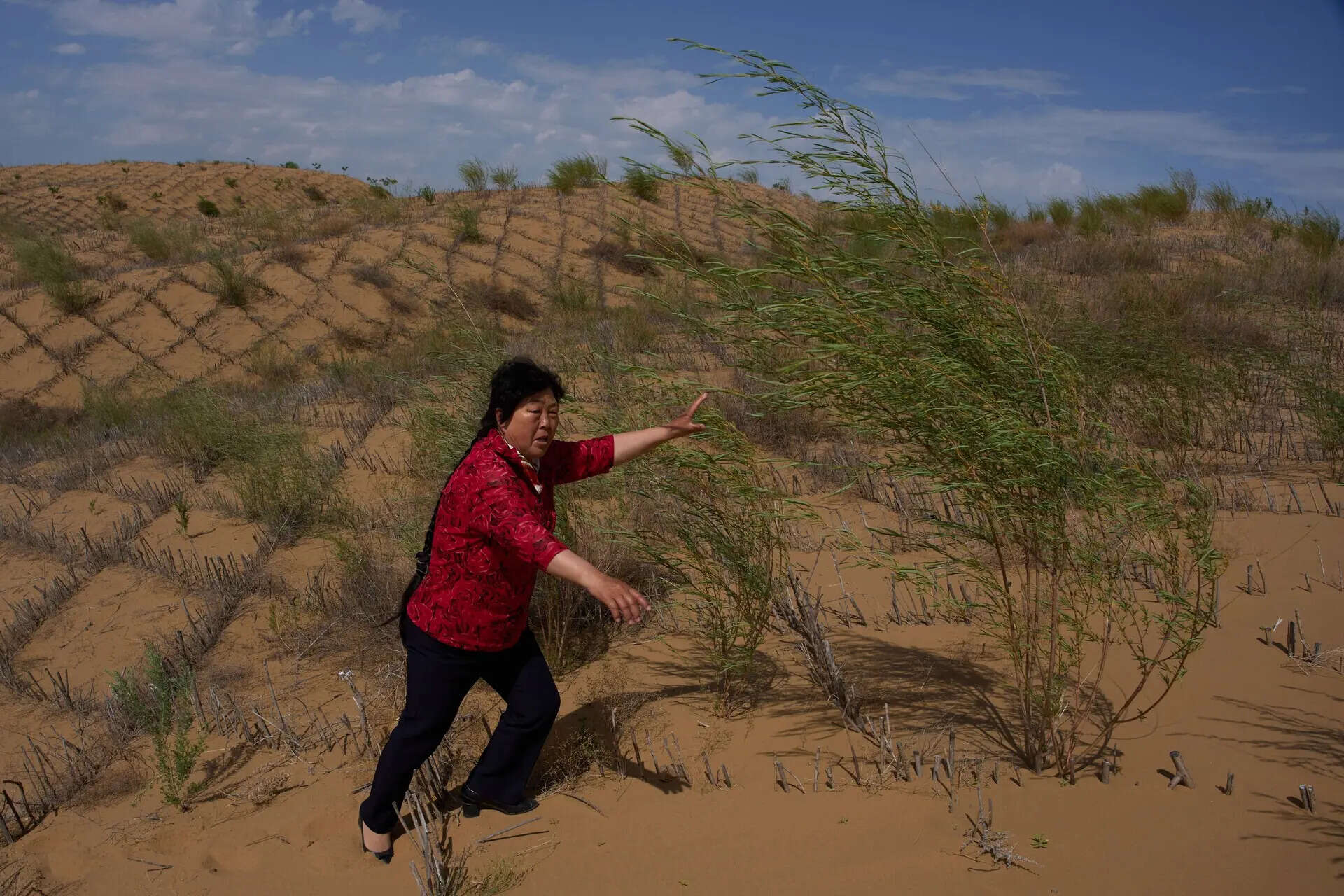
At the heart of this environmental triumph lies a deceptively simple method: the 'straw checkerboard'. Workers meticulously press bundles of straw into the loose desert sand, creating a vast, interlocking lattice pattern across the dunes. This grid serves a dual purpose: it anchors the shifting sand, preventing the fierce desert winds from creating massive dust storms, and it creates protected micro-environments.
Inside each small square created by the straw, workers plant tiny saplings. These grids act as windbreaks, allowing the fragile plants to take root without being buried or uprooted by the elements. With strategic irrigation, these small pockets of life gradually expand, eventually turning barren wastes into stable, forested ecosystems.
Decades of Dedication and Data-Driven Success
The scale of this transformation is staggering. According to environmental scientist Zhu Jiaojun, the progress is clearly visible in the data. Since the year 2000, when desertification reached its peak in northern China, the country has seen a 10% reduction in desertified land and a more than 40% drop in severely degraded areas. The forest cover within the program zones has climbed from a meager 5% in 1978 to approximately 14% by 2022.
However, the true impact is best understood through the lives of the 300 million rural laborers who have contributed to this cause. For workers like Yin Yuzhen, the project is not just about statistics; it is about visibility and survival. Where once there was only a blinding blur of dust, there is now the ability to see the sun, the road, and the encroaching green. This massive mobilization of human labor demonstrates the power of long-term political commitment to environmental sustainability.