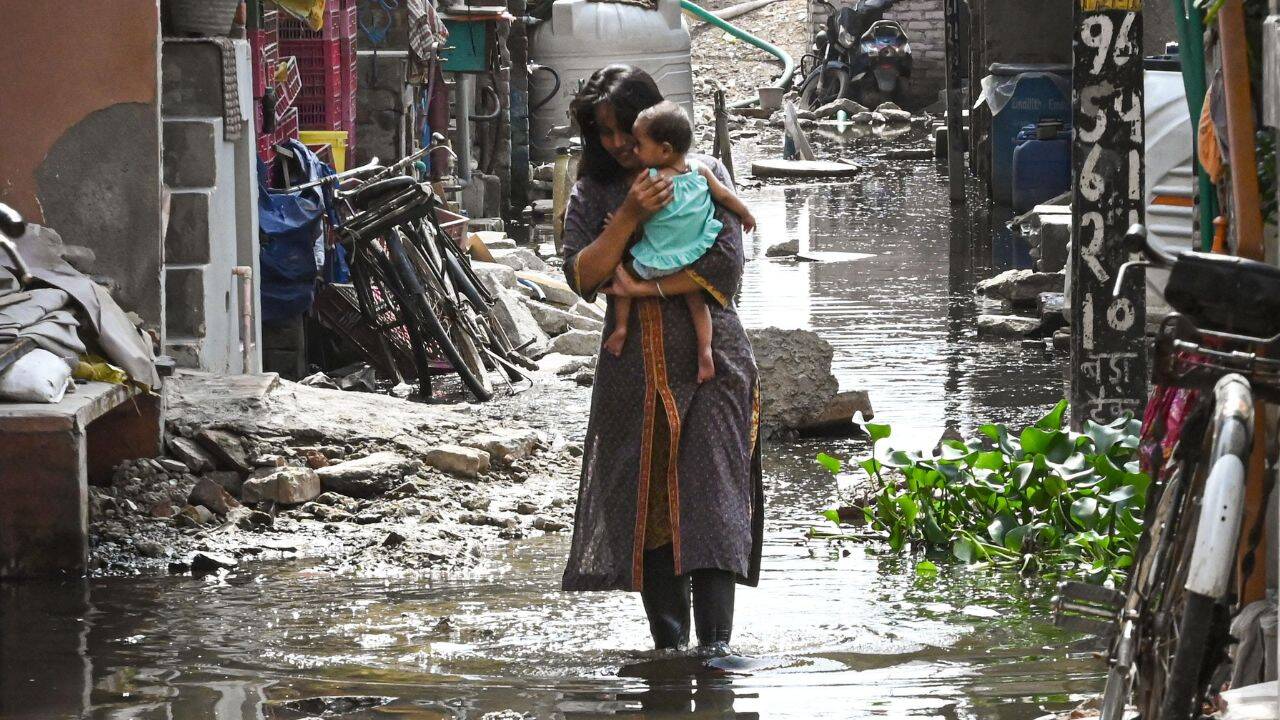
Residents of Kirari are battling sewage‑filled waters and rising illnesses after the heaviest monsoon rains. Schools remain underwater, public parks turn into lakes, and authorities have begun temporary drainage work, but relief remains distant.
Key Takeaways
- Kirari still water‑logged, many homes submerged
- Schools closed, disrupting children’s education
- Local authorities have launched temporary drainage solutions
Kirari, a low‑lying neighbourhood in north‑west Delhi, remains under water a week after the city’s heaviest monsoon downpour. Stagnant, sewage‑laden water has engulfed homes, turned public parks into filthy lakes and submerged school campuses, leaving residents in a state of chronic distress.
Impact on Daily Life
Seventy‑year‑old Sushila, who has placed bricks on the floor to create a makeshift walkway, described her situation as “living in hell.” Her three‑year‑old grandson, a five‑year‑old granddaughter and her son have all fallen ill, reflecting the health hazards of contaminated water. Thousands of families now navigate streets filled with sewage, while snakes and swarms of mosquitoes add to the danger.
Education on Hold
Two government secondary schools—Girl’s Secondary School No. 1 and Boy’s Secondary School No. 2—have been closed since last Friday. The school courtyards are knee‑deep in water, electricity has been cut off as a precaution, and entry points are completely submerged. Parents have yet to receive a reopening timetable, causing severe disruption to students’ academic progress.
Root Causes and Infrastructure Gaps
Kirari sits atop a former landfill and lacks adequate drainage infrastructure. Over‑dumping of waste near the colony and inadequate storm‑water channels have turned each rainfall into a flood event. Dr. Anshu Sharma, a water‑resource specialist, notes, “With changing monsoon patterns, the absence of resilient urban infrastructure amplifies disaster risk.”
Government Response
The Delhi Development Authority (DDA) has dug a temporary drain on a vacant plot and installed four to five pumps in each of the flooded lanes. A Municipal Corporation of Delhi (MCD) official acknowledged that the area’s low‑lying topography makes it prone to prolonged water‑logging, and emphasized the need for a comprehensive drainage network.
Looking Ahead
If the monsoon returns with similar intensity, the situation could deteriorate further. Experts argue that a redesign of drainage systems, stricter waste‑management enforcement and community‑level awareness are essential to mitigate future flooding. Kirari’s plight underscores the stark contrast within Delhi—a city that races forward in some sectors while many neighbourhoods grapple with basic civic neglect.
In the broader picture, the crisis serves as a warning that urban growth must be inclusive and sustainable; otherwise, more communities will find themselves drowning in the consequences of inadequate planning.


