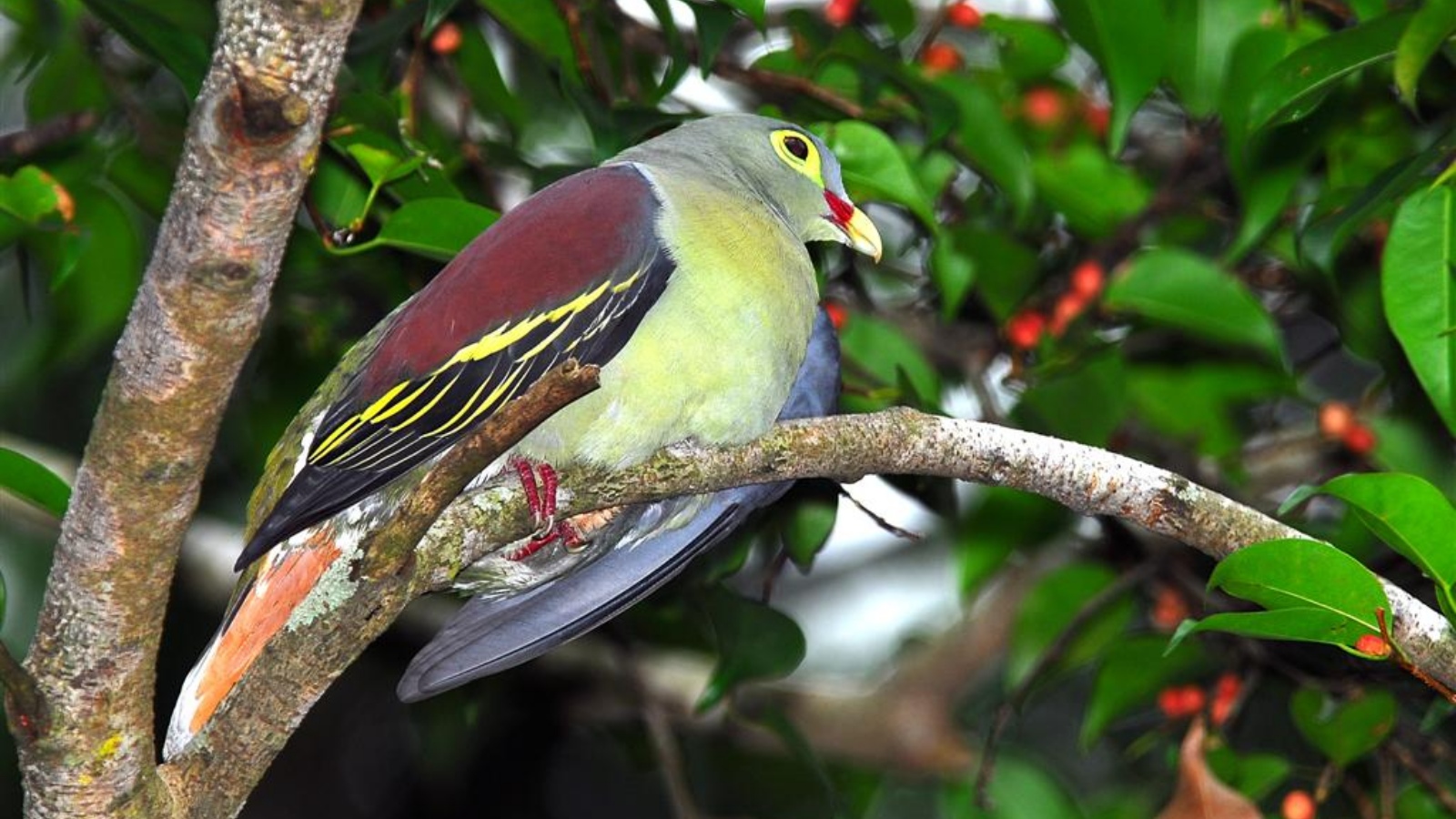
The Timor green pigeon population has plummeted to critical levels, with experts warning that the species could soon disappear forever due to habitat loss and hunting.
- Global population estimated at only 100–500 mature individuals.
- Primary threats include 80% habitat loss and intensive hunting.
- Researchers urge reclassification to 'Critically Endangered' on the IUCN Red List.
The Timor green pigeon, a rare bird endemic to the islands of Timor, Rote, and surrounding areas, is facing a catastrophic decline. According to a recent study published in Oryx and reported by Mongabay, the global population has dwindled to a terrifying range of just 100 to 500 mature birds. Experts suggest the actual number may even be lower, prompting calls to upgrade their status from 'Endangered' to 'Critically Endangered'.
The Deadly Paradox: A Lack of Fear
One of the most tragic factors contributing to their decline is a unique behavioral trait that makes them easy targets for hunters. Wildlife photographer and environmentalist Indrajit Ghorpade notes that these birds are not 'gun-shy.' In the Lautem District, hunters even refer to them as 'tule,' meaning 'deaf,' because the birds often remain perched in the canopy even after gunfire is heard. This allows hunters to strike multiple birds within a single flock, devastating local populations rapidly.
Why This Matters
BozokMedia analysis shows that the plight of the Timor green pigeon is a microcosm of the global biodiversity crisis. The loss of a specialized species indicates a fundamental breakdown in the lowland forest ecosystems of Southeast Asia, which provides essential services to the entire region.
The Timor Green Pigeon is one more victim of a common cause-and-effect pattern where human activity pushes wildlife toward extinction.
Beyond hunting, the destruction of habitat has been relentless. It is estimated that over 80% of their natural habitat has been lost. This fragmentation prevents healthy gene pool transfers, leading to isolated pockets of birds that are more susceptible to disease and have shorter lifespans due to inbreeding and lack of genetic diversity.
Historical Background
Historically, the Timor green pigeon was a common sight in the lowland forests of eastern Indonesia and Timor-Leste. They relied heavily on specific fruiting trees for survival. As human settlements expanded and forest resources were exploited, their once-vast territory was sliced into disconnected fragments, making survival increasingly difficult.
Frequently Asked Questions
Question 1: Where is the remaining population of Timor green pigeons located?
Answer: Most remaining birds are concentrated in Timor-Leste, specifically in the Lautem District and Nino Konis Santana National Park.
Question 2: Why is habitat fragmentation so dangerous for them?
Answer: It isolates small groups, reduces genetic diversity, and makes the species more vulnerable to disease and environmental changes.