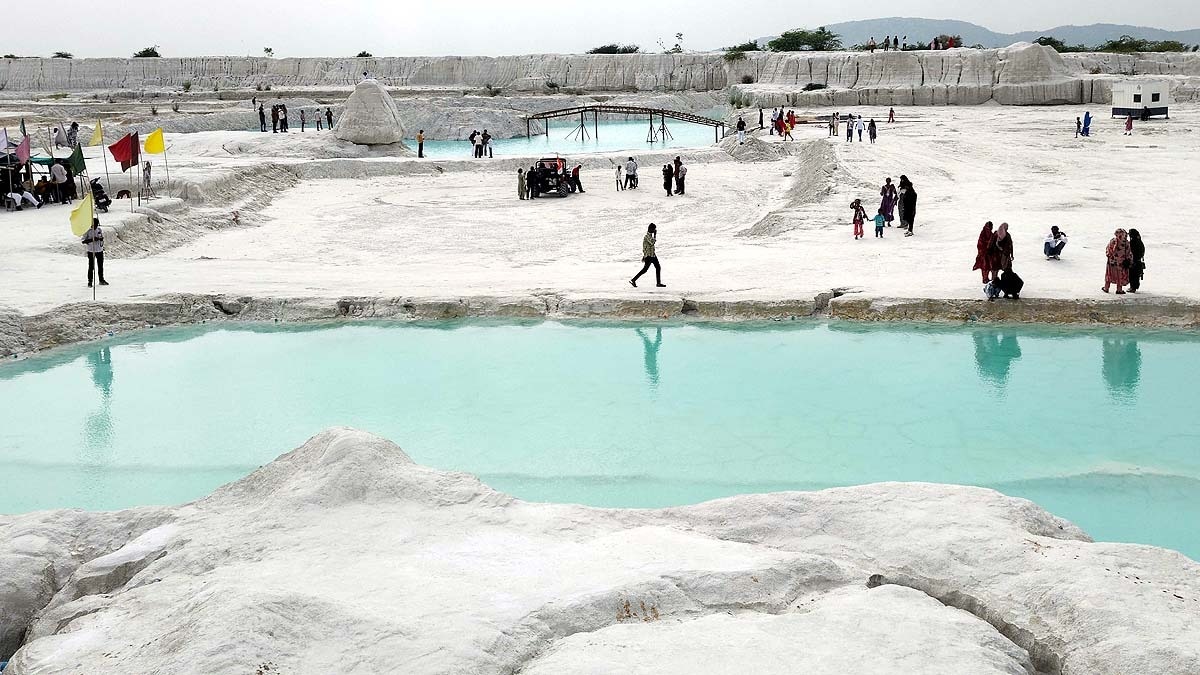
The marble slurry dumps in Kishangarh, Rajasthan, have transformed into a viral tourist destination, mimicking a snow-covered landscape. However, the massive accumulation of industrial waste poses significant ecological risks.
- Kishangarh's 82-acre marble slurry dump has become a viral sensation for photography.
- Over 5,500 tons of marble waste is dumped daily from 1,200+ units.
- The white residue mimics snow, attracting couples and filmmakers.
- The site poses serious threats to air quality and groundwater levels.
In the heart of Rajasthan, the town of Kishangarh has gained unexpected fame on social media. Travelers and photographers are flocking to a landscape that looks remarkably like a snow-capped wonderland. However, this pristine white expanse is not snow; it is the byproduct of intensive industrial activity known as 'Marble Slurry'.
Spanning across approximately 82 acres, this white desert is the result of waste generated by more than 1,200 marble processing units in the region. During the cutting and polishing of marble, a mixture of water and fine stone particles is created. This slurry is subsequently disposed of in massive dumping yards, where, as the water evaporates, a thick white layer of mineral dust remains.
A Viral Tourist Phenomenon
Driven by stunning visuals on Instagram and YouTube, the area has become a hotspot for pre-wedding shoots, music videos, and casual tourism. The visual deception of the white ground creates a unique aesthetic that attracts people looking for 'exotic' locations without leaving the desert state of Rajasthan.
What looks like a winter paradise to the naked eye is actually a mounting mountain of industrial waste.
Why This Matters
BozokMedia analysis shows that while the site provides a temporary boost to local informal tourism, it masks a growing environmental crisis. The uncontrolled accumulation of industrial byproducts without proper recycling mechanisms is a ticking time bomb for the local ecosystem.
| Feature | Details |
|---|---|
| Total Area | Approx. 82 Acres |
| Daily Waste Output | 5,500+ Tons |
| Industrial Sources | 1,200+ Marble Units |
| Primary Visual Effect | Snow-like white terrain |
Environmentalists have raised alarms regarding the health implications. Once the slurry dries, the fine particulate matter can become airborne, leading to severe air pollution. Furthermore, there is a significant risk of these particles leaching into the soil, potentially contaminating the groundwater and affecting the local agricultural viability.
Historical and Industrial Context
Kishangarh has long been a cornerstone of India's marble industry. The scale of production has grown exponentially over the decades, leading to the massive scale of waste management issues seen today. Experts suggest that instead of open dumping, this marble waste should be repurposed for brick making or road construction to mitigate environmental impact.
Frequently Asked Questions
1. Why does the ground look like snow?
The fine particles of marble left behind after the water in the slurry evaporates create a bright white, powdery surface.
2. Is the marble waste harmful?
Yes, the fine dust can cause respiratory issues, and the chemical composition can impact soil and water quality.