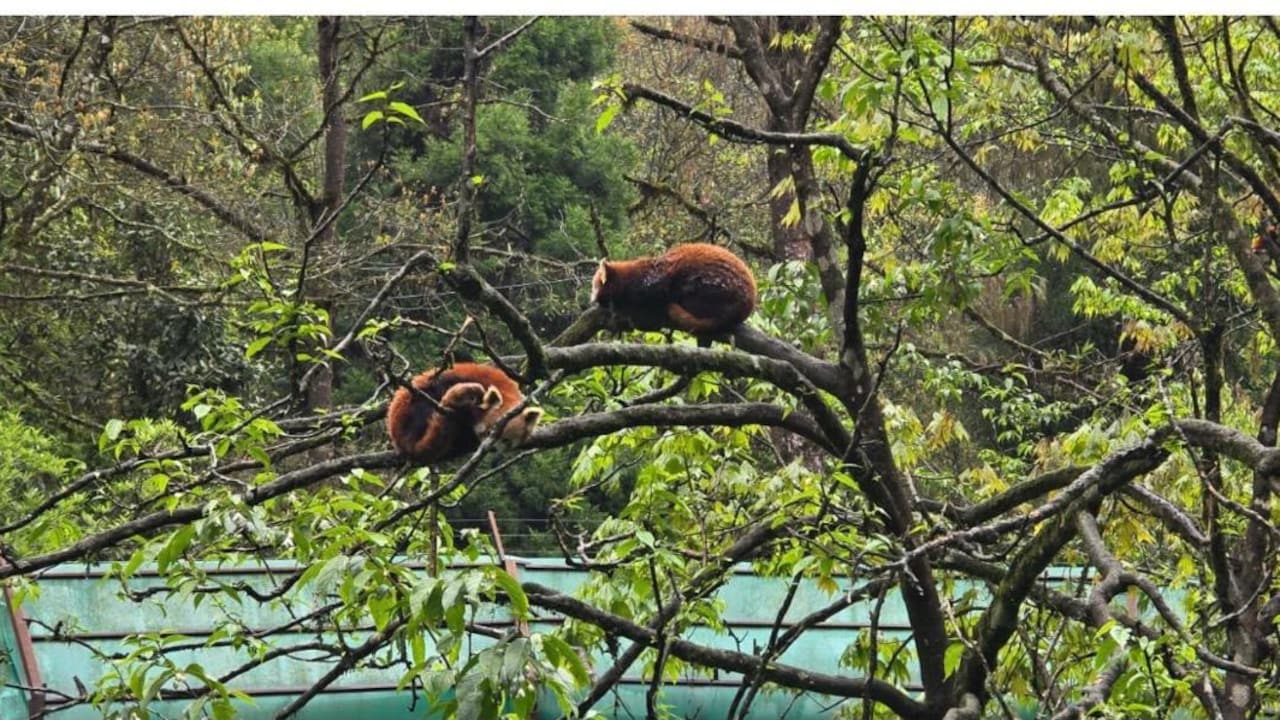
After a seven-year hiatus, the Himalayan Zoological Park in Sikkim celebrates the healthy growth of two red panda cubs, Nuba and Numa.
- Two red panda cubs, Nuba and Numa, were born in Sikkim's Himalayan Zoological Park.
- This marks the first successful breeding in the park in seven years.
- The cubs are reported to be in excellent health and thriving under expert care.
In a significant boost to wildlife conservation efforts, the Himalayan Zoological Park in Sikkim has announced the successful rearing of two red panda cubs. The cubs, named Nuba and Numa, have shown remarkable growth following a period of seven years where no births had been recorded in the facility.
The arrival of Nuba and Numa is being hailed as a milestone for the regional conservation of the red panda, a species that faces severe threats from habitat loss and poaching. The long gap in successful breeding had previously raised concerns among zoologists regarding the genetic viability and breeding environment within the park.
The Significance of Successful Breeding
Red pandas are classified as endangered, making every successful birth a critical step toward preventing their extinction. The controlled environment of the Sikkim zoo provides a safe haven for these animals to reproduce away from the pressures of the wild, such as fragmented habitats and declining food sources.
The thriving health of Nuba and Numa serves as a testament to the advanced veterinary care and habitat management implemented in Sikkim.
Why This Matters
BozokMedia analysis shows that successful captive breeding programs like this one are vital components of global biodiversity strategies. By ensuring the survival of offspring in controlled settings, conservationists can build a 'genetic insurance policy' for species that are struggling in their natural habitats.
The park authorities are closely monitoring the cubs' development, ensuring they receive specialized nutrition and social interaction necessary for their species. This success is expected to encourage further investment in Himalayan wildlife preservation.
Frequently Asked Questions
Question 1: How old are the red panda cubs?
Answer: The cubs are currently in their early developmental stages and are being monitored daily.
Question 2: Why was there a seven-year gap in births?
Answer: Breeding in endangered species can be highly unpredictable and requires specific environmental triggers that were only recently met.