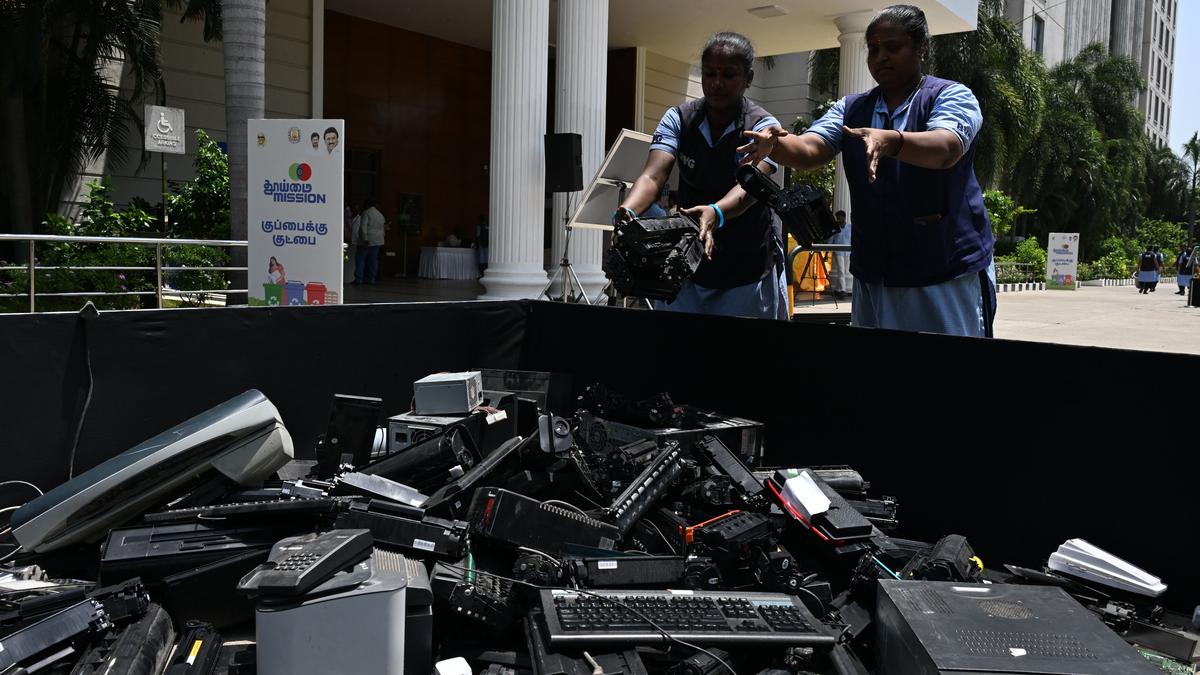
While the Indian government pushes for advanced e-waste recycling to secure rare metals, the dominance of the informal sector and regulatory loopholes pose massive hurdles.
- India generated an estimated 4.17 million metric tonnes of e-waste in 2022.
- Only one-third of the total e-waste is processed through formal, regulated channels.
- The informal sector remains the primary player, hindering a true circular economy.
- Geopolitical risks, including China's REE export restrictions, make domestic recycling critical.
The Union government of India is aggressively pivoting towards electronics manufacturing and resource security, yet a critical link in the chain—e-waste recycling—remains fractured. As the government introduces schemes to boost the recovery of rare earth elements (REEs) and precious metals, experts warn that the lack of formalization and implementation gaps could undermine these efforts.
With mobile broadband connections in India crossing the 93.9 crore mark, the volume of discarded consumer electronics is reaching unprecedented levels. Policymakers view the extraction of metals like copper, aluminium, nickel, cobalt, and lithium not just as an environmental necessity, but as a strategic move to insulate India from fragile global supply chains and geopolitical volatility.
Why This Matters
BozokMedia analysis shows that as global competition for critical minerals intensifies, India's ability to establish a robust 'circular economy' will determine its manufacturing resilience. Failing to capture these materials means losing valuable raw materials to unregulated, hazardous informal processes.
Informal setups have frustrated policymakers, as they focus on harvesting components outside any formal framework, preventing recycling from becoming a viable raw material source.
A significant roadblock is the dominance of the informal sector. According to the Indian Cellular and Electronics Association (ICEA), these unregulated entities often prioritize repairing or scavenging components rather than scientific metal extraction. This bypasses the formal Extended Producer Responsibility (EPR) framework, which is designed to ensure manufacturers take responsibility for their products' end-of-life.
Furthermore, the industry is plagued by allegations of 'paper trading.' Some recyclers are accused of overstating their recycling volumes to claim government incentives without actually possessing the capacity for sophisticated metal extraction. Dr. Sandip Chatterjee, an adviser to SERI, emphasizes the need for rigorous third-party auditing to ensure environmental safety and material traceability.
| Metric | Formal Recycling | Informal Sector |
|---|---|---|
| Methodology | Scientific/Chemical Extraction | Manual Scavenging/Repair |
| Traceability | High (via EPR Portals) | Very Low/Non-existent |
| Environmental Impact | Regulated/Controlled | High Pollution/Toxic Waste |
The challenge of 'material traceability' remains unsolved. Unlike Western nations that track products from the point of sale, the lifecycle of gadgets in India is often opaque, with devices passing through multiple owners before disposal. This makes accurate inventorying for State Pollution Control Boards incredibly difficult.
Frequently Asked Questions
1. What is the importance of Rare Earth Elements (REEs)?
REEs are vital for high-tech applications, including semiconductors and EV batteries, and are currently subject to significant geopolitical tensions.
2. How does the EPR framework work?
Extended Producer Responsibility mandates that manufacturers collect and process the electronic waste generated by their products.