A decade ago Arkane Austin scrawled "Fuck ladders" on its office walls. Today that rebellion has sparked fresh design solutions across the industry.
Key Takeaways
- Arkane Austin initially rejected ladders as a core mechanic.
- Dishonored replaced ladders with chains, opening new gameplay possibilities.
- Modern games face complex animation, AI, and physics challenges when implementing ladders.
Before Xbox shut down Arkane Austin, the studio displayed twenty design maxims on its walls. One of the most infamous read simply, "Fuck ladders." The phrase emerged from a candid conversation between former studio head Harvey Smith and co‑founder Raphael Colantonio, long before Dishonored became a cult hit. At the time, the team was unfunded, scrambling to launch either Thief or a game inspired by Blade Runner. Smith recalled, “We had all these sayings, but half the people we hired hadn’t even heard them.” He turned the sayings into motivational posters and plastered them around the office.
From Rejection to Reinvention
When the studio finally delivered Dishonored in 2012, it swapped traditional ladders for functionally identical hanging chains. Raphael argued the chains would be "less work," yet the development team discovered they were just as demanding to animate and program. The decision, however, gave players a fresh vertical traversal experience and forced designers to confront a slew of new questions about animation fidelity, weapon handling, and AI behavior on vertical surfaces.
The Hidden Complexity of Ladders
Decades of game design have produced a shorthand of accepted standards: unified control schemes, level‑design conventions, and even whitepapers on how to implement functional ladders. Yet integrating a ladder into a modern third‑person action title involves dozens of design dilemmas—should the player see hands and feet on the rung? How does drawing a weapon interrupt the climbing animation? Can the character slide, jump off, or be hit by a bullet while on the ladder? Must AI characters replicate every player capability? Each of these considerations multiplies development time and risk.
Industry Voices on Vertical Navigation
Classic examples illustrate the problem. In the original PlayStation Tom Clancy's Rainbow Six, ladders were more lethal than terrorists—hostages would leap off like lemmings, instantly killing themselves. In Source Engine games, players would magnetise their faces to surfaces, tilt back, and walk up an invisible “crotch appendage,” only to slip off if they angled sideways. Sound designers could no longer capture the “crunch” of a broken ladder because the mechanic had become obsolete.
Former Ubisoft and Insomniac lead designer Liz England echoed similar frustrations: “When you put players in a different move state, bugs appear where they get stuck. You might be kicked off the ladder and suddenly can’t draw your gun—ladders are horrible.” Her blog “The Door Problem” highlighted how seemingly mundane objects—doors, ladders—carry hidden layers of logic that most players take for granted.
Practical Solutions and Workarounds
During development of Resistance 3, a single ladder in a trainyard kept being missed in playtests. England tried arrows, then multiple arrows, but players still walked past because a ladder blended into the environment. The final fix was a bright yellow paint job, a visual cue that sacrificed realism for clarity. This illustrates a broader trade‑off: high visual fidelity often conflicts with intuitive gameplay cues.
Most modern titles now place ladders only in enemy‑free zones, effectively turning them into “safe spaces” and reducing the number of edge‑case scenarios designers must handle. Ladders also represent a break in the flow of horizontal movement, constraining player freedom to a vertical track. Consequently, designers aim to make the climb as quick and unobtrusive as possible.
Occasionally, developers subvert expectations for fun. In Arc Raiders, a ladder on a building’s side only reaches halfway; holding the climb button makes the character fall off the bottom and die, forcing players to jump sideways. Such “troll” ladders reinforce the message that no area is completely safe, keeping tension high.
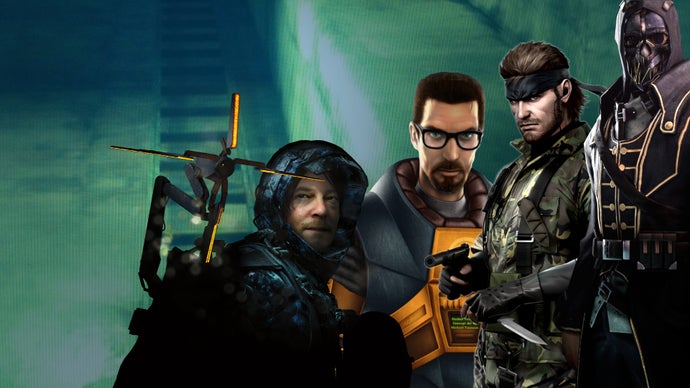
One of the most infamous vertical challenges is the three‑minute climb in Metal Gear Solid 3: Snake Eater, often cited as the longest ladder in gaming history. That very image once served as the background for Arkane’s “fuck ladders” quote, a reminder that even the most brutal criticism can inspire legendary moments.
Looking ahead, as procedural generation and advanced AI become mainstream, we may see ladders replaced by dynamic vertical pathways—magnetic boots, grappling hooks, or fully physics‑driven climb systems. Until then, developers must continue wrestling with the minutiae of animation, collision, and player perception to keep the vertical experience both seamless and engaging.