.jpg?width=690&quality=85&format=jpg&auto=webp)
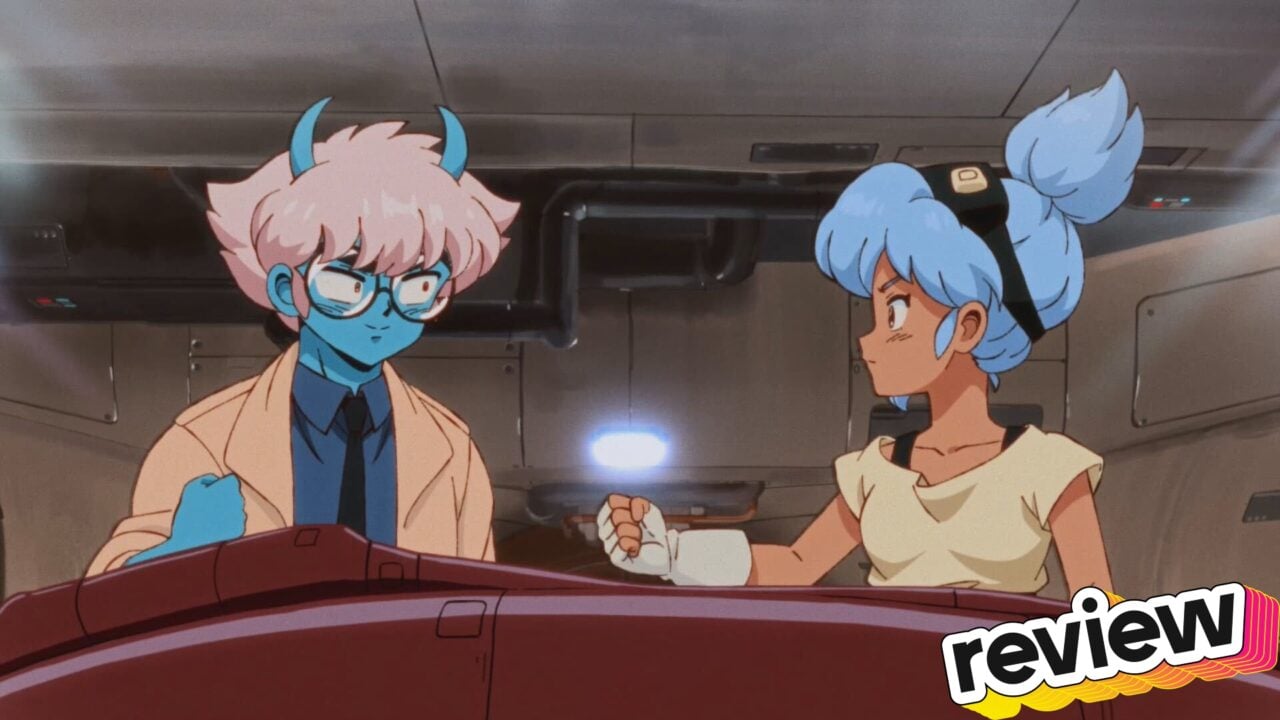
Orbitals delivers a breathtaking anime aesthetic and charming protagonists in a co-op adventure that echoes the 'Hazelike' genre. While it struggles with narrative depth, its emotional core and art style make it a compelling journey.
- Stunning hand-animated cinematics by Studio Massket.
- Deeply charming protagonists, Maki and Omura, with unique personality quirks.
- Gameplay heavily inspired by the 'Hazelike' co-op formula (It Takes Two).
- Strong emphasis on gadget-based puzzle solving and environmental interaction.
Orbitals enters the gaming scene during a renaissance of cooperative play, attempting to carve its own niche in the shadow of giants like It Takes Two. At its heart, the game is a journey of two protagonists, Maki and Omura, whose relationship provides the emotional anchor for an otherwise surreal sci-fi odyssey. The game is a visual masterpiece, blending high-fidelity gameplay with sumptuous hand-animated sequences that evoke the golden age of anime.
The narrative begins with a jarring premise: two toddlers are placed into a consciousness-transfer machine during a space station catastrophe, effectively incinerating their original forms to be 'Ctrl-V'd' into adult clone bodies 15 years later. Despite this traumatic origin, Maki and Omu remain eternally optimistic, possessing an adorable habit of saying 'sayonara' to the tools they leave behind—a touch that humanizes them in a world of cold steel and alien technology.
Why This Matters
BozokMedia analysis shows that Orbitals is attempting to formalize the 'Hazelike' subgenre—games that prioritize asymmetric co-op mechanics and constant novelty over traditional progression. By employing Jakob Lundgren, a former designer on It Takes Two, the developers are consciously utilizing a blueprint that offsets narrative gaps with mechanical invention. However, where its predecessors succeeded in constant variety, Orbitals leans more heavily on a core set of tools.
The success of Orbitals lies not in its mechanical innovation, but in its ability to evoke genuine affection for its characters through meticulous animation and voice acting.
The gameplay revolves around three primary gadgets: the Liquid Launcher, the Beam Cannon, and the Scrap Hook. While these tools provide the necessary utility to navigate the starship, the review notes a lack of the 'frenetic pace of invention' seen in other co-op hits. Instead of introducing new toys every few minutes, the game asks players to master these three, repurposing them in various combinations to solve puzzles.
A significant point of contention for critics is the localization. While the English dub is competent, the Japanese audio is highly recommended. The 'twittering' nature of the protagonists feels more organic and less grating in its native tongue, allowing the player to immerse themselves in the atmosphere without the dialogue becoming a distraction from the gameplay.
| Feature | Orbitals | It Takes Two (Hazelike Standard) |
|---|---|---|
| Visual Style | High-end Anime (Studio Massket) | 3D Stylized Realism |
| Gadget Variety | Focused (3 core tools) | Rapidly Rotating (New tools frequently) |
| Protagonists | Optimistic Clones | Conflicted Couple |
Frequently Asked Questions
Q: Does Orbitals require two players to play?
A: Yes, it is designed as a two-player split-screen co-op experience, following the 'Hazelike' design philosophy.
Q: Which language setting is recommended for the best experience?
A: The reviewer strongly suggests using Japanese audio with English subtitles to better capture the characters' essence.