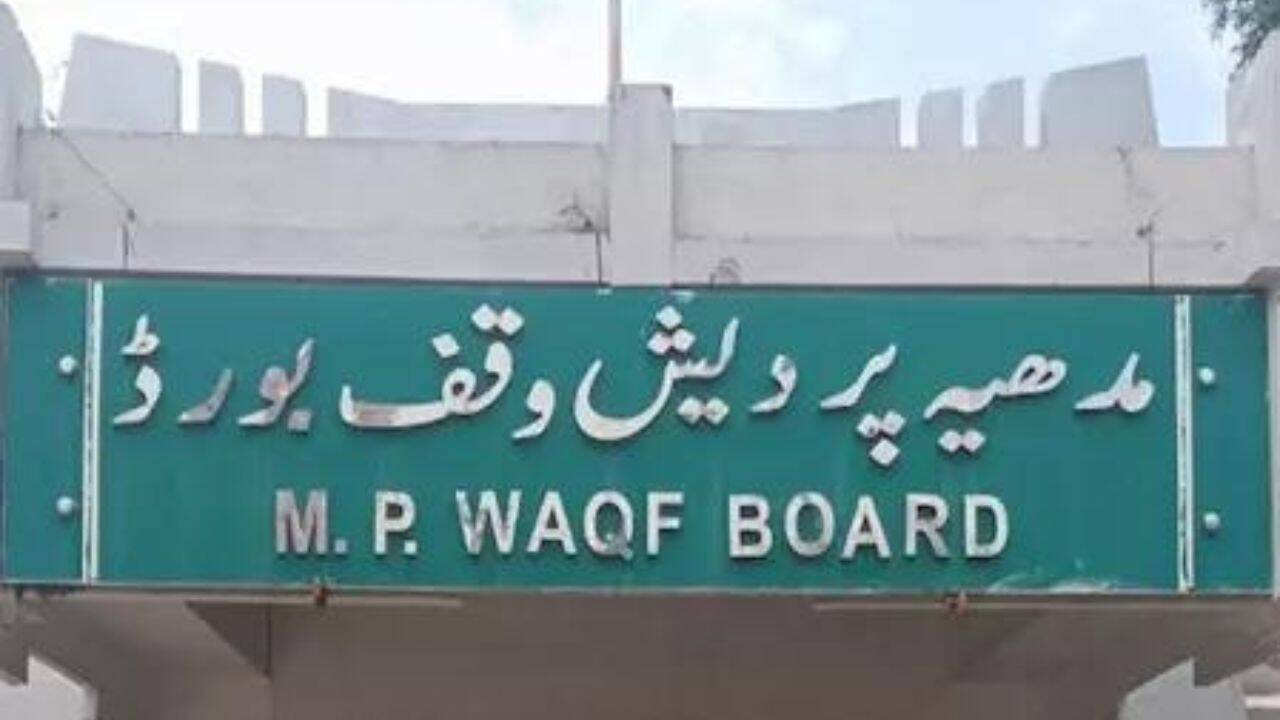
Madhya Pradesh has made history by reconstituting its Wakf Board under the amended Wakf Act, 2025, becoming the first state to include two non-Muslim members, marking a significant stride towards broader representation and inclusive governance.
Madhya Pradesh has carved a new path in the administration of religious endowments, becoming the first state in India to reconstitute its Wakf Board under the provisions of the amended Wakf Act, 2025. This pioneering move introduces an unprecedented level of inclusivity to the board, which now notably includes two non-Muslim members. Following an order issued by the Chief Minister, Sanwar Patel has been appointed as the chairman of the newly formed 10-member board, which comprises Manoj Malpani and Animesh Bhargava as the Hindu members. This decision was made by the state government in exercise of its powers under Section 13(1) of the Wakf Act, 1995 (as amended in 2025), aligning perfectly with the provisions outlined in Section 14 of the Act.
Wakf Boards are crucial bodies responsible for managing properties permanently dedicated for religious or charitable purposes under Islamic law. In India, these boards play a vital role in minority welfare and the preservation of religious assets. Traditionally, the composition of these boards has been exclusively from the Muslim community. However, Madhya Pradesh's initiative challenges this long-standing convention, advocating for a broader representation in governance. The inclusion of non-Muslim members is seen as a progressive step towards enhancing transparency and fostering greater trust among various communities involved in or affected by Wakf property management.
The newly constituted board reflects a diverse representation from various sections of society and geographical regions within the state. Its members include prominent figures such as Najma Heptulla from New Delhi, Atif Aqueel from Bhopal, Faizan Khan from Ujjain, Fatema Choudhary from Indore, Shaista Sultan, Shabana Khan, along with the aforementioned Manoj Malpani from Indore and Animesh Bhargava from Raghogarh, Guna. Additionally, the Commissioner of the Backwards Classes and Minority Welfare Department will serve as an ex-officio member, ensuring administrative continuity and expertise. This blend of elected and ex-officio members, coupled with diverse community representation, is expected to bring a more comprehensive perspective to the board's decision-making processes.
It is important to note that Najma Heptulla's appointment was initially made under the elected category through a notification issued on April 19, 2023, under Section 14 of the Wakf Act, 1995 (as amended in 2013). Her tenure remains valid until April 18, 2028, and her name has been retained in the new notification for the remaining period. This detail underscores the meticulous adherence to legal frameworks and the continuity of established appointments during the reconstitution process.
This landmark decision by Madhya Pradesh carries significant implications beyond its borders. It could potentially set a precedent for other states to consider similar inclusive reforms in the administration of Wakf Boards and other community-specific institutions. By embracing a more inclusive approach, the state government aims to make the management of religious endowments more transparent, accountable, and acceptable to a wider cross-section of society. This move is poised to strengthen India's secular fabric and redefine the balance between religious governance and inclusive development, paving the way for a more harmonious and representative administrative model.