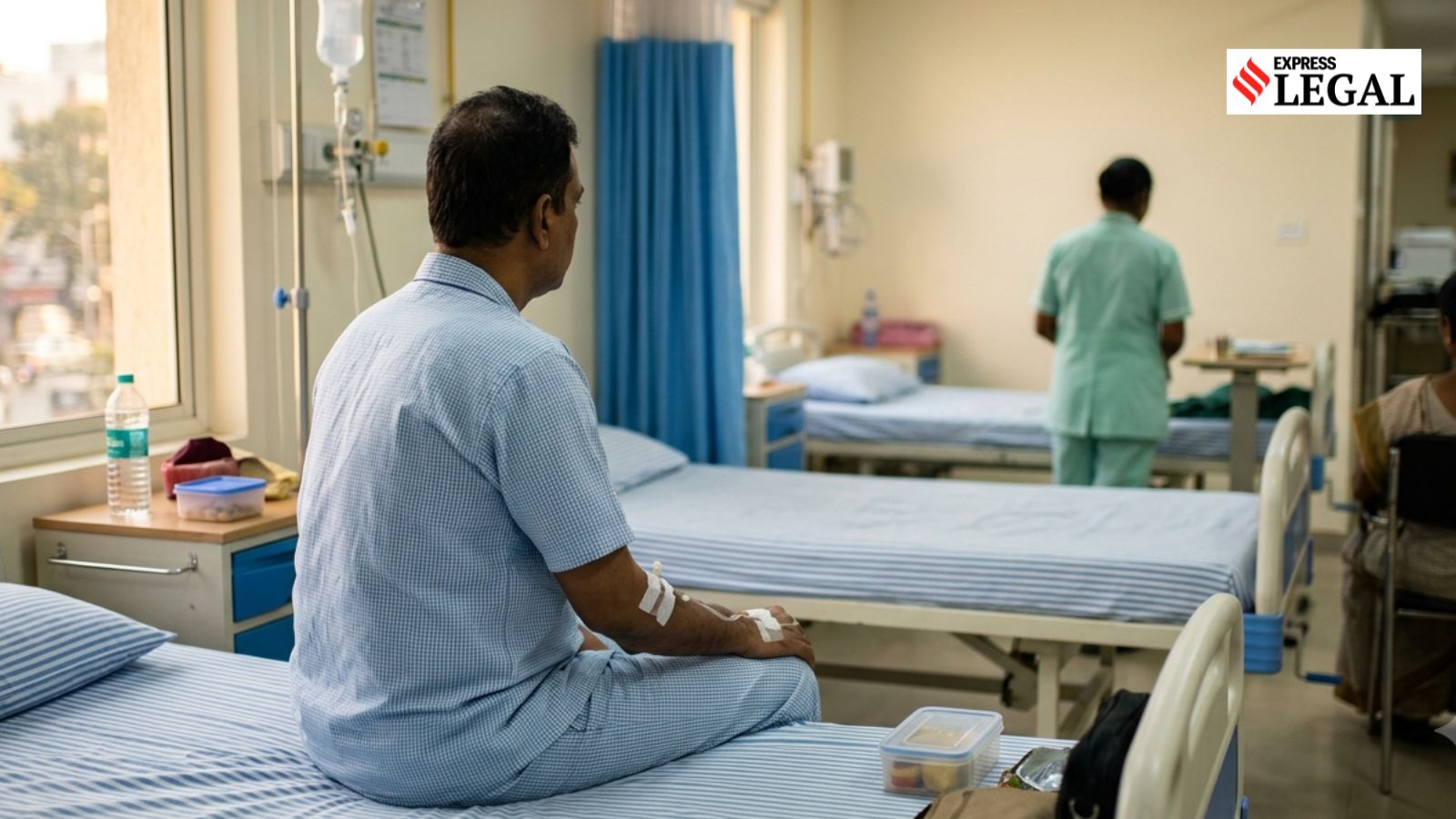
A colon‑cancer patient in Ghaziabad was denied cash‑less treatment after his insurer cancelled the policy, prompting a consumer commission to order a ₹12.35 lakh payout. The ruling holds Yashoda Super‑Speciality Hospital and Niva Bupa liable for service deficiency, interest and compensation.
मुख्य बिंदु (Key Takeaways)
- Insurer unjustly cancelled the policy, obstructing cancer treatment.
- Hospital engaged in irregular billing and forced payments.
- Consumer commission ordered a total payout of ₹12.35 lakh including interest and compensation.
The complainant, diagnosed with colon cancer, was admitted to Yashoda Super‑Speciality Hospital in Ghaziabad for treatment. He had purchased a health insurance policy from Niva Bupa covering the period 30 August 2024 to 29 August 2025 and submitted all required documents for cash‑less treatment.
Background and Timeline
Prior to buying the policy, the patient underwent a medical consultation in 2022 for back pain and disclosed his medical reports to the insurer. In March‑April 2025, he was diagnosed with a malignant neoplasm of the colon and incurred medical expenses exceeding ₹5.36 lakh during his hospital stay.
Irregularities by Insurer and Hospital
Despite providing the necessary paperwork, Niva Bupa abruptly cancelled the policy, citing a 20‑30 % coronary stenosis—a condition the patient argued was treatable and unrelated to his cancer therapy. The hospital, meanwhile, issued invoices without GST details, detained the patient until payments were made, and levied arbitrary charges for medicines and procedures. During a second admission on 9 April 2025, the hospital collected ₹5.72 lakh even though the insurer had approved only ₹3.80 lakh.
Consumer Commission Verdict
The Gurgaon District Consumer Disputes Redressal Commission found Yashoda Hospital, Niva Bupa Health Insurance and associated personnel guilty of deficiency in service. It ordered a joint refund of ₹11.63 lakh with 9 % interest, a compensation of ₹50,000, litigation costs of ₹22,000, and mandated that the insurance policy remain active until its natural expiry. Failure to comply within 45 days will attract an additional 12 % interest.
Implications for the Healthcare Sector
This ruling underscores that insurers and hospitals cannot evade accountability by abstaining from consumer hearings. Unilateral policy cancellations, denial of legitimate medical claims, and unfair billing practices now constitute clear service deficiencies. Patients facing similar grievances are urged to contact the National Consumer Helpline (1915) or state‑specific helplines, such as Haryana’s 1800‑180‑2087, for assistance.