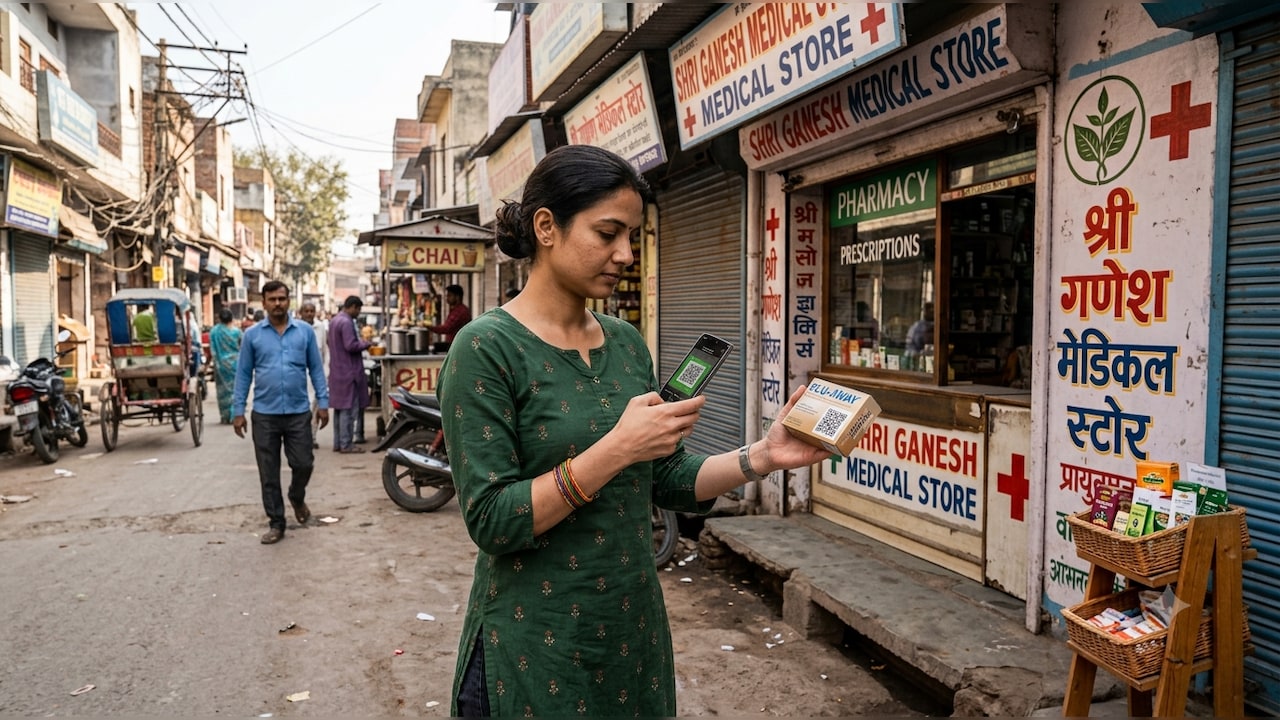
The Indian government has embedded QR codes on medicine packs to curb counterfeit drugs. Consumers can instantly verify authenticity, batch details, and regulatory approval by scanning the code with a smartphone.
Counterfeit medicines have long plagued India's healthcare system, endangering millions each year. To combat this, the Central Drugs Standard Control Organization (CDSCO) introduced QR codes as a digital seal of authenticity, assigning a unique identifier to every legitimate drug package.
Background
Traditional labeling and serial numbers were easily replicated by illicit manufacturers, making it difficult for regulators and patients to differentiate genuine products from fakes. QR technology offers a secure, scalable and consumer‑friendly solution that can be read instantly with any smartphone camera.
How QR Verification Works
When a consumer scans the QR code printed on a medicine strip, the app connects to a centralized, encrypted database. The system instantly retrieves the drug’s name, manufacturer, license number, batch number, manufacturing date and expiry. A clear “Authentic” badge appears if the code matches; any mismatch triggers an immediate warning, preventing the product from being consumed.
Regulatory Drive and Guidelines
Since 2022, under the “Digital Medicine Traceability” initiative, CDSCO has mandated QR code placement on all pharmaceutical products. A national platform—India Medicare Portal—stores the verification data, with state health officials and retailers participating in real‑time validation. A free mobile application, pre‑loaded with the verification engine, is available for the public.
Steps for Consumers
1. Locate the QR code on the medicine pack before purchase. 2. Scan it using the official app or any QR‑reader. 3. Review the displayed details against the label. 4. Report any discrepancy to the pharmacist or local health authority. 5. Return or claim a refund for suspicious products.
Future Outlook
The QR‑based safeguard is poised to become a global template; the World Health Organization (WHO) has cited India’s model as a best practice for low‑ and middle‑income nations. Upcoming enhancements include blockchain‑backed traceability, AI‑driven risk scoring, and real‑time alert networks. As consumer confidence grows, demand for counterfeit drugs is expected to evaporate, reshaping the illicit supply chain.