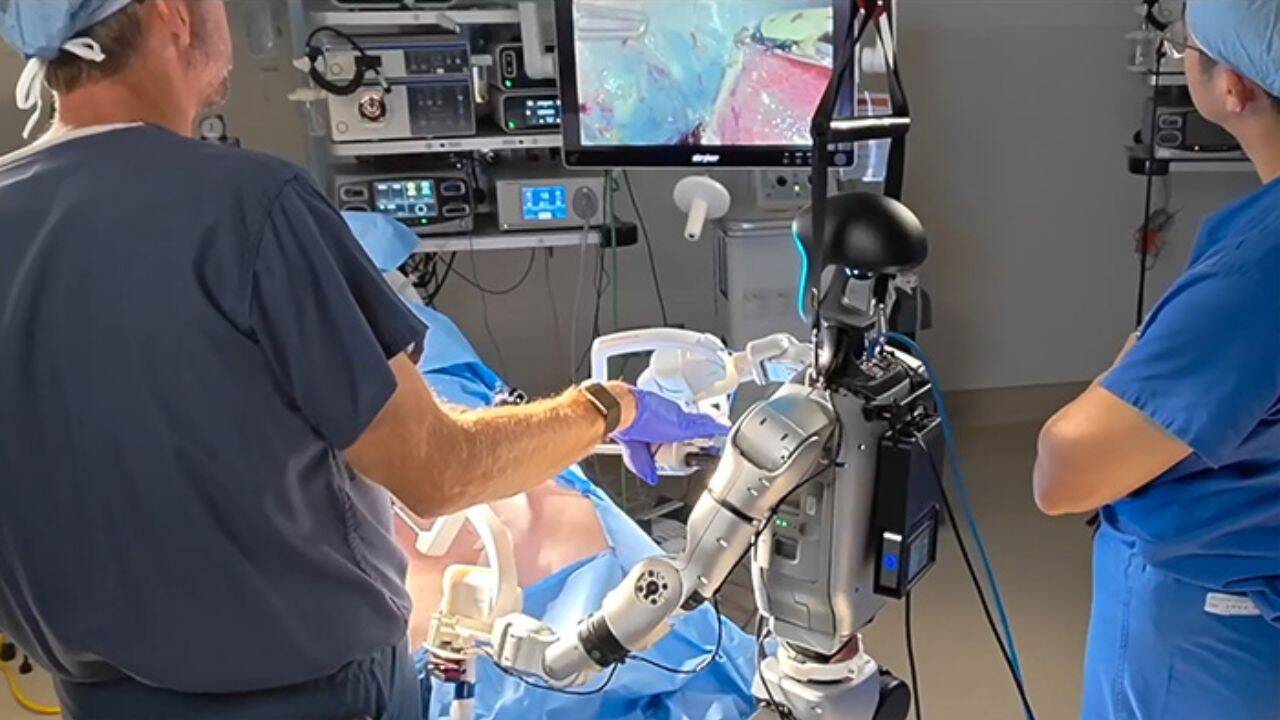
Engineers and surgeons at UC San Diego have successfully used tele‑operated humanoid robots to remove gallbladders in live animal trials, marking the first such achievement. The breakthrough could reshape operating rooms and expand surgical access worldwide.
Robotic surgery has become a mainstay of modern medicine, yet most systems are purpose‑built, bulky machines designed for a narrow set of procedures. Their high cost, large footprint, and need for specialized infrastructure limit their deployment to major urban hospitals. A multidisciplinary team at the University of California, San Diego (UCSD) has now turned that paradigm on its head by demonstrating that general‑purpose humanoid robots can be remotely controlled to perform minimally invasive surgery on living subjects.
The “Surgie” Platform: A Humanoid for the Operating Room
The project produced a five‑foot‑tall, 60‑pound humanoid robot equipped to handle standard laparoscopic instruments rather than custom‑made surgical tools. Nicknamed Surgie, the robot is operated via a tele‑operation console that translates a surgeon’s hand motions into precise robotic movements, allowing the machine to mimic human dexterity in real time.
Pre‑clinical Trials and Outcomes
Two separate gallbladder removal procedures were performed on large non‑primate mammals. In the first case, a human surgeon worked alongside the robot, creating a hybrid human‑robot team. In the second, two tele‑operated humanoids collaborated, each manipulating laparoscopic instruments independently. Both surgeries concluded without complications, demonstrating that current humanoid technology can meet the precision, control, and safety standards demanded by minimally invasive surgery.
Why This Matters?
With surgical workforce shortages and growing demand for procedures, especially in remote or under‑resourced regions, tele‑operated humanoid robots could provide a cost‑effective, space‑efficient solution. Their human‑like size allows them to navigate standard operating rooms, potentially democratizing access to complex surgeries that were previously limited to well‑equipped centers.
Future Implications
According to Prof. Michael Yip, a senior author of the study, autonomous or remotely controlled humanoids could dramatically expand surgical reach in locations where specialist surgeons are hard to recruit. Their mobility and compatibility with existing OR layouts make them attractive for smaller hospitals, field hospitals, and disaster‑response settings.
Regulatory and Ethical Hurdles
Despite the promising results, widespread clinical adoption will require rigorous regulatory approval, long‑term safety data, and robust ethical frameworks. Issues such as data security, human‑robot interaction protocols, and fail‑safe mechanisms must be addressed before patients can be entrusted to these machines.
Overall, the UCSD trials represent a pivotal step toward integrating humanoid robotics into everyday surgical practice, potentially ushering in a new era of equitable, technology‑driven healthcare.