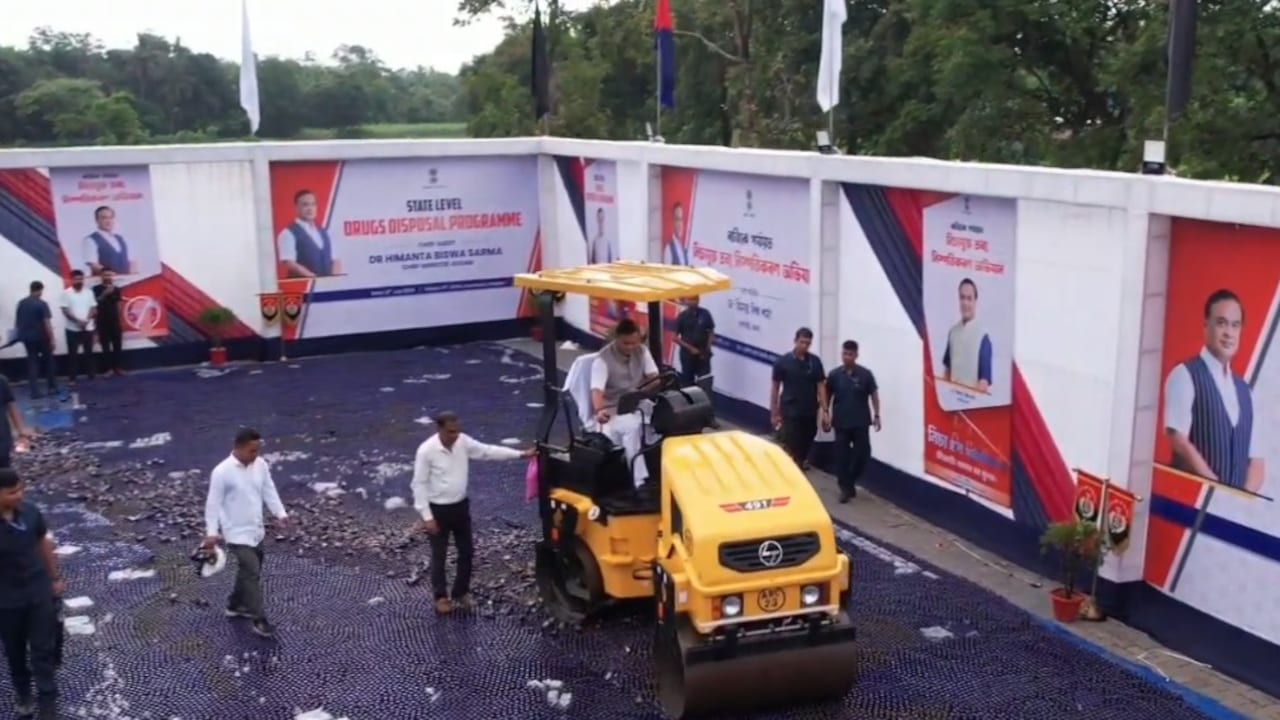
Assam Chief Minister Himanta Sarma crushed seized narcotics worth Rs 472 crore with a road roller at a large disposal event on Guwahati’s outskirts. The haul included morphine, opium, heroin, cocaine and nearly 38 tonnes of cannabis.
मुख्य बिंदु (Key Takeaways)
- Rs 472 crore worth of narcotics destroyed using a road roller.
- Seized items comprised morphine, opium, heroin, cocaine and cannabis.
- Assam’s high‑profile disposal aims to boost public awareness and deter trafficking.
On the outskirts of Guwahati, Assam’s state‑level drug disposal programme culminated in a dramatic spectacle as Chief Minister Himanta Sarma drove a heavy‑duty road roller over seized narcotics valued at roughly Rs 472 crore. The visual impact of crushing the contraband was intended to send a clear message that the state will not tolerate drug trafficking.
Breakdown of the seized stock
The inventory destroyed included 39.068 kg of morphine, 79.770 kg of opium, 58.877 kg of heroin, 0.0471 kg of cocaine and an astounding 37,796.34 kg (approximately 37.8 tonnes) of cannabis (ganja). Analysts estimate the combined market value at around Rs 472 crore, making this one of the largest drug disposals in the region’s recent history.
Historical context
Assam has long struggled with narcotics smuggling, especially along its porous borders where opium and heroin have traditionally flowed. In recent years, cannabis cultivation and trafficking have surged, prompting the state government to launch the “Drug Disposal Initiative” in 2022. The programme’s goal is to eliminate confiscated substances permanently, thereby preventing their re‑entry into the market. While previous disposals used incineration, this event’s use of a road roller marked a novel, media‑friendly approach.
Social impact and future outlook
Publicly demolishing drugs serves a dual purpose: it deters traffickers and raises community awareness about the scale of the problem. Experts argue that such visual deterrents can reduce demand among youth, but they stress that enforcement must be paired with robust rehabilitation and education programmes. The state has pledged to hold regular disposal events, expand drug‑rehab centers, and tighten border surveillance.
Reactions
Local residents, law‑enforcement officials and health professionals applauded the bold move. Civil‑society groups welcomed the heightened visibility but cautioned that lasting change will require sustained investment in treatment facilities and preventive outreach, not just high‑profile crushing of contraband.