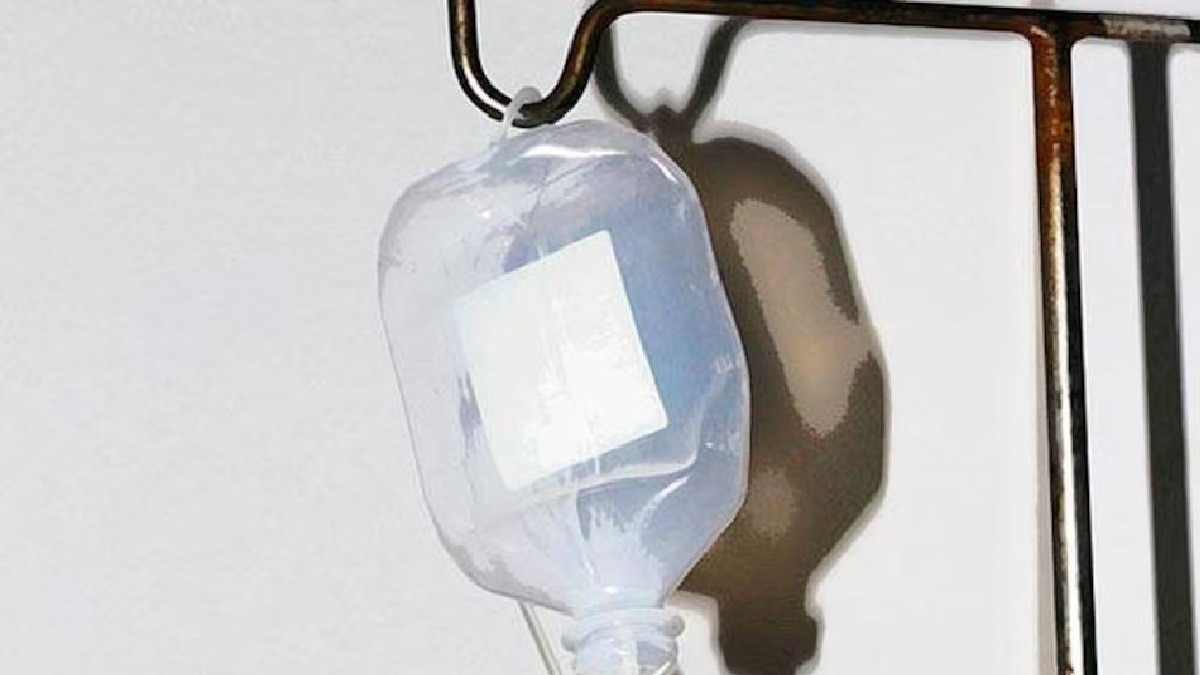
A woman admitted for blood pressure treatment at Danta Government Hospital in Banaskantha received an expired glucose IV, leading to swelling and infection. Hospital officials admitted the error and announced disciplinary action against night‑shift staff.
Key Takeaways
- Expired glucose IV administered at Danta Government Hospital
- Patient suffered swelling and infection
- Hospital to issue showcause notices to the on‑duty doctor and nurse
Danta Government Hospital, Banaskantha (Gujarat) – A grave lapse in night‑shift protocol resulted in a female patient being given a 100 ml bottle of expired glucose intravenously during blood‑pressure management. The incident came to light on 14 July 2026 when the patient’s relatives inspected the IV bag and discovered that its expiry date had already passed.
Incident Details
The woman was transferred to the public facility after a private hospital closed for the evening. While a nurse was preparing the IV, she attached the glucose bottle without checking its validity. Within hours the patient developed pronounced swelling and signs of infection, prompting the family to confront the staff. According to relatives, no doctor was present at the time and the nurse was occupied with her mobile phone, remaining absent for roughly thirty minutes after the infusion.
Hospital Administration’s Response
Superintendent Dr. K. K. Singh of Danta CHC publicly acknowledged the mistake, stating that routine monthly checks of expiry dates are scheduled for the first of each month, but this particular bottle slipped through the audit. He assured that the patient’s condition has now stabilised and no severe side‑effects have been observed. The administration announced that a showcause notice will be issued to the night‑duty doctor and nurse, and the nurse will face strict disciplinary action for mobile‑phone misuse during duty hours.
Background and Wider Implications
Medical negligence cases are on the rise across India, eroding public confidence in the health system. Use of expired medications often stems from inadequate inventory controls, insufficient staff training, and weak supervisory mechanisms. Experts recommend the adoption of digital inventory management, barcode scanning, and regular third‑party audits to prevent similar errors.
Legal and Social Dimensions
Should the patient suffer lasting damage or, in the worst case, death, the hospital and responsible personnel could face civil litigation under the Indian Penal Code and the Drugs and Cosmetics Act, which criminalises the administration of expired drugs. The episode has prompted the Gujarat health department to call for tighter inspections of all government hospitals.
Overall, the Danta incident underscores the urgent need for robust quality‑control frameworks in public health institutions. Strengthening protocols, continuous staff education, and leveraging technology are essential steps to safeguard patient safety and restore trust in the system.