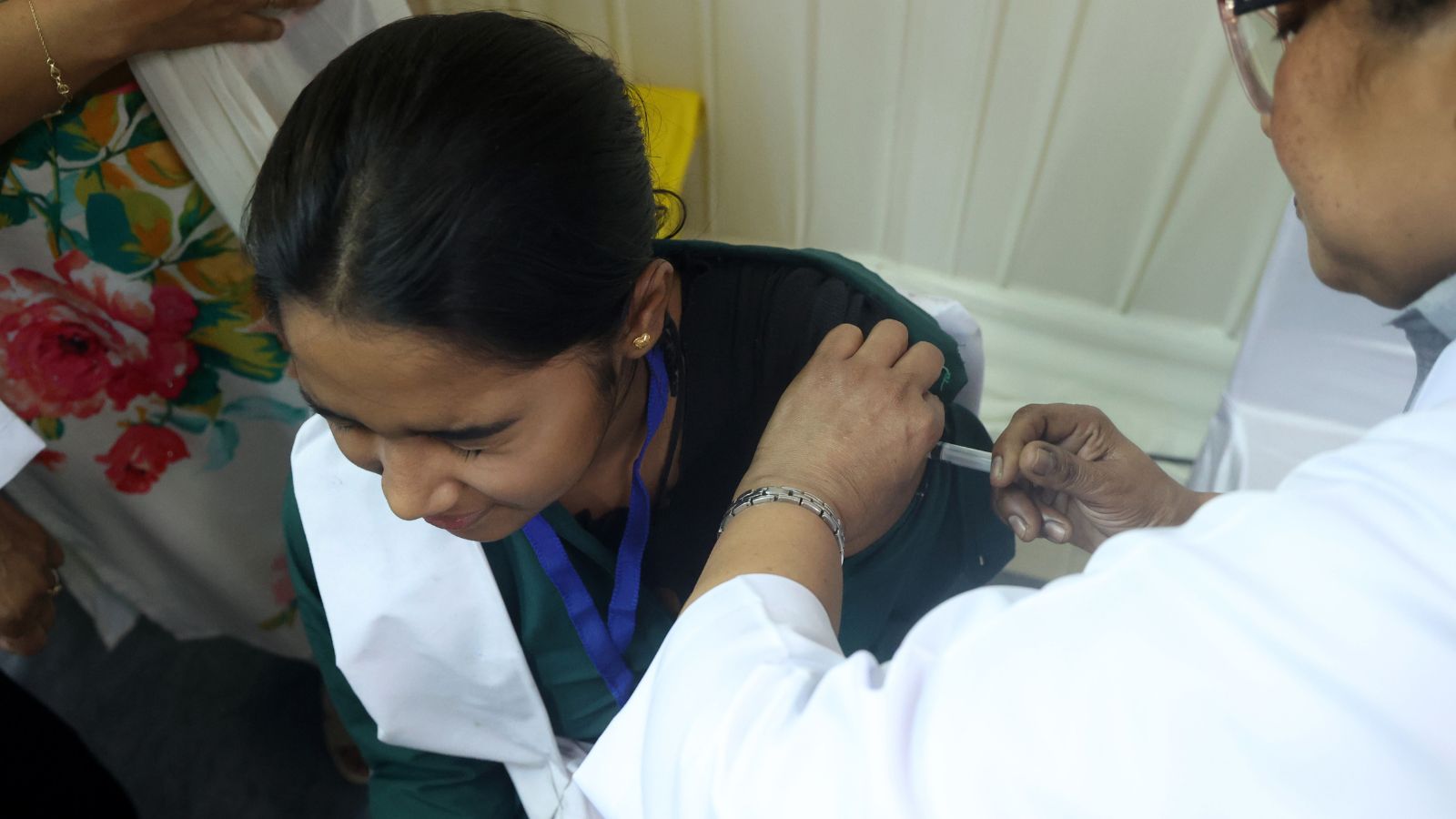
Delhi government schools are employing creative strategies to overcome parental hesitation regarding the HPV vaccine, aiming to protect adolescent girls from cervical cancer.
- Delhi government targets vaccinating 1.49 lakh girls in the next 100 days.
- Parental concerns focus on vaccine safety and potential impacts on future fertility.
- Schools are using peer influence and simplified language to drive adoption.
In a critical move to combat cervical cancer, Delhi's government schools have intensified their push for the HPV (Human Papillomavirus) vaccine. Launched nationwide on February 28, the initiative seeks to immunize adolescent girls, yet the rollout has faced significant hurdles due to deep-seated myths and a lack of awareness among parents.
At Sarvodaya Kanya Vidyalaya in South Delhi’s Fatehpur Beri, the approach has been unconventional. To encourage others, the first student to receive the vaccine was appointed as the class monitor. This strategic move aimed to transform a medical procedure into a badge of courage, addressing the fear and uncertainty prevalent among parents who questioned if the vaccine could affect their daughters' future ability to conceive.
Why This Matters
BozokMedia analysis shows that the gap between vaccine availability and vaccine acceptance is a systemic challenge in public health. Cervical cancer remains a leading cause of mortality among women in India. The success of this drive depends not on the logistics of the U-WIN portal, but on the ability of educators to dismantle cultural taboos surrounding reproductive health.
Teachers have realized that terms like 'Human Papillomavirus' are meaningless to many. Consequently, they have pivoted to using plain language, describing the disease as "cancer at the mouth of the womb." This shift in communication, combined with personal testimonies from teachers whose own family members were affected by HPV, has begun to shift the needle of trust.
"The bridge between a medical breakthrough and public health success is built with trust and clear, empathetic communication."
To further the cause, students have become active participants, designing posters and diagrams of the reproductive system to educate their peers. While over 14,000 doses have been administered in Delhi, the government's ambitious goal of reaching 1.49 lakh girls requires a sustained effort to eliminate fear through education.
Frequently Asked Questions
Q1: What is the HPV vaccine and why is it administered to adolescent girls?
A: It protects against the Human Papillomavirus, which is the primary cause of cervical cancer, making early vaccination critical for long-term prevention.
Q2: Are there any risks associated with the HPV vaccine?
A: The vaccine is globally approved and safe; common side effects are mild, such as temporary soreness at the injection site.