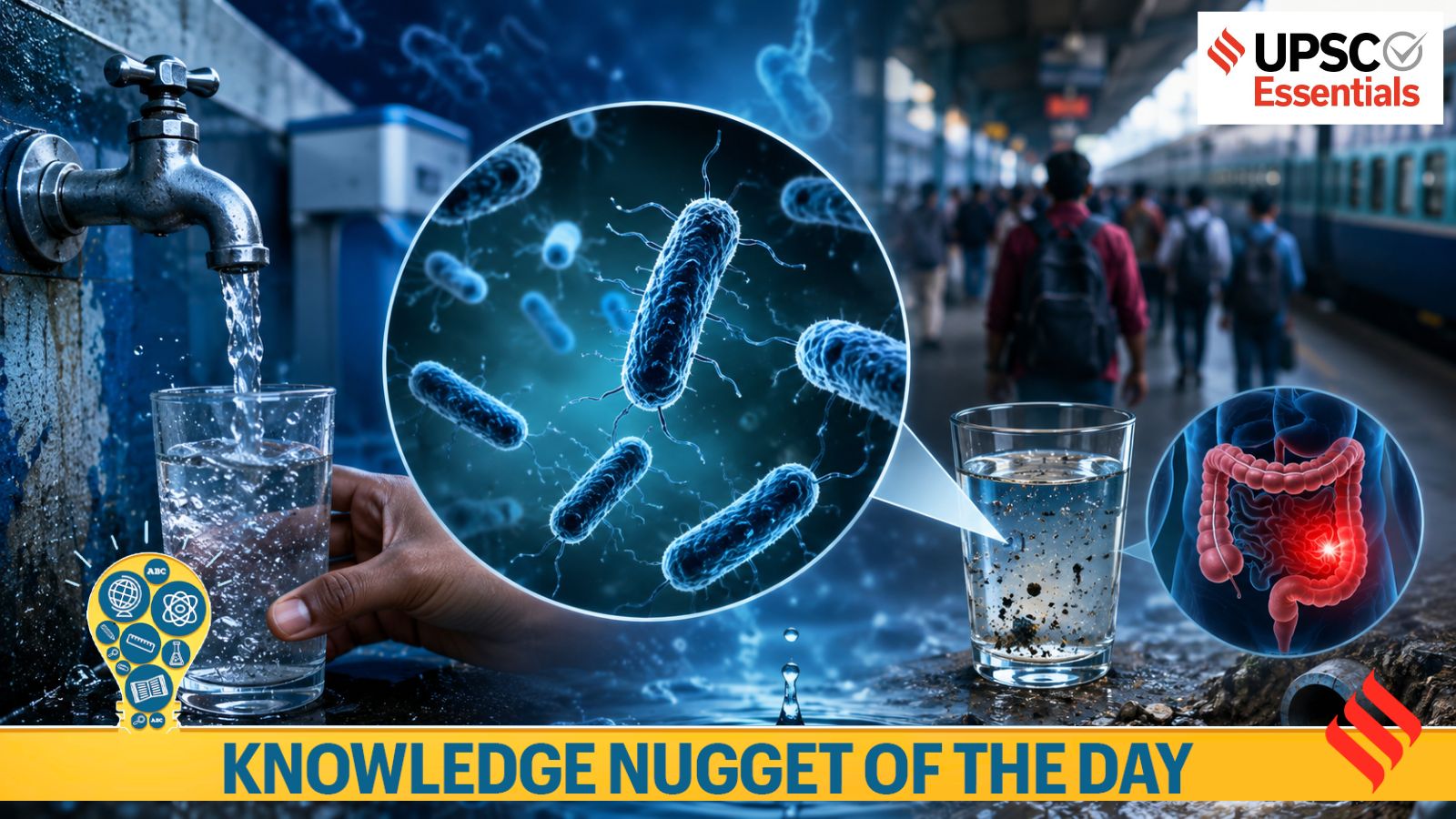
The Comptroller and Auditor General (CAG) has exposed critical violations of water quality norms after E. coli bacteria were found in drinking water coolers across multiple Indian railway stations.
- CAG detected E. coli in water samples from 8 out of 49 tested railway stations.
- Contamination was found in Mumbai local stations, as well as stations in Kerala, Tamil Nadu, and Jharkhand.
- The presence of fecal coliforms indicates sewage leakage into the drinking water supply.
The Comptroller and Auditor General (CAG) of India has raised a red flag regarding passenger safety after auditing 'Passenger Amenities and Sanitation at Non-Suburban Railway Stations'. The audit revealed a shocking breach of water quality protocols, with Escherichia coli (E. coli) bacteria detected in drinking water samples collected from water coolers and platform taps across various railway zones.
The contamination was widespread, affecting stations in Mumbai, Kerala, Tamil Nadu, and Jharkhand. Specifically, the audit found total coliform bacteria in samples from 49 stations across eight zones in 2022-23, and 56 stations across nine zones in 2023-24. The CAG has urged the Indian Railways to implement a comprehensive testing regime under the Uniform Drinking Water Quality Protocol to prevent widespread outbreaks.
Understanding E. coli and Its Transmission
Escherichia coli (E. coli) is a bacterial strain primarily found in the intestines of humans and warm-blooded animals. It typically enters the water supply through leakages in sewage pipelines or improper waste management. Unlike many other pathogens, E. coli is highly potent; even a minute amount ingested through contaminated water or undercooked food can trigger a severe infection.
"The presence of E. coli in public water systems is a definitive marker of fecal contamination, signaling a failure in the primary filtration and sanitation barriers."
Health Implications and Risks
Ingesting water contaminated with E. coli can lead to severe gastrointestinal distress, including watery diarrhea, stomach cramps, and vomiting. Certain virulent strains can damage the lining of the small intestine, resulting in bloody diarrhea. Furthermore, if the bacteria migrate from the gut to the urinary tract, they can cause UTIs or pelvic inflammatory disease. In extreme cases, E. coli can enter the bloodstream, leading to sepsis—a life-threatening inflammatory response that requires immediate intravenous antibiotics.
Why This Matters
BozokMedia analysis shows that this is not merely a plumbing issue but a systemic public health crisis. With the rise of Antimicrobial Resistance (AMR), where microbes evolve to resist medicines, the risk of treating waterborne infections increases. If railway water systems remain contaminated, they could become breeding grounds for drug-resistant bacteria, making common infections untreatable.
| Feature | Antibiotic Resistance | Antimicrobial Resistance (AMR) |
|---|---|---|
| Scope | Limited to bacteria | Bacteria, Viruses, Fungi, Parasites |
| Cause | Overuse of antibiotics | Misuse of all antimicrobial drugs |
Frequently Asked Questions
Q1: Is E. coli infection treatable?
Yes, most infections are treated with antibiotics, though sensitivity tests are now required due to increasing drug resistance.
Q2: How can passengers protect themselves?
It is advisable to carry personal bottled water or use certified water purification tablets when traveling through high-risk zones.