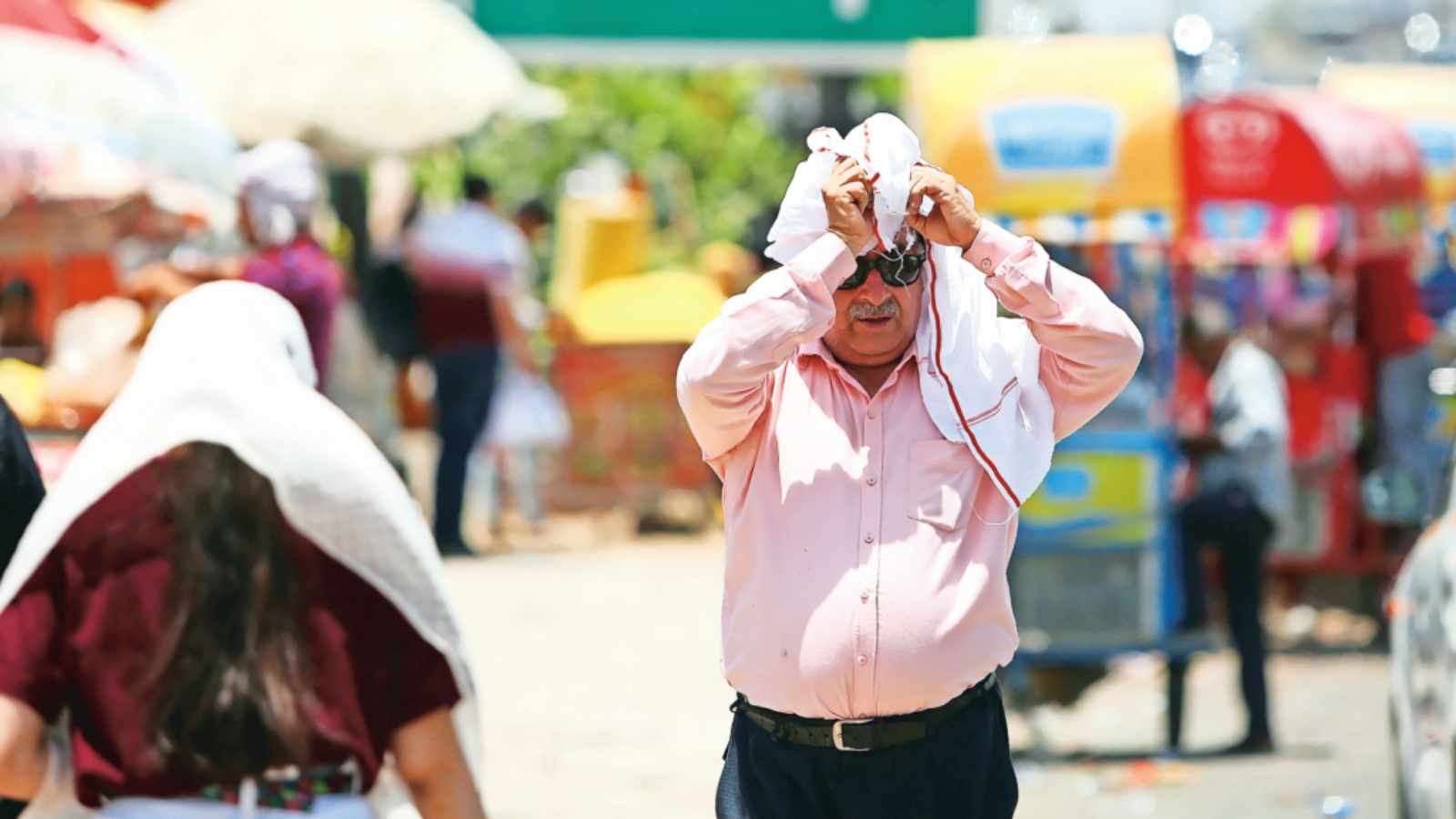
A groundbreaking study in The Lancet Planetary Health reveals that 3°C of global warming could expose the vast majority of India's older population to life-threatening heat. The report highlights a critical failure in previous heat-stress models that relied on younger, healthier demographics.
- Over 80% of India's elderly could face 'intolerable heat' if global warming reaches 3°C.
- Older adults in Delhi and the Indo-Gangetic Plain may endure 2,000+ hours of dangerous heat annually.
- Existing heat-health models underestimate risk because they are based on younger adult physiology.
- South Asia is identified as one of the most vulnerable regions globally due to high population density and poverty.
A critical new study published in The Lancet Planetary Health has sounded a grave alarm for the future of public health in South Asia. The research indicates that as global warming progresses toward a 3°C increase, more than 80% of India's elderly population will be exposed to heat levels that the human body simply cannot tolerate. This vulnerability is not limited to the peak of summer but is projected to persist through both day and night for several consecutive months.
The geographical impact is particularly severe in Delhi and the Indo-Gangetic Plain. According to the study, at a warming level of 1.5°C (expected around 2030), older adults in these regions will already face 1,000 hours of intolerable heat per year. If warming reaches 3°C, this figure doubles to over 2,000 hours, creating a scenario where the body has virtually no opportunity to recover between heat episodes.
Why This Matters
BozokMedia analysis shows that this study exposes a systemic flaw in how global heat-health warnings are calibrated. For decades, the 'danger threshold' for heat has been based on the physiological responses of healthy young adults. However, older adults possess a diminished capacity to regulate body temperature—they sweat less and their cardiovascular systems are under greater strain. Consequently, the 'danger zone' for the elderly begins at much lower temperatures than previously assumed.
"Ageing diminishes the body’s ability to control heat, and older people are likely to experience greater physiological strain at much lower temperature-humidity levels than healthy young people."
The study utilized laboratory experiments across three age groups (15–39, 40–59, and 60+) to map heat tolerance. The findings are stark: while young adults might not face similar systemic risks until 4°C of warming, 22% of the world's elderly are already at risk at 1.5°C. This gap highlights a profound biological inequality in the face of climate change.
Furthermore, the researchers emphasize that 'intolerable heat' does not mean immediate death, but rather the point where the body can no longer maintain a stable core temperature, even during sedentary activities. In countries like India, Pakistan, and Bangladesh, this biological risk is compounded by high poverty rates and limited access to cooling infrastructure, making the crisis an issue of both health and social equity.
| Warming Level | Risk to Elderly (India/South Asia) | Annual Intolerable Hours (Delhi/IGP) |
|---|---|---|
| 1.5°C (est. 2030) | Significant increase in vulnerability | ~1,000 Hours |
| 3.0°C | Over 80% of elderly at risk | 2,000+ Hours |
Frequently Asked Questions
Q1: Why are elderly people more affected by heat than young people?
Elderly individuals have a reduced ability to sweat and slower blood vessel responses, meaning their bodies cannot shed heat as efficiently as younger people.
Q2: What is 'intolerable heat' according to the Lancet study?
It is the threshold where the body can no longer maintain a stable internal core temperature, even during light activity, leading to continuous heat accumulation.