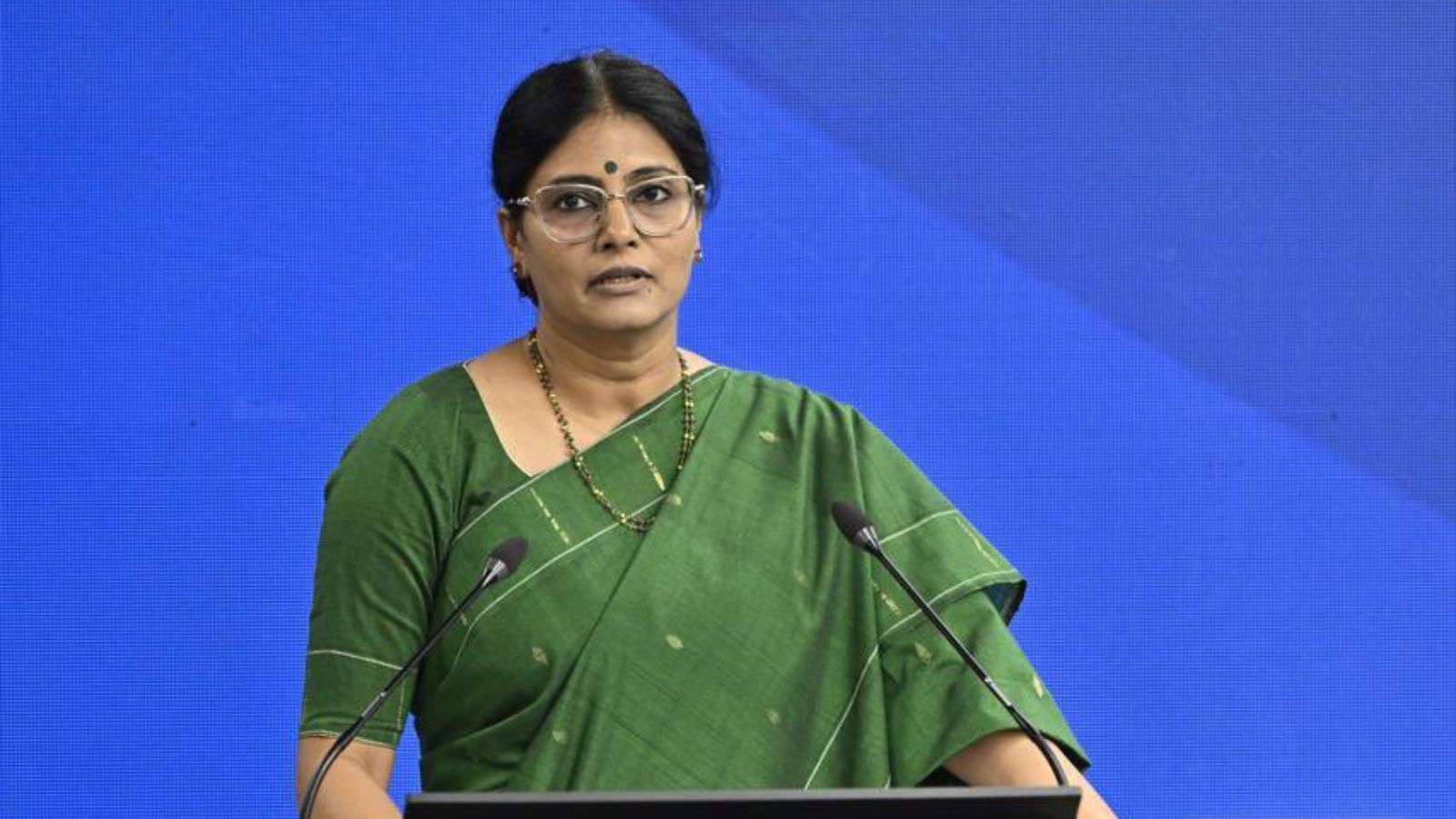
Union Minister Anupriya Patel emphasized that AI can act as a force multiplier to achieve health equity in India. She highlighted the goal of transforming India from the 'pharmacy of the world' to the 'laboratory of the world' through AI-driven innovation.
- AI has the potential to bridge healthcare gaps in geographically inaccessible areas.
- India aims to transition from a generic medicine manufacturer to a global leader in drug discovery.
- The government is investing ₹5,000 crore through the PRIP scheme to boost R&D.
- Human accountability must remain central; AI should augment, not replace, medical professionals.
Delivering the keynote address at the IIMA Healthcare Summit 2026 in Ahmedabad, Union Minister of State for Health and Chemicals and Fertilizers, Anupriya Patel, highlighted the transformative potential of Artificial Intelligence (AI) in the medical sector. Addressing the theme "Advancing AI in Healthcare," she noted that for a country as diverse and populous as India, AI could serve as a critical "force multiplier."
Bridging the Healthcare Divide
Minister Patel pointed out that India's geographical complexities and vast population create significant variations in healthcare access. She argued that AI should not be adopted merely as a technological trend but as a tool to achieve health equity. "We must ensure that AI improves patient care outcomes and reaches those who are underserved or live in geographically distant areas," she stated.
BozokMedia analysis shows that the integration of AI is crucial for handling India's unique genetic diversity. Since a treatment effective for one individual may not work for another due to genetic variations, AI can process massive datasets to identify specific patterns, enabling highly personalized medical interventions.
AI should augment our healthcare professionals and support their clinical judgment; it must never replace human accountability.
The Ambition: From 'Pharmacy' to 'Laboratory'
In a significant strategic shift, the Minister remarked that India is no longer content with its reputation as the "pharmacy of the world." While India is globally lauded for providing affordable generic medicines and vaccines, the government's new objective is to become the "laboratory of the world."
This transition requires a heavy emphasis on drug discovery, a field where AI can drastically reduce the time and cost of bringing new medicines to market. To support this vision, the government is implementing the Promotion of Research and Innovation in the Pharma-Medtech sector (PRIP) scheme, with a substantial outlay of ₹5,000 crore aimed at connecting academia with industry.
Safety, Privacy, and Scalability
As AI becomes more integrated into clinical settings, the Minister emphasized that development must remain safe, responsible, and human-centered. Privacy guarantees and ethical AI frameworks are non-negotiable components of this digital evolution. Furthermore, she called for a move from small-scale pilot programs to national-level implementation, ensuring that only validated and effective tools reach the general population.
Why This Matters
The push for AI in healthcare marks India's attempt to leapfrog traditional developmental hurdles. By moving from cost-based manufacturing to innovation-led growth, India is positioning itself to lead the global fight against both communicable and non-communicable diseases (NCDs).
Frequently Asked Questions
1. How will AI help in drug discovery in India?
AI can analyze vast amounts of biological data to identify patterns and connections that human researchers might miss, significantly accelerating the process of finding new drugs.
2. What is the goal of the PRIP scheme?
The PRIP scheme, with a ₹5,000 crore budget, aims to strengthen research and innovation in the pharmaceutical and medtech sectors by linking educational institutions with industry.


