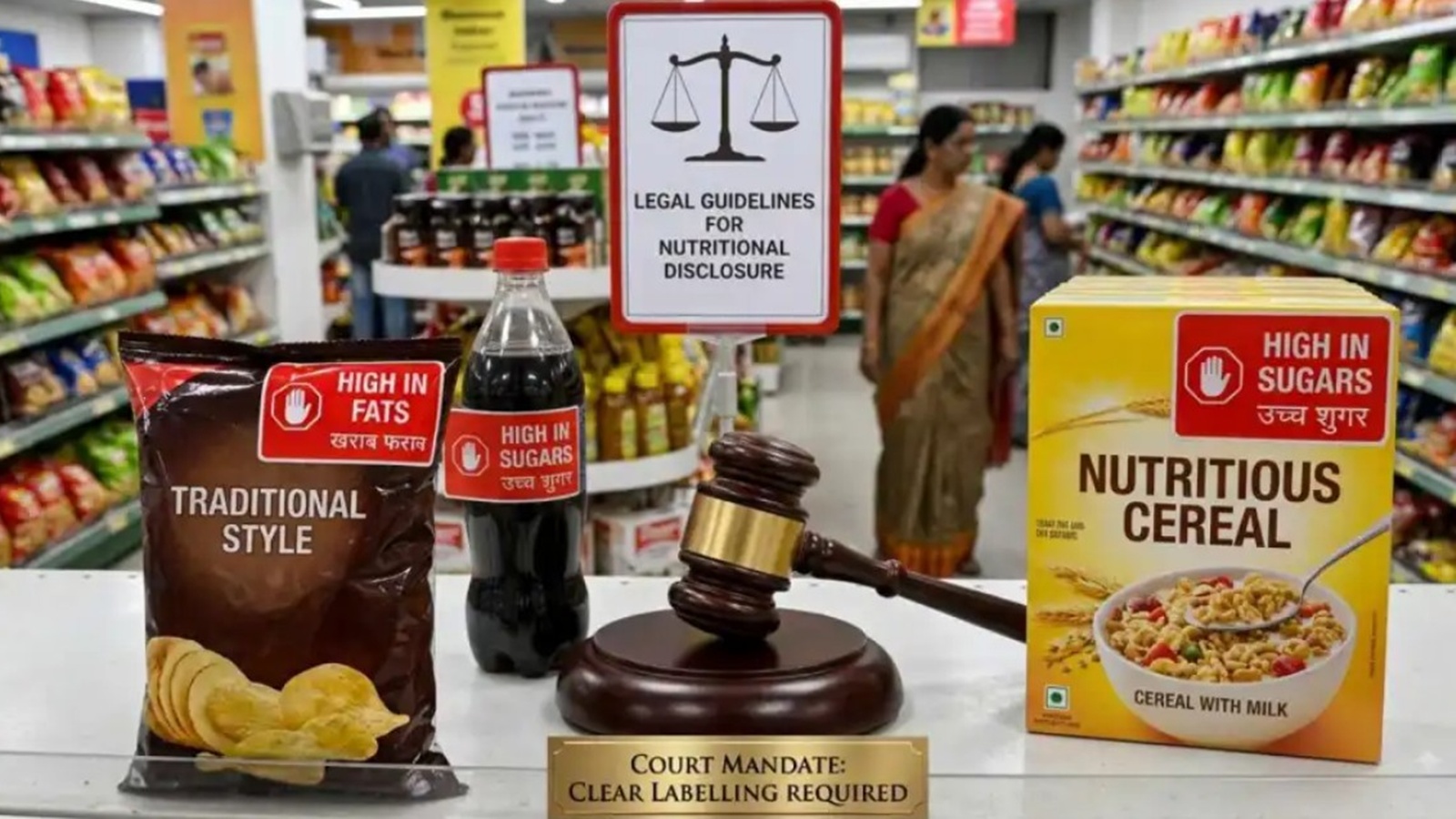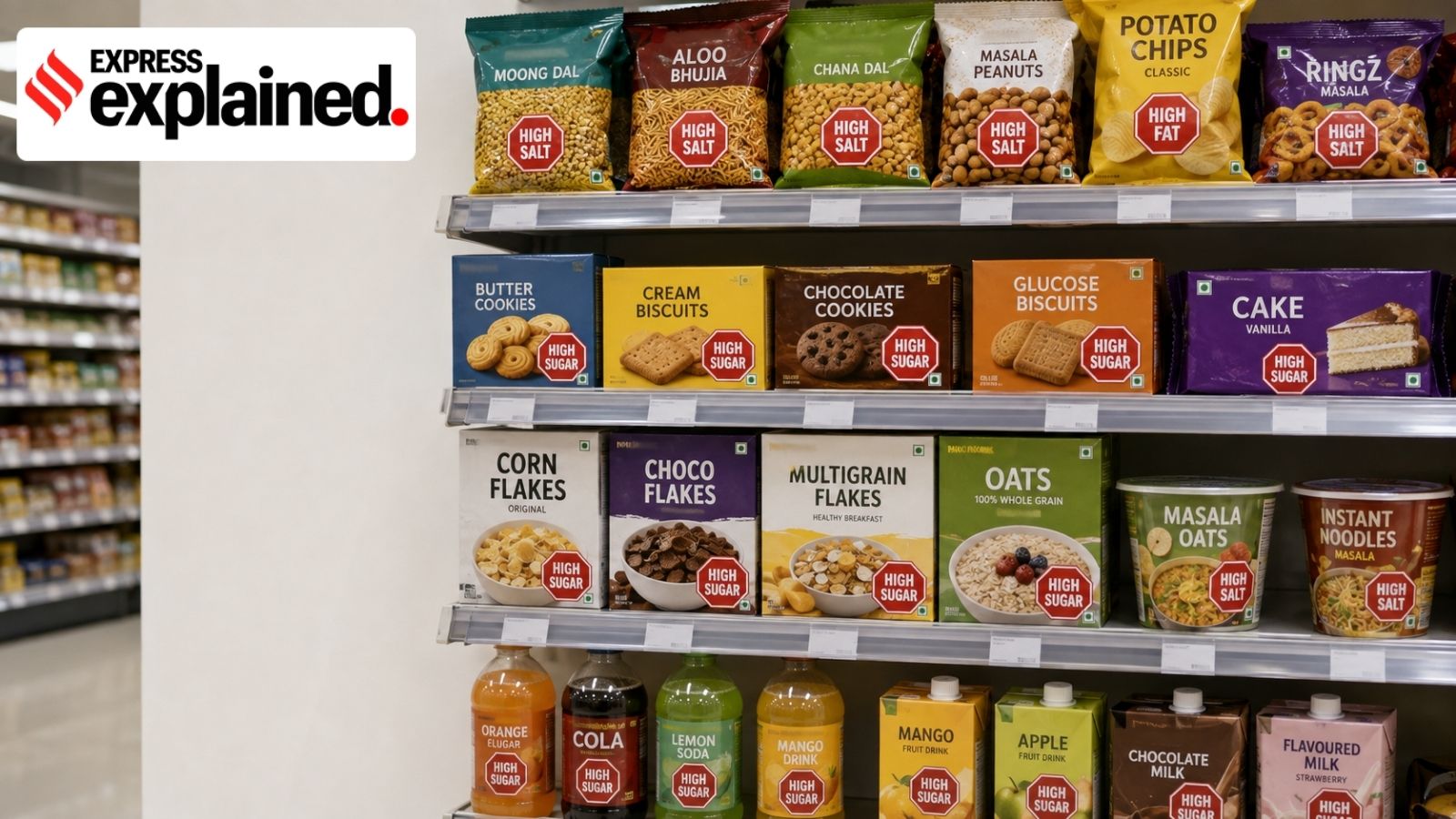
Prompted by the Supreme Court, India's food regulator FSSAI has proposed mandatory red hexagonal warning labels on packaged foods high in salt, sugar, or fat to protect consumer health.
- FSSAI proposes red hexagonal front-of-pack warning labels for unhealthy packaged foods.
- The labels will target products high in salt, sugar, or added saturated fat.
- Implementation will occur in two phases: first for products with two or more high nutrients, then for products with even one.
- The Supreme Court emphasized that the 'Right to Life' under Article 21 includes the 'Right to Health'.
In a significant move toward public health safety, the Food Safety and Standards Authority of India (FSSAI) has proposed the introduction of prominent red hexagonal warning labels on the front of packaged food products. This proposal, filed as a compliance affidavit before the Supreme Court, aims to alert consumers about foods that are excessively high in salt, sugar, or saturated fats.
The initiative follows a legal challenge by a Kerala-based non-profit, 3S and Our Health Society. According to the FSSAI, the goal is to provide a "simple, prominent, and easily comprehensible warning" to help consumers make informed dietary choices, particularly for vulnerable populations such as children.
The Two-Phase Implementation Plan
BozokMedia analysis shows that the regulator intends to roll out this Front of Pack Nutrition Labelling (FOPNL) in a structured manner to allow the food industry time to reformulate their products. In the first phase, the warning labels will be mandatory for products that exceed thresholds for at least two of the targeted nutrients. In the second phase, the regulation will tighten, requiring labels even if only one nutrient is present in excess.
This regulatory shift marks a transition from passive information disclosure to active consumer protection in the Indian food market.
During the proceedings, the government raised concerns that such labeling might unfairly categorize traditional Indian foods, like namkeen, as unhealthy. However, the Supreme Court rejected this stance, questioning why India should not adhere to international packaging standards seen in developed nations. The court underscored that the State has a constitutional duty under Article 47 to improve public health.
Exemptions and Specifics
Not all products will carry these warnings. The FSSAI has clarified that single-ingredient foods and products that are inherently rich in these nutrients—such as ghee, edible oils, salt, sugar, jaggery, and honey—will be exempted from these specific labeling requirements.
| Implementation Stage | Criteria for Labeling | Target Nutrients |
|---|---|---|
| Phase 1 | High in 2 or more nutrients | Salt, Sugar, Saturated Fat |
| Phase 2 | High in 1 or more nutrients | Salt, Sugar, Saturated Fat |
Frequently Asked Questions
1. What will the warning labels look like?
They will be red hexagonal shapes on the front of the package, clearly stating 'high fat', 'high sugar', or 'high salt'.
2. Why is the government implementing this in phases?
To ensure consumer acceptability and to give the food industry adequate time to reformulate products to reduce harmful ingredients.