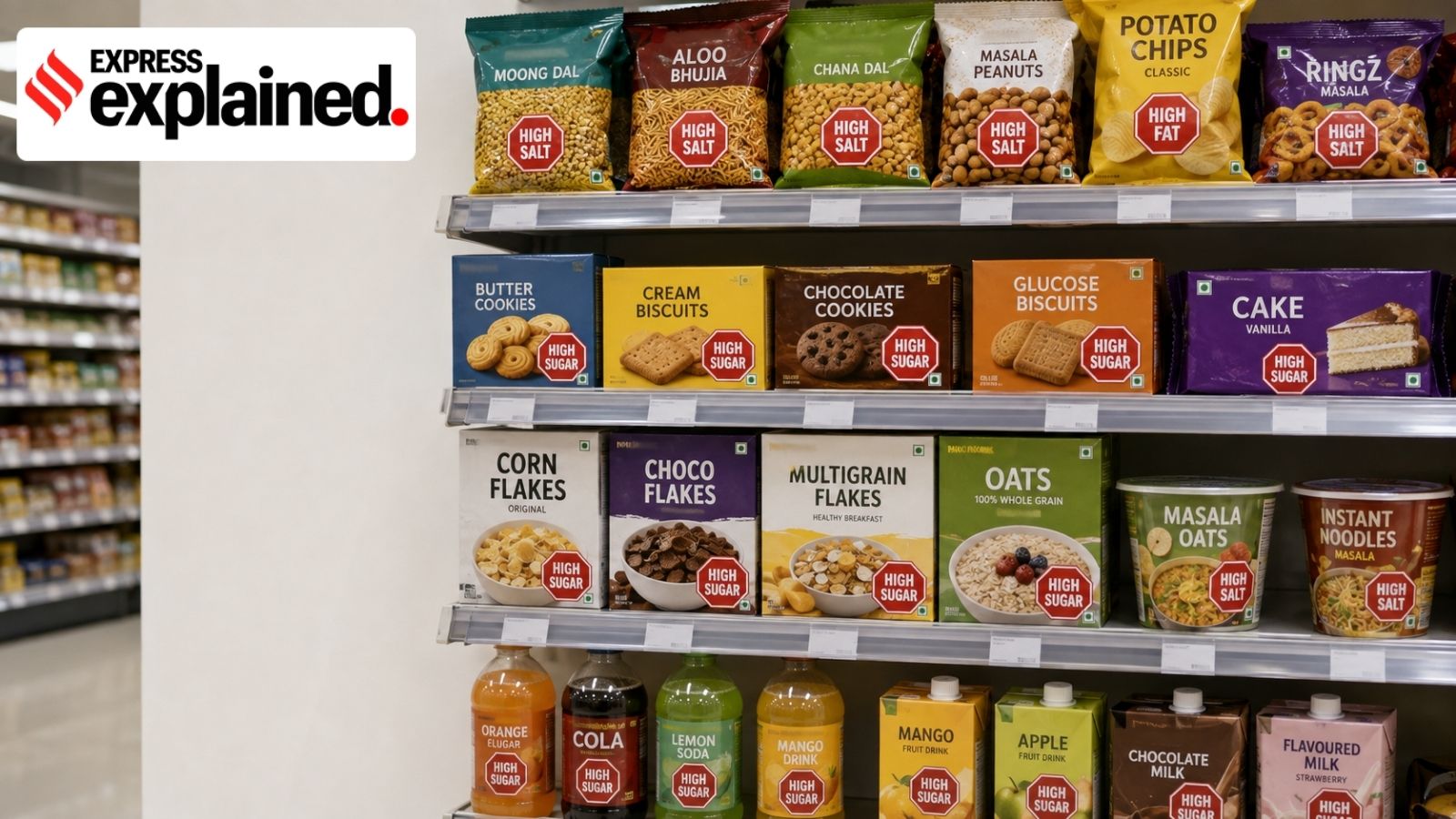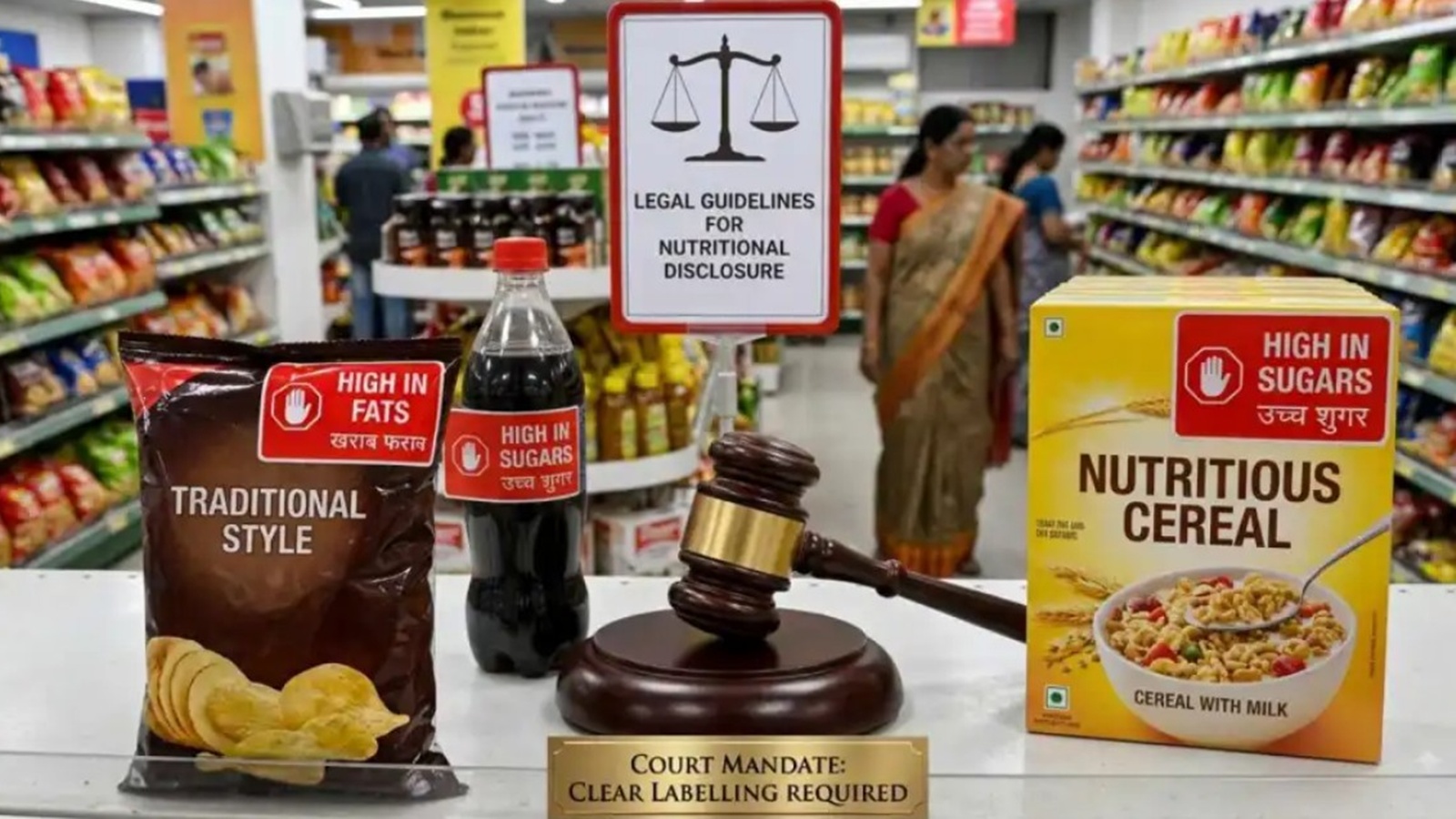
In a major move toward public health, FSSAI has informed the Supreme Court of its plan to introduce red hexagonal warning labels on packaged foods high in fat, sugar, and salt.
- FSSAI will introduce red hexagonal warning labels on the front of packaging for unhealthy foods.
- The implementation will occur in two phases to allow industry reformulation.
- Phase I targets foods high in at least two of the three key nutrients (fat, sugar, salt).
- Sweetened beverages will receive specific standalone warnings.
The Food Safety and Standards Authority of India (FSSAI) has officially informed the Supreme Court that it will implement front-of-pack warning labels on packaged food products. These labels, designed as red hexagons, will alert consumers to products containing excessive levels of fat, sugar, or salt.
This decision marks the end of a long-standing debate between food regulators and health activists. Previously, the regulator had proposed a 'star-rating' system similar to electrical appliances. However, nutrition experts vehemently opposed this, arguing that even unhealthy snacks could receive a 'half-star,' potentially misleading consumers into thinking they are making a healthy choice.
The Two-Phase Rollout Plan
To facilitate consumer acceptance and allow the food industry time to reformulate their products, FSSAI has proposed a phased approach:
- Phase I: Warning labels will be mandatory only if a food product is high in at least two of the three harmful ingredients: fats, sugars, or salts. Sweetened beverages, which are primarily high in sugar, will carry a separate, specific warning.
- Phase II: The scope will expand to include products that are high in even just one of these three ingredients.
Why This Matters
BozokMedia analysis shows that this regulatory shift is crucial for combating the rising epidemic of non-communicable diseases in India. By placing clear, visual warnings on the front of the pack, the regulator aims to bridge the gap between nutritional information and consumer decision-making.
"In principle, FSSAI has agreed to the warning labels, but the conditions they have set may dilute their overall effectiveness," noted Dr. Arun Gupta, Convener of NAPi-India.
The proposed labels will be printed in English with a font size slightly larger than the nutritional table on the back. However, critics have pointed out that for maximum impact in a diverse country like India, these warnings should also be prominently displayed in regional languages like Hindi.
Global Context and Comparison
| Country | Labeling Method |
|---|---|
| Chile / Mexico | Black Stop Signal / Warning Labels |
| United Kingdom | Traffic Light System (Red, Yellow, Green) |
| Australia | Health Star Rating |
| Netherlands | Nutri-Score Symbols |
Frequently Asked Questions
1. Which products are exempt from these red labels?
Single-ingredient foods like milk, and products inherently rich in these nutrients like ghee, edible oil, salt, and honey, will be exempt.
2. When will these labels actually appear on shelves?
While the FSSAI has accepted the principle in court, a specific timeline for the implementation of both Phase I and Phase II has not yet been released.