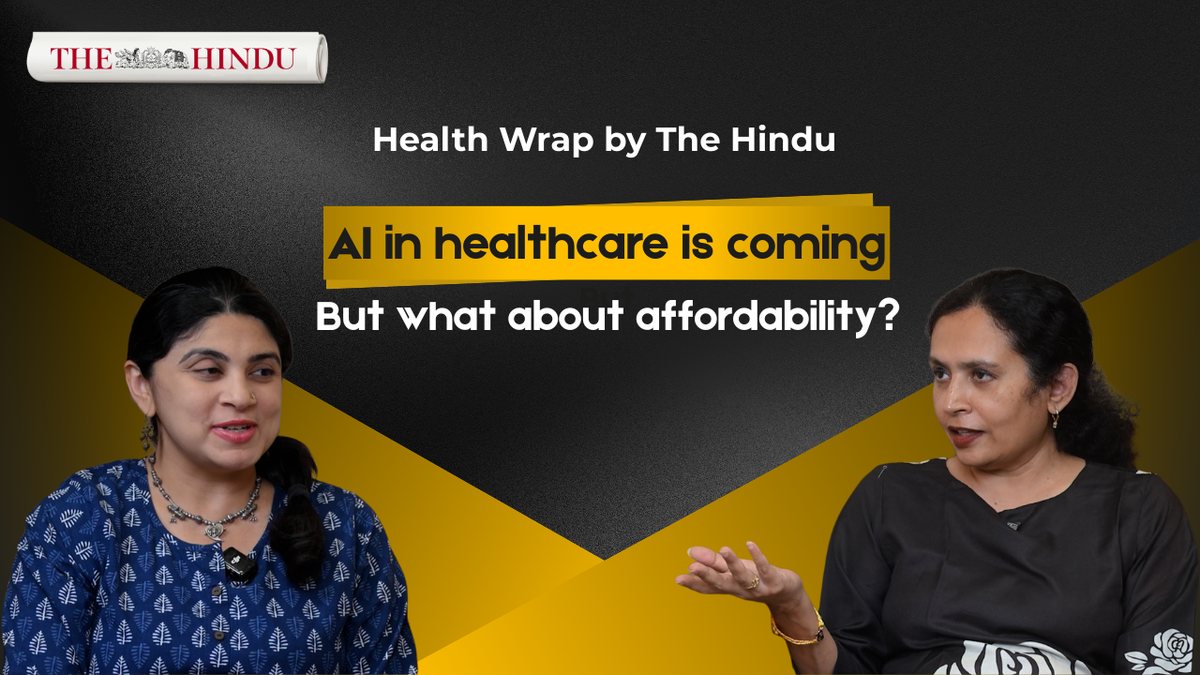
In this episode of The Health Wrap, we explore India's AI healthcare revolution, the rise of digital-age OCD driven by social media, and the critical need for transparency in private hospital billing.
- India's strategic push toward AI-integrated healthcare post-Delhi AI Summit.
- The emergence of digital-age OCD behaviors linked to social media usage.
- The urgent demand for transparency in private healthcare pricing models.
Following the recent Delhi AI Summit, India is standing at a pivotal crossroads in its healthcare journey. The integration of Artificial Intelligence (AI) promises to revolutionize diagnostics and patient care across the subcontinent. However, as 'The Health Wrap' highlights, the transition must be guided by ethical frameworks and a human-centric approach to ensure that technology serves humanity rather than complicating it.
The potential for AI to bridge the gap in rural healthcare access is immense. Yet, the industry faces significant hurdles regarding data ethics and algorithmic bias. BozokMedia analysis shows that for AI to be truly effective in the Indian context, it must be implemented with a focus on inclusivity and strict regulatory oversight to protect patient privacy.
The Digital Mental Health Crisis
While technology advances, our psychological well-being faces new challenges. The rise of 'Digital-Age OCD' is a growing concern among mental health professionals. Social media platforms, designed to capture and hold attention, are inadvertently fostering obsessive-compulsive behaviors. The constant need for validation, the endless scroll, and the comparison trap are reshaping the neural pathways of the digital generation.
The intersection of social media algorithms and human psychology is creating a new frontier of mental health disorders.
As users become increasingly tethered to their screens, the symptoms of anxiety and obsessive behaviors are becoming more prevalent, necessitating a new approach to digital wellness and mental health intervention.
The Transparency Gap in Healthcare Pricing
Beyond the high-tech advancements and mental health struggles lies a more grounded, systemic issue: the opaque nature of private healthcare billing. One of the most significant pain points for patients in India is the lack of clarity regarding medical costs. Sudden, inflated, and unexplained hospital bills remain a major source of distress for families.
The lack of a standardized pricing mechanism in private hospitals creates an environment of uncertainty. Experts argue that price transparency is not just a consumer right but a fundamental necessity to maintain public trust in the healthcare ecosystem. Without clear communication on costs, the financial burden of medical emergencies can become catastrophic.
Why This Matters
This discussion is vital because it touches upon the three pillars of modern existence: technological evolution, psychological stability, and economic security. Addressing AI ethics, social media's impact on the mind, and healthcare affordability is essential for building a resilient society.
Frequently Asked Questions
1. What is ethical AI in healthcare?
Ethical AI refers to the use of machine learning models that are transparent, unbiased, and prioritize patient data privacy above all else.
2. How does social media contribute to OCD?
The repetitive nature of social media interaction and the constant urge to check notifications can trigger obsessive behavioral patterns.