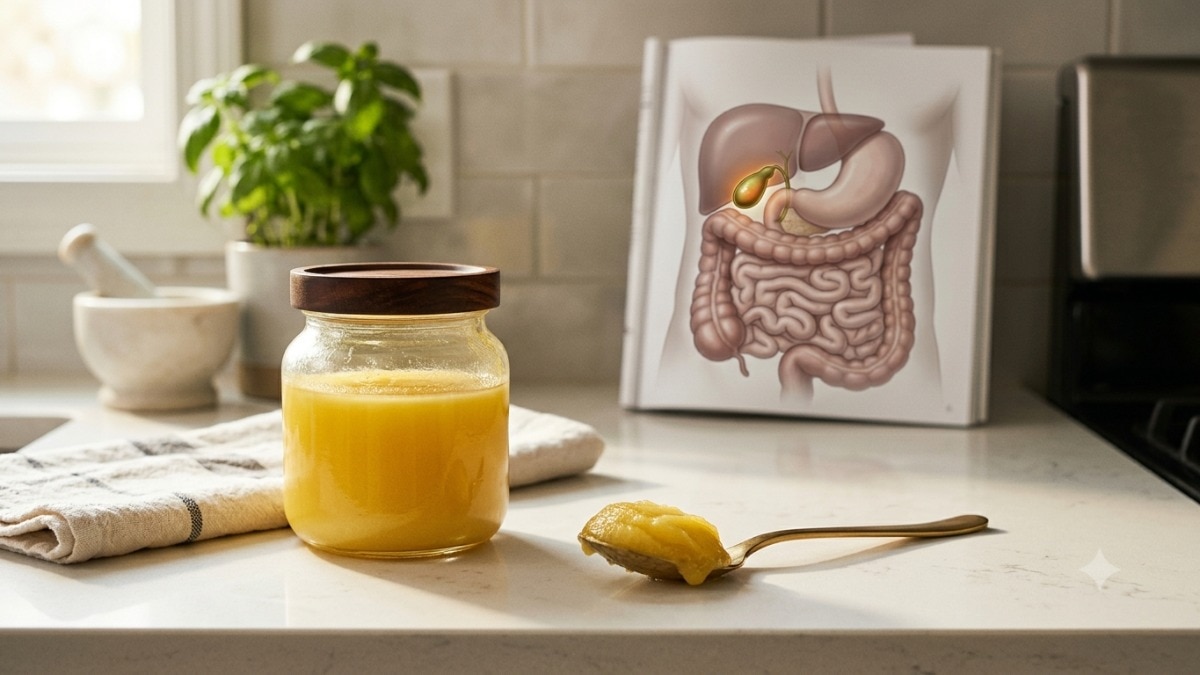
While ghee is a dietary staple, medical experts warn that consuming it in large quantities or as a wellness trend can trigger gallstones and severe digestive distress.
- Consuming large amounts of ghee can cause gallbladder contractions and pain.
- There is no scientific evidence supporting 'ghee coffee' for weight loss.
- A safe daily limit is approximately 1–2 teaspoons as part of a balanced diet.
Ghee has long been a cornerstone of the Indian diet, celebrated for its nutritional properties. However, a rising wellness trend—involving consuming spoonfuls of ghee directly or mixing it into black coffee—has raised alarms among medical professionals. Dr. Abhishek Agrawal, a leading Surgical Gastroenterologist at Asperia Hospital, Greater Noida, cautions that more ghee does not equate to more health benefits.
The Danger of High Fat Intake and Gallstones
The primary concern lies in how the body processes concentrated fats. When large amounts of ghee are consumed, the gallbladder must contract forcefully to release bile for digestion. For individuals with existing gallstones, this contraction can be excruciatingly painful and may trigger complications such as gallbladder inflammation (cholecystitis) or even pancreatitis (inflammation of the pancreas).
Why This Matters
BozokMedia analysis shows that the democratization of health advice via social media has led to the rise of unverified dietary trends. While ghee is healthy in moderation, treating it as a concentrated medicine for weight loss or constipation ignores the fundamental biological requirements of the digestive system.
Consuming large amounts of ghee can cause gallbladder contraction that may lead to severe health complications.
Dr. Agrawal emphasizes that the focus should remain on a balanced diet rich in protein and fiber. The belief that ghee can cure constipation is a misconception; fiber-rich foods are the true solution for healthy bowel movements. Furthermore, the 'ghee coffee' trend lacks scientific backing and often leads to nausea and abdominal bloating due to sudden fat overload.
Historical Context of Dietary Fats
Traditionally, fats in Indian cuisine were used as flavor enhancers and carriers for spices in controlled amounts. The modern shift toward consuming fats in isolation—driven by wellness influencers—marks a departure from traditional nutritional wisdom, potentially leading to metabolic imbalances.
| Aspect | Moderate Intake (1-2 tsp) | Excessive Intake (Direct/Trend) |
|---|---|---|
| Digestive Impact | Supports digestion | Nausea and bloating |
| Gallbladder Risk | Low/Safe | High risk of stones/inflammation |
| Weight Goal | Part of balanced diet | Risk of weight gain |
Frequently Asked Questions
1. Can drinking ghee help with weight loss?
No, there is no established scientific reason to consume large amounts of ghee specifically for weight loss. Caloric density is a key factor.
2. What should people with gallbladder issues avoid?
They should avoid high-fat diets and consult a medical professional regarding their specific dietary needs.