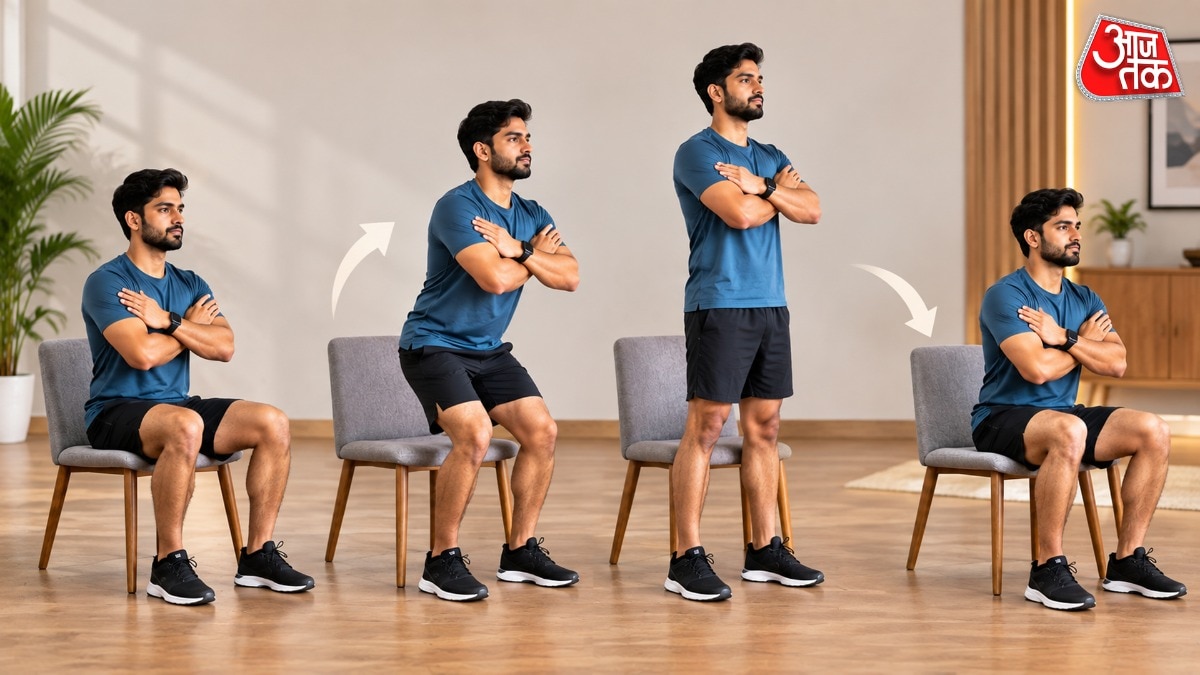
Discover your functional strength and balance with a simple 'Sit-to-Stand' test at home. A low score may indicate underlying physical weakness or potential health risks related to cardiovascular health.
- The 30-second Sit-to-Stand test measures lower body strength and balance.
- Lower scores can be an indicator of physical frailty or lung/heart issues.
- Fitness benchmarks vary significantly based on age and gender.
- Active lifestyles and targeted exercises can improve these scores over time.
Determining your overall physical fitness doesn't always require a trip to a high-tech clinic. Health experts suggest a simple, home-based assessment known as the Sit-to-Stand Test. This 30-second exercise provides a snapshot of your lower body strength, balance, and ability to perform daily activities independently.
The test primarily targets the quadriceps and glutes, which are essential for mobility. In clinical settings, doctors use this metric to evaluate the risk of falls or physical instability, particularly in aging populations. While not a diagnostic tool for specific diseases, it serves as a critical indicator of functional longevity.
How to Perform the Sit-to-Stand Test
To conduct this test, you will need a sturdy chair with a straight back and no armrests. Follow these steps:
- Sit in the center of the chair with your back straight and feet flat on the floor.
- Cross your arms across your chest, placing your hands on opposite shoulders.
- Start a timer for 30 seconds.
- Stand up completely and sit back down without using any external support.
- Count the total number of complete repetitions performed within the time limit.
"This test offers a glimpse into bodily strength and fitness, though it should not be viewed as definitive proof of any medical condition." - Prof. Dr. Subhash Giri, RML Hospital.
Benchmark Scores by Age and Gender
According to CDC data, the average scores for different demographics are as follows:
| Age Group | Men (Avg) | Women (Avg) |
|---|---|---|
| 20-24 Years | 25 reps | 23 reps |
| 25-50 Years | 21 reps | 19 reps |
| 60-64 Years | 14 reps | 12 reps |
| 70-74 Years | 12 reps | 10 reps |
| 85-89 Years | 8 reps | 8 reps |
Why This Matters
BozokMedia analysis shows that the decline of lower-body muscle mass—often termed sarcopenia—is a silent epidemic in modern sedentary lifestyles. A low score in this test is a red flag that your functional capacity is diminishing. This increases the likelihood of injuries and reduces the quality of life as one ages.
To improve your score, experts recommend staying active, incorporating short bursts of movement every two hours, and utilizing stairs. However, individuals with recent surgeries, acute injuries, or chronic illnesses should consult a physician before attempting this test.
Frequently Asked Questions
Q1: Does a low score mean I have a disease?
No, a low score indicates lower-than-average physical strength. It is a prompt to improve your lifestyle and diet, not a medical diagnosis.
Q2: Can I use a chair with armrests?
No, using armrests provides external support, which invalidates the test results as it no longer measures pure leg strength.