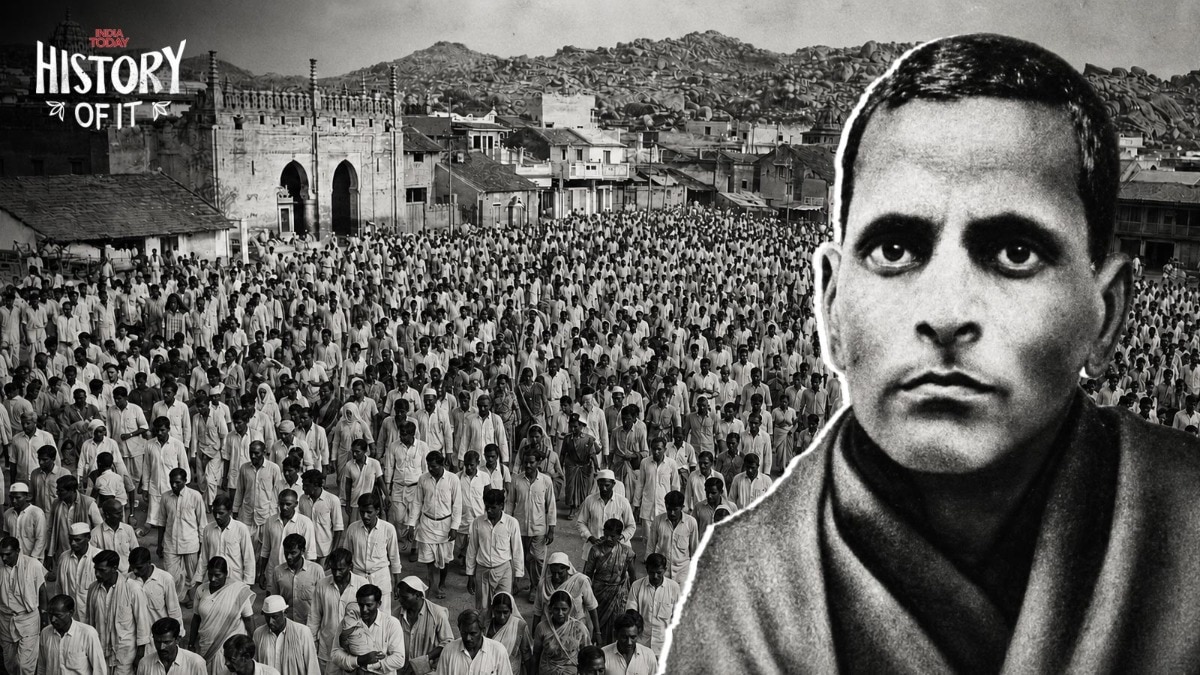
Five years after independence, activist Potti Sriramulu fasted for 58 days demanding a separate state for Telugu speakers. His death forced Jawaharlal Nehru to announce the formation of Andhra, India’s first linguistically defined state.
Key Takeaways
- Potti Sriramulu’s 58‑day hunger strike triggered the birth of India’s first language‑based state.
- Nehru’s initial resistance gave way to decisive action after mass protests.
- Contemporary fasts, like Sonam Wangchuk’s, echo the enduring power of non‑violent protest.
Five years after India became a republic, Potti Sriramulu launched a death‑fast in October 1952 demanding a separate state for Telugu‑speaking people. The fast was not merely a personal act of self‑sacrifice; it was a calculated Gandhian strategy aimed at reshaping the political map of a newly independent nation.
Historical Context
In the immediate post‑Independence era, most Indian provinces still followed the colonial administrative boundaries. The Telugu‑speaking districts were part of the Madras Presidency (later Madras State), dominated by Tamil administration. This linguistic mismatch sowed discontent among Telugu elites, who felt marginalized.
Sriramulu’s Fast and Its Aftermath
Having already impressed Mahatma Gandhi with a 29‑day fast, Sriramulu embarked on a second, more determined fast lasting 58 days. He died before seeing his vision realized, but his martyrdom ignited massive protests, violent clashes, and police firings across the Telugu districts of Madras.
Shift in Nehru’s Policy
Prime Minister Jawaharlal Nehru, who initially argued that “the time is not right” for linguistic reorganisation, was compelled to act by the sheer scale of unrest. On 15 August 1953, India’s first linguistically based state—Andhra—was officially announced, setting a precedent for future state reorganisation.
Modern Parallel: Sonam Wangchuk’s Hunger Strike
In 2026, Ladakh‑born educator Sonam Wangchuk began an indefinite hunger strike at Delhi’s Jantar Mantar, demanding accountability over the NEET‑UG paper leak and the resignation of Education Minister Dharmendra Pradhan. While Sriramulu’s fast reshaped India’s internal borders, Wangchuk’s protest seeks systemic reform within an existing framework. Both underscore the enduring relevance of non‑violent pressure in Indian political discourse.
The legacy of Sriramulu’s sacrifice demonstrates how a single act of moral conviction can catalyse structural change—a lesson that resonates with today’s activists demanding transparency and accountability.