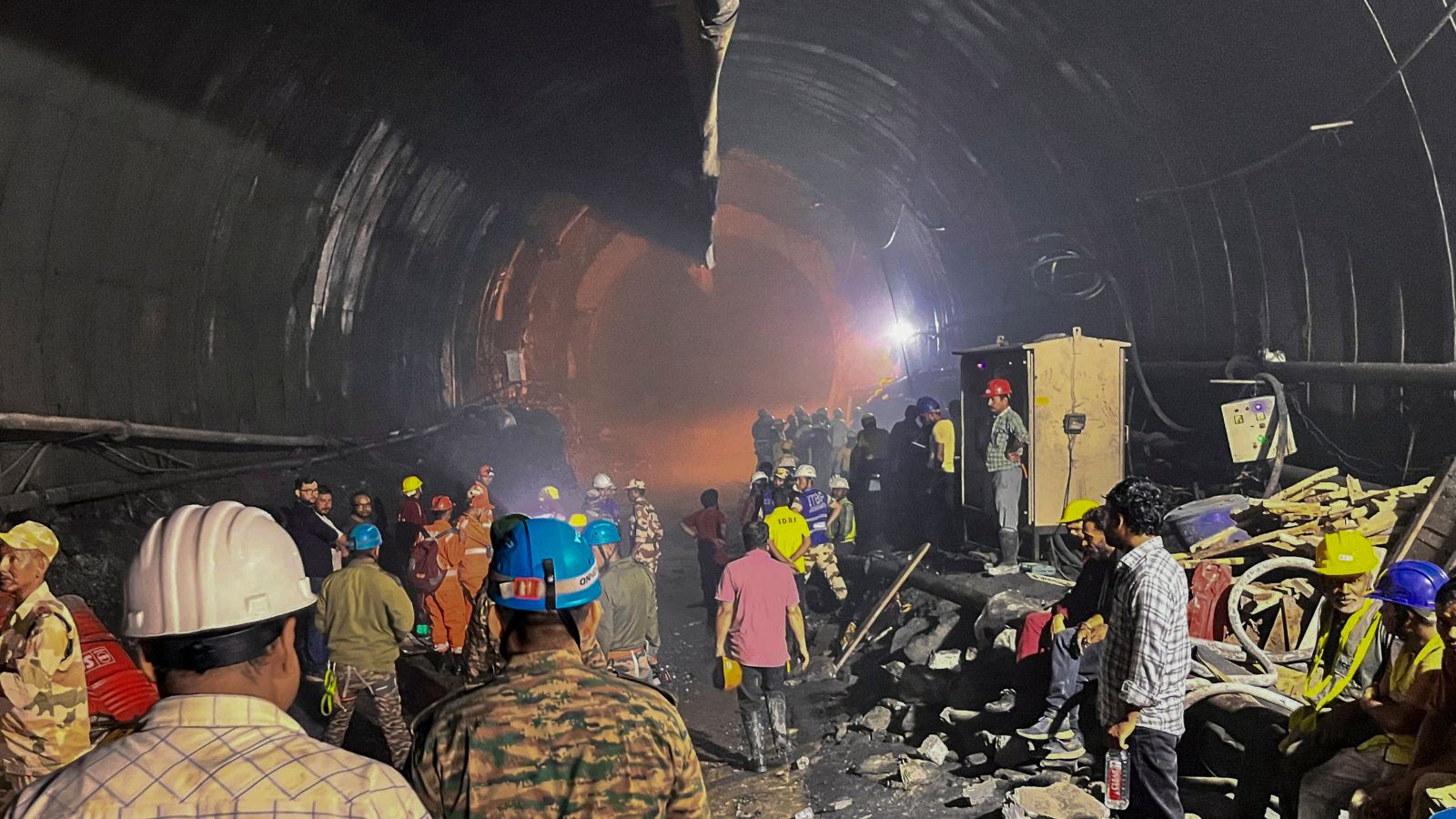
The death toll in the Uttarakhand tunnel collapse has reached 10 following the recovery of two more bodies from the Vishnugad-Pipalkoti Hydroelectric Project site.
- Death toll hits 10 after recovery of two workers in Chamoli.
- Identified deceased: Chetan Poyam (Chhattisgarh) and Lukas Topno (Jharkhand).
- Six-day intensive rescue operation involving 200+ personnel concludes.
- Magisterial inquiry ordered by the State Government.
In a somber update from the Chamoli district of Uttarakhand, the death toll from the recent tunnel tragedy has risen to 10. On Tuesday, rescue teams recovered the bodies of two more workers from the under-construction tunnel at the Vishnugad-Pipalkoti Hydroelectric Project, marking a grim milestone in the ongoing crisis.
State Disaster Response Force (SDRF) Commandant Arpan Yaduvanshi confirmed that the massive search and rescue operation, which spanned six days and involved nearly 200 personnel, officially concluded on Tuesday. The disaster originally struck on August 13, when a massive landslide trapped 22 workers inside the tunnel while they were performing concreting work on the lining.
The Complexity of the Rescue Operation
The recovery process was fraught with immense technical difficulties. According to officials, the tunnel was inundated with water, debris, and cement. Heavy metallic equipment and large-scale machinery were submerged in thick mud, complicating every move made by the rescue teams. To facilitate the search, rescuers had to cut through submerged machines and install specialized pumps to drain the water from the underground passage.
The victims recovered on Tuesday have been identified as Chetan Poyam from Chhattisgarh and Lukas Topno from Jharkhand. Both men were employees deployed by the Hindustan Construction Company. Earlier in the week, 12 workers were successfully rescued, while seven bodies had been recovered prior to Tuesday's findings.
Why This Matters
BozokMedia analysis shows that such incidents highlight the extreme volatility of the Himalayan terrain during major infrastructure developments. As India pushes for rapid hydroelectric expansion, the balance between engineering ambition and geological safety remains a critical point of contention for environmentalists and safety experts alike.
The convergence of heavy machinery, water ingress, and unstable geological structures creates a 'perfect storm' for industrial disasters in mountainous regions.
A multi-agency task force, including the NDRF, ITBP, Indian Army, CISF, and local police, worked tirelessly to navigate the treacherous conditions. In the wake of the tragedy, the state government has mandated a magisterial inquiry to investigate the circumstances leading to the landslide and ensure accountability.
Frequently Asked Questions
Question 1: Where exactly did the tunnel collapse occur?
Answer: The incident took place at the Vishnugad-Pipalkoti Hydroelectric Project site in the Chamoli district of Uttarakhand.
Question 2: Who was involved in the rescue operation?
Answer: The operation was a massive joint effort involving the SDRF, NDRF, ITBP, the Indian Army, CISF, and local police forces.