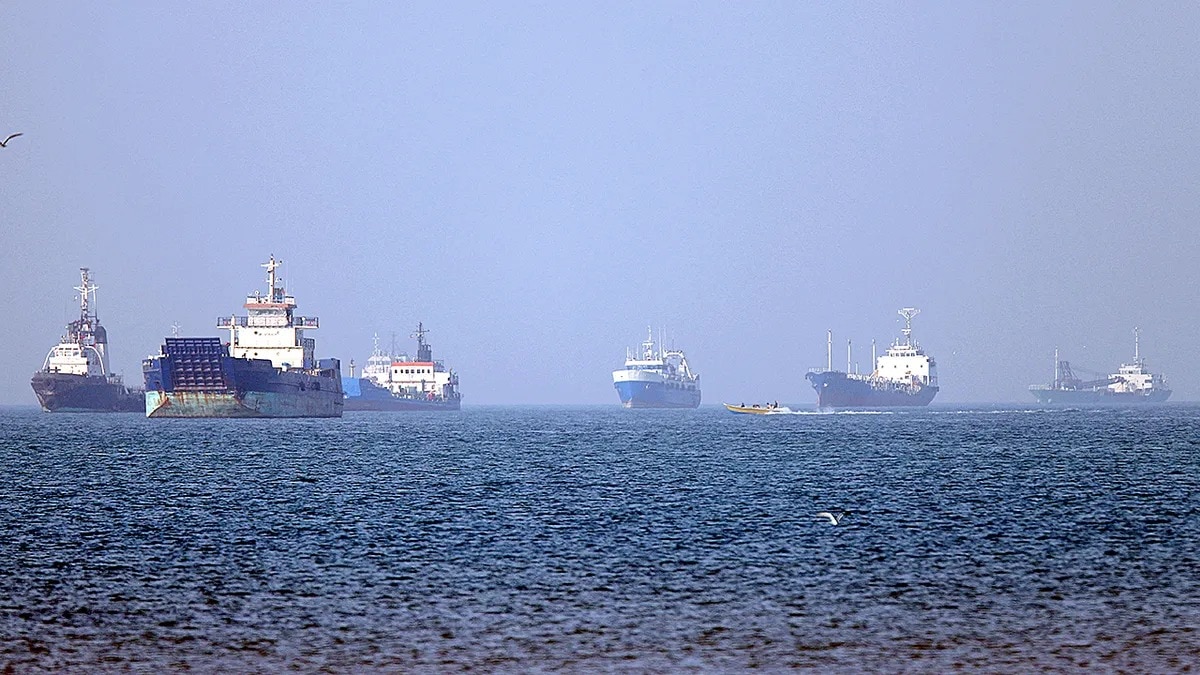
Iran launched cruise missiles at two UAE‑flagged oil tankers in the Strait of Hormuz, killing an Indian sailor and wounding eight crew members. The strike heightens maritime security concerns in a region already fraught with tension.
Key Takeaways
- Iran fired cruise missiles at two UAE oil tankers.
- One Indian sailor died; eight crew members injured.
- The incident escalates security worries in the Strait of Hormuz.
The strategic Strait of Hormuz, a chokepoint for roughly one‑fifth of the world’s oil shipments, became the scene of a deadly encounter on July 14. Iran’s Islamic Revolutionary Guard Corps (IRGC) launched cruise missiles at two United Arab Emirates‑flagged tankers – Mombasa and Bahia. The strike claimed the life of an Indian seafarer and injured eight others, including six Indians and two Ukrainians.
Incident Details
According to Reuters, the missiles were fired from Iran’s waters into Oman’s territorial sea, targeting the tankers on the southern route of the strait. The Indian crew member aboard the Mombasa tanker died on site, while four of the injured are reported in critical condition. Both vessels caught fire briefly, but the flames were later contained and the situation stabilized.
Geopolitical Context
The Hormuz Strait is one of the world’s most vital maritime corridors, handling millions of barrels of crude oil daily. It lies at the intersection of the interests of Iran, the United Arab Emirates, Qatar, Saudi Arabia, and Oman. Recent months have seen heightened friction between Iran and the United States, with both sides increasing naval postures. Iran asserted that the missile launch was a “warning shot” against vessels it deemed to be illegally traversing the waterway, while the UAE condemned the act as a grave breach of international law.
International Reactions and Implications
The UAE’s defense ministry announced the attack on its social media platform X, vowing to protect its sovereignty and citizens. The United States, through its Central Command (CENTCOM), responded with a new wave of airstrikes aimed at degrading Iran’s ability to threaten commercial shipping in the region. Analysts warn that such missile strikes could destabilize global oil markets, drive up energy prices, and increase the risk of inadvertent escalation between major powers.
Looking Ahead
Should the current trajectory continue, the Strait of Hormuz could witness further militarisation and possibly more direct confrontations. All vessels, under the United Nations Convention on the Law of the Sea (UNCLOS), have the right to innocent passage, but regional power rivalries are increasingly testing that principle. Diplomatic engagement among India, the UAE, Iran, and the United States will be crucial to prevent a broader maritime crisis.