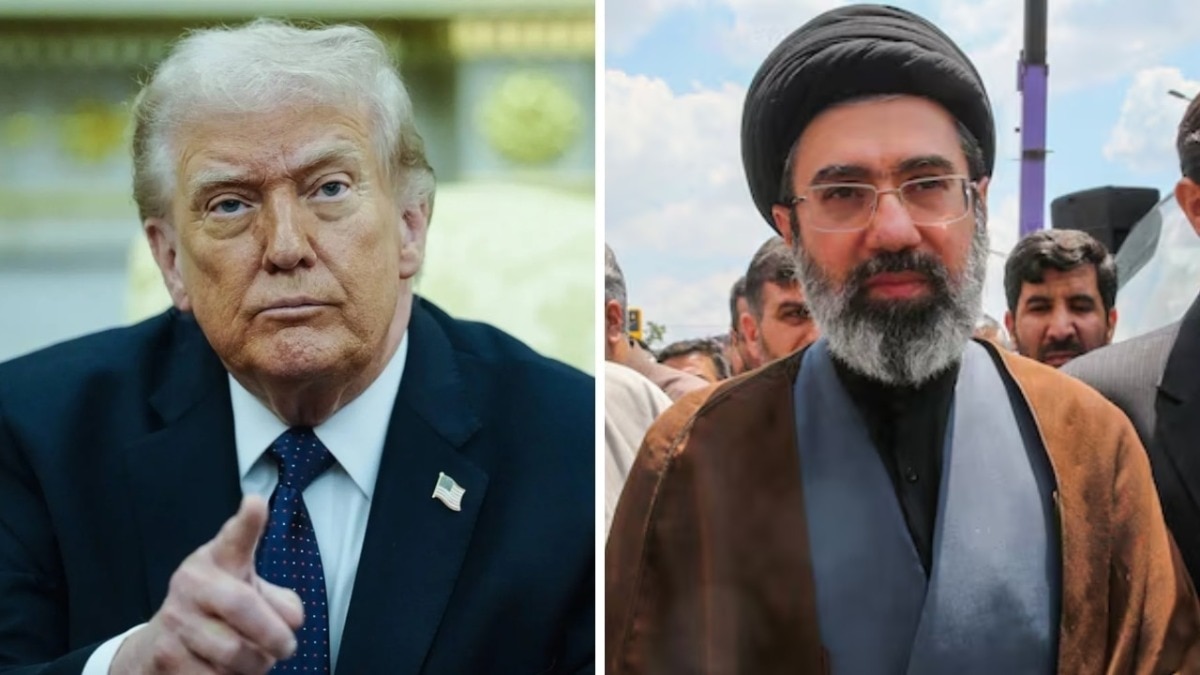
U.S. President Donald Trump claimed that Iran’s armed forces are virtually annihilated and that Mojtaba Khamenei, son of the late Supreme Leader, is 90 % eliminated. He also announced a new economic blockade of the Strait of Hormuz, demanding a 20 % fee from passing vessels.
Key Takeaways
- Trump asserts Iran’s military is 90 % destroyed.
- Mojtaba Khamenei is described as almost eliminated.
- A proposed 20 % levy on ships transiting the Strait of Hormuz.
U.S. President Donald Trump told Fox News on July 14, 2026 that Iran’s military “has been almost completely wiped out” and that former Supreme Leader Ayatollah Ali Khamenei’s son, Mojtaba Khamenei, is “90 % gone.” The statement arrived amid a renewed wave of U.S.–Iran tension, following a series of joint U.S.–Israeli strikes that targeted Iranian air defenses and naval assets.
Background Context
Relations between Washington and Tehran have been fraught for decades, but recent coordinated air raids have intensified the narrative of Iranian weakness. Trump claimed that these operations have “shattered Iran’s navy, air force, and aerial security systems.” Mojtaba Khamenei, long viewed as his father’s heir, was reportedly injured in a recent aerial attack, preventing him from attending his father’s funeral and casting doubt on his succession prospects.
Proposed Hormuz Economic Blockade
Trump declared the Strait of Hormuz “under U.S. protection” and announced a plan to levy a 20 % fee on any vessel that navigates the waterway. He argued that the measure would keep the passage open for non‑Iranian traffic while financially penalising Tehran. Iran’s foreign minister, Abbas Araghchi, responded sharply, insisting that Iran has always been the “real guardian” of Hormuz and labeling the 20 % demand as “excessive.”
Potential Implications
If implemented, the blockade could disrupt global oil shipments, as the Strait of Hormuz carries roughly a fifth of the world’s petroleum. A 20 % surcharge would likely raise shipping costs, push oil prices higher, and add volatility to already tense markets. Moreover, the move could provoke further confrontations with Iran’s regional allies, including Yemen’s Houthi rebels and Saudi Arabia, heightening the risk of a broader Middle‑East flare‑up.
Expert Analysis
Geopolitical analyst Dr. Ravi Singh notes, “Trump’s rhetoric is more political theater than an accurate assessment of Iran’s capabilities. The real test will be whether the proposed economic pressure translates into tangible strategic leverage or simply fuels further instability in a volatile region.”