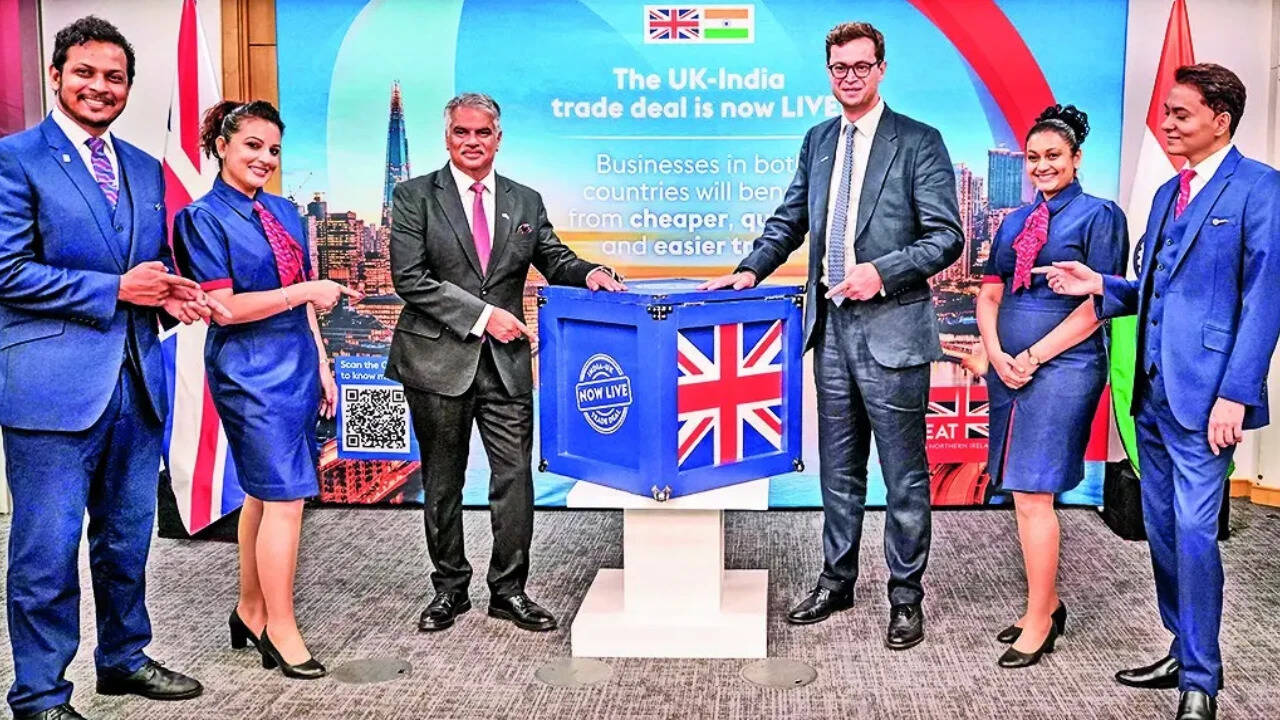
The newly effective India‑UK trade agreement showcases deepening trust between the two nations while tackling critical issues such as national security and the extradition of financial fugitives. Analysts project a substantial boost to both economies and a surge in bilateral trade.
Key Takeaways (मुख्य बिंदु)
- The deal is expected to add over £25 billion annually to financial trade and lift GDP by roughly £5 billion.
- The UK has pledged serious attention to India’s security concerns and the return of economic offenders.
- A Vision 2035 roadmap will deepen cooperation in defence, technology, climate, education and people‑to‑people links.
The landmark India‑UK trade deal, which came into force on Wednesday, signals a new era of "trust and cooperation" between the two economies. British High Commissioner Lindy Cameron described the agreement as the "new gold standard" of trade deals, emphasizing its pro‑worker, pro‑innovation and pro‑growth orientation. By simplifying customs procedures and reducing transaction costs, the pact builds on an already substantial £48 billion bilateral trade flow.
Security Concerns and Financial Fugitives
While refraining from commenting on individual cases, diplomatic sources confirm that the United Kingdom is taking India’s national‑security worries and the issue of financial fugitives very seriously. This stance, especially regarding Khalistan‑linked extremist elements in the UK and the extradition of economic offenders, reassures New Delhi that its sovereignty concerns are being respected. Prime Minister Narendra Modi has repeatedly warned against the misuse of democratic freedoms and has backed ongoing extradition efforts.
Vision 2035: A Multi‑Sector Roadmap
Beyond trade, the two governments have launched a "Vision 2035" roadmap aimed at deepening collaboration in defence, technology, climate action, education and people‑to‑people connectivity. The roadmap seeks to harness the combined economic and scientific might of two global powerhouses, reinforcing a rules‑based international order.
Economic Impact and Future Prospects
Cameron projected that the agreement will raise the GDP of both India and the UK by about £5 billion. In the longer term, financial trade is expected to exceed £25 billion each year. Trade Minister Chris Bryant highlighted that the pact sends a clear message to the world that a rules‑based trade system works for everyone, particularly for the UK and India. Consequently, the deal is positioned as a "force multiplier" and a template for future agreements, promising tangible benefits for businesses and citizens alike.