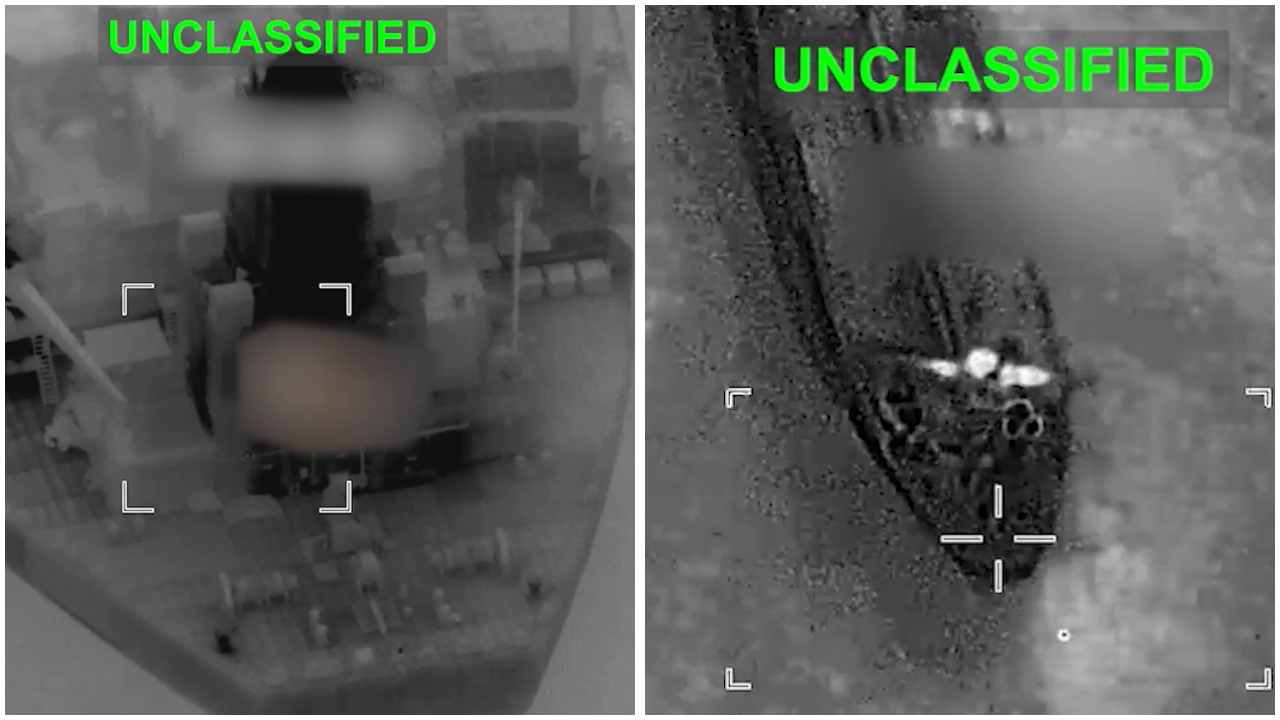
The United States disabled the Curacao‑flagged oil tanker M/T Belma in the Strait of Hormuz after it ignored multiple warnings and attempted to reach Iran’s Kharg Island. It marks the first commercial vessel targeted within the first 24 hours of the renewed blockade.
Key Takeaways (मुख्य बिंदु)
- US forces used Hellfire missiles to disable the Curacao‑flagged M/T Belma.
- During the first 24 hours of the renewed blockade, two vessels complied, one was disabled.
- Iran condemns the blockade, warning of broader energy disruption.
US Central Command (Centcom) announced that the Curacao‑flagged oil tanker M/T Belma ignored repeated warnings while transiting international waters toward Iran’s Kharg Island, the country’s principal oil‑export hub. A US aircraft launched Hellfire missiles into the ship’s smokestack, rendering the vessel unable to continue its voyage.
Re‑imposition of the blockade and the first target
On July 14 at 4 p.m. ET, Washington reinstated its naval blockade on Iran, prohibiting vessels from entering or exiting Iranian ports and coastal waters. The Belma became the first commercial ship to be struck during the initial enforcement window of the renewed embargo. Centcom reported that two other commercial ships complied with orders and altered course, while Belma refused to turn away and was consequently disabled.
Historical backdrop and recent US strikes
During the previous blockade, which lasted nearly two months before a June‑mid temporary US‑Iran memorandum of understanding lifted it, Centcom redirected 142 commercial vessels and disabled nine non‑compliant ships, including one strike that killed three sailors. The latest action coincides with a fresh wave of US strikes aimed at degrading Iranian military capabilities that threaten navigation through the strategically vital Strait of Hormuz.
Geopolitical and economic significance
The Strait of Hormuz carries roughly one‑fifth of global oil and natural‑gas trade, making it a chokepoint for energy markets worldwide. The US first imposed the blockade in April, lifted it after the interim agreement, and now re‑imposed it as diplomatic talks stalled and hostilities escalated around the waterway.
Iran’s response and future implications
Iran denounced the renewed blockade, warning that it could expand the conflict by disrupting regional energy exports. Parliament Speaker Mohammad Bagher Qalibaf accused Washington of undermining “Iranian arrangements” for navigation, while the Islamic Revolutionary Guard Corps cautioned that oil and gas exports would be “for everyone or for no one.” Continued US enforcement and potential Iranian retaliation could trigger broader instability in global energy supplies and price volatility.